Learning Outcomes
Community helpers → Identify roles and responsibilities → Child names familiar helpers and explains how each person supports daily community life.
First grade social studies → Connect jobs to community needs → Child describes why helpers are important in neighborhoods and towns.
Community vocabulary → Use job words in context → Child talks about helpers, workplaces, tools, and services with clearer language.

Community Helpers Social Studies Worksheet
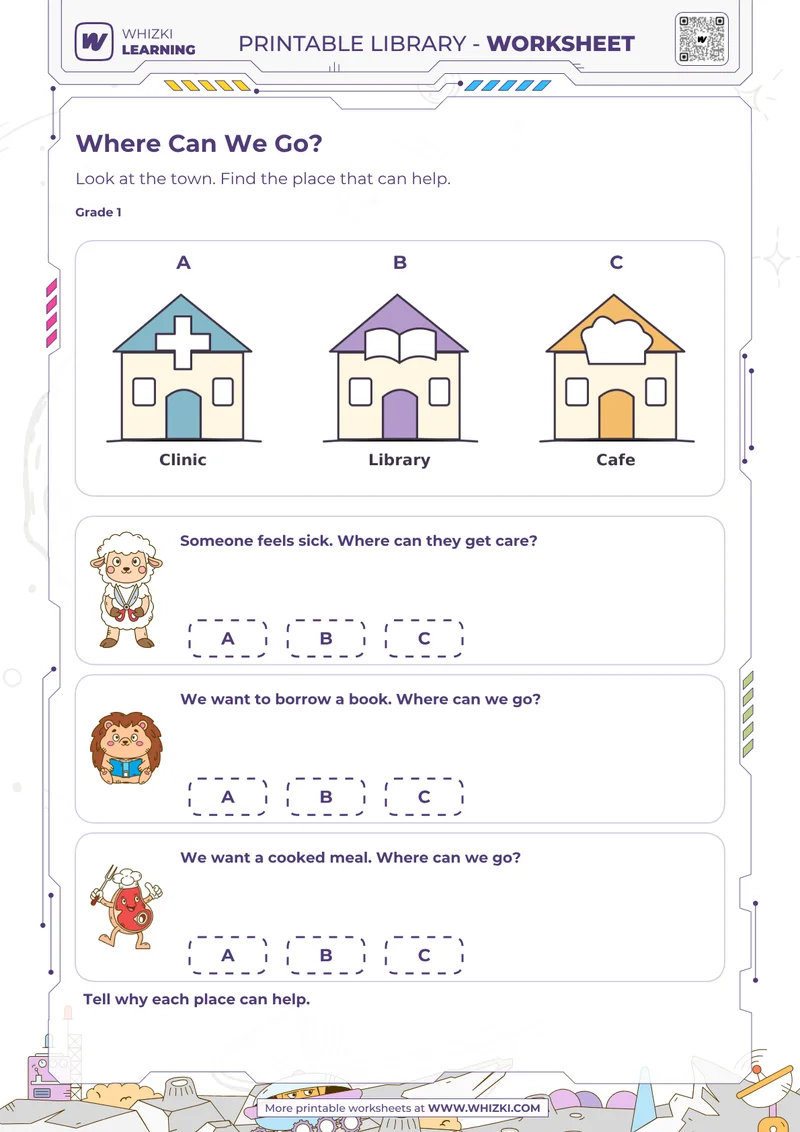
The Community Helpers Social Studies Worksheet is a printable page for 1st grade learners who are building early social studies vocabulary. The worksheet practices community helper recognition, including naming familiar helpers and thinking about how each helper supports people in a neighborhood.
At age six, children are starting to notice jobs, places, uniforms, vehicles, and tools in everyday life. The tricky part is that six-year-olds may mix up a helper with a tool or remember a siren faster than the person doing the work, so the worksheet gives the conversation a clear place to start.
A parent or teacher can sit beside the child and read each prompt aloud, then ask, “What does this helper do for people?” After each answer, invite the child to share a real-life example, such as seeing a mail carrier, nurse, firefighter, teacher, or crossing guard in the community.
The worksheet is useful because the page keeps the focus on people, jobs, and helpful actions rather than loose coloring or random matching. The simple printable format gives children a calm way to connect social studies words with real community experiences.
Limited-time savings
on Whizki workbooks.
Boost your child’s skills with our discounted workbooks. Engaging activities for preschool, kindergarten, and grade 1 - now at special sale prices!


Fast shipping
Secure Payment
Licensed Teachers
For the planet
Printed in the USA
Find fresh ideas
To help your little learners grow!
Helpful guides for parents and teachers, and tips for making learning at home super fun.

A vague school screening notice can leave families guessing, so start with seven plain questions about the test, timing, language, evidence, and next steps.

A field note on the May 2026 move to one shared worksheet generator API, with a simple parent preview for print consistency and handwriting comfort.

A seven-minute apple observation helps children compare color, stem, skin, weight, smell, and a cut surface, then draw what children noticed before any craft begins.

A field note on why Ukrainian-English workbook pages need fresh design choices for letters, examples, space, and language-specific skills.
Join the Screen-Free Movement.
Get exclusive activities, expert tips, and inspiration for a more meaningful, offline family life.