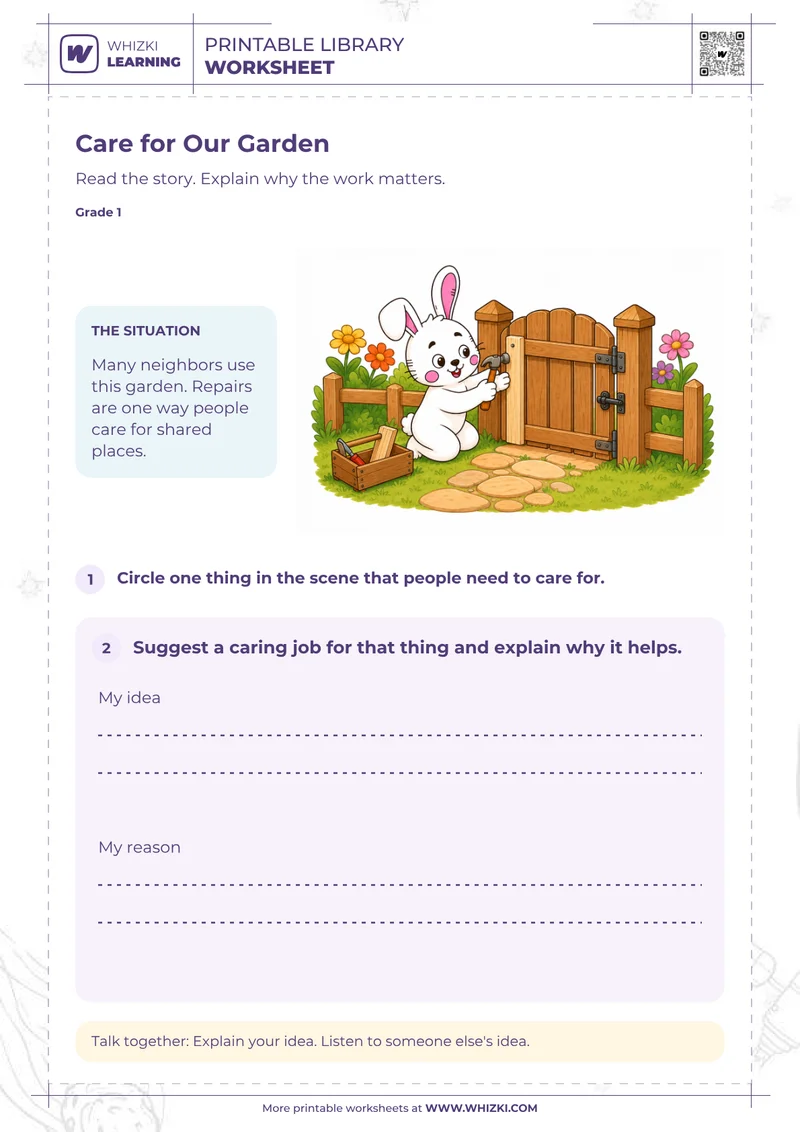
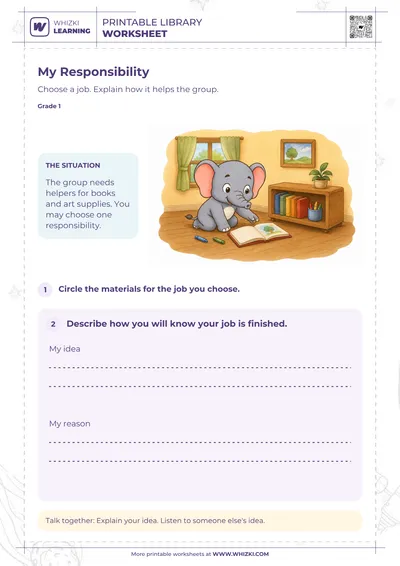
Care for Our Garden is a social studies worksheet about understanding care and repair in a shared place. Many neighbors use this garden. Repairs are one way people care for shared places. The child responds to two linked prompts using the scene or drawing space, with an adult reading the directions when needed. This page gives one specific situation to explore rather than asking for a general account of the whole topic.
Begin with the first direction: “Circle one thing in the scene that people need to care for.” Read it slowly and point to the part of the scene or response area it names. Let the child point, speak, or plan a drawing before making a pencil mark. Point to the visible gate, wooden part, or tool mentioned in the prompt. Help the child ask or answer one concrete question about the work instead of listing jobs that are not shown in the scene. If an unfamiliar word interrupts the task, explain it briefly and return to the same prompt so the child can use the new meaning immediately.
The second direction is “Suggest a caring job for that thing and explain why it helps.” Connect this response with the first one instead of treating it as an unrelated question. Invite the child to explain what they noticed, chose, or learned, and record dictated words when handwriting would slow the conversation. Use the actual picture details or the real experience requested by the prompt. A different supported personal response can be useful when the activity invites an open drawing or explanation.
Explore the grade 1 social studies library for related activities. You can also use the Family Learning Planner to make room for another short conversation or paper task. Work through one prompt at a time and revisit an unclear answer together. Afterward, ask the child to explain the main idea in their own words or point to the detail that supports it, keeping the follow-up connected with the situation on this page.