

Connect the clinic, library, and cafe with a familiar community need or helper.
Use the building labels A, B, and C to record the answers to three need-based clues.
Explain a choice by naming the service a place offers rather than relying on its color or position.

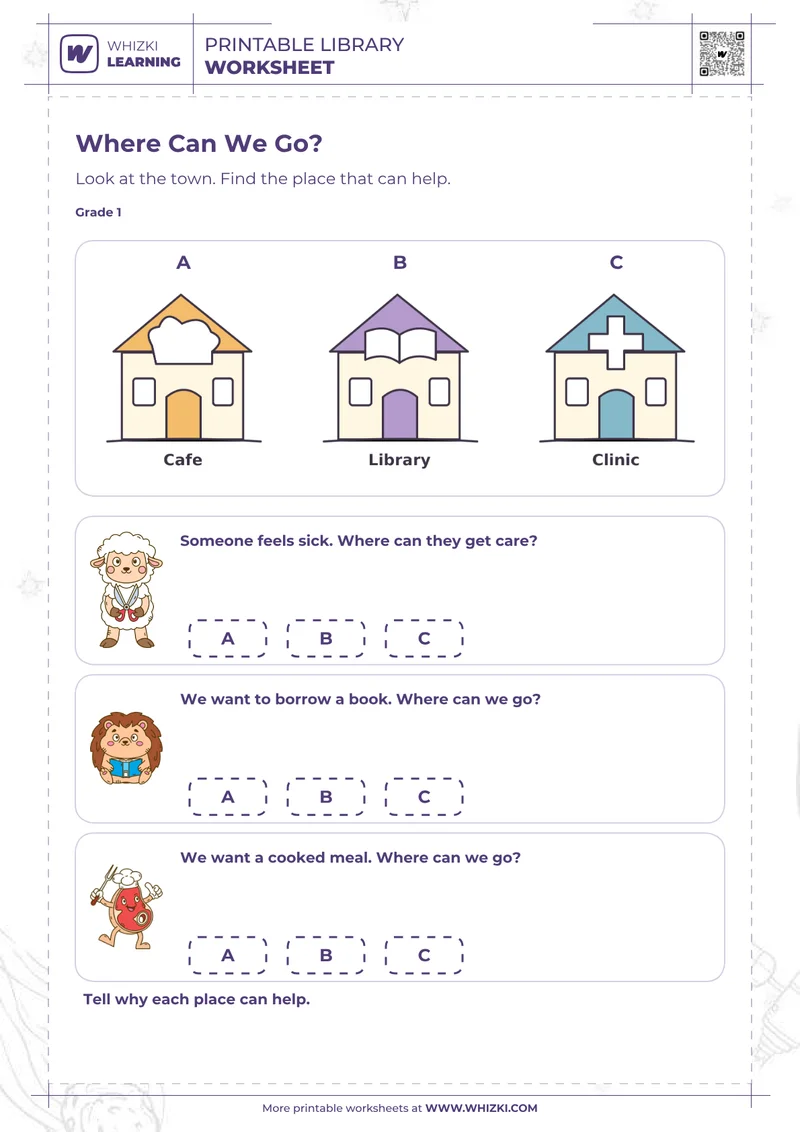
This community places worksheet shows a clinic, library, and cafe in a small pretend town. Read three everyday-need clues and choose the letter of the place that can help. The buildings are labeled A, B, and C, so read their names before using a position or letter as an answer.
On this page, A is the cafe, B is the library, C is the clinic. The clinic provides care when someone feels sick, the library lends books, and the cafe serves cooked food. The three clue answers are C for care, B for borrowing a book, and A for a cooked meal. Point to the named building and explain its use before recording the response.
Keep the discussion tied to the need in each clue. A building’s color or place on the page is not the reason it helps. An adult can read the words and explain an unfamiliar place, while the child chooses the connection. The town is an illustration for practice; local buildings may look different and offer additional services.
Explore the community helpers collection for related practice. Use the Family Learning Planner to save a suitable next activity. Work through a few examples with time to explain a choice. After checking the page, try one spoken example using a familiar place, activity, or object while keeping the same skill in focus.
Boost your child’s skills with our discounted workbooks. Engaging activities for preschool, kindergarten, and grade 1 - now at special sale prices!


Fast shipping
Secure Payment
Licensed Teachers
For the planet
Printed in the USA
Helpful guides for parents and teachers, and tips for making learning at home super fun.

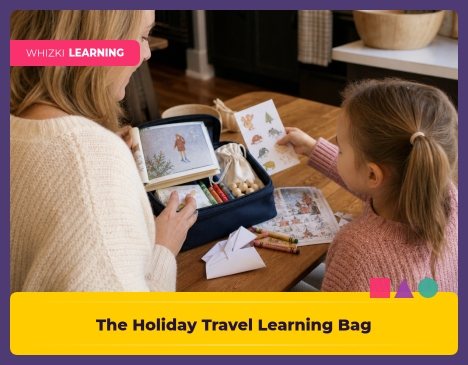
A calm six-item travel bag for ages 3-7, with one book, paper, crayons, cards, manipulatives, and a printed page for real holiday waiting.

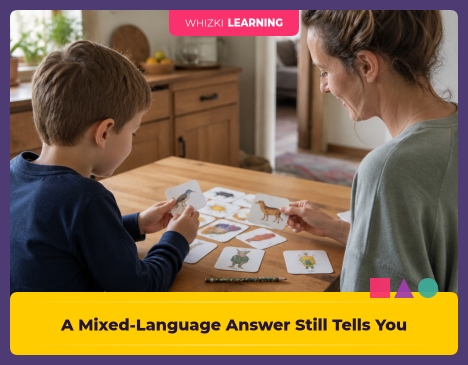
Mixed-language answers can show knowledge, vocabulary gaps, or a form still forming. Learn a warm recast routine that teaches without shaming.

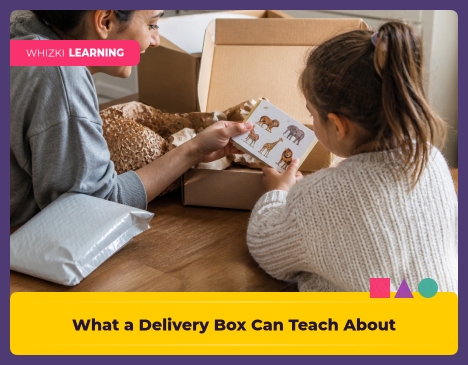
Turn a delivery box into a quick materials investigation for ages 3-7, comparing cardboard, paper, plastic, and padding through touch, water, and reuse choices.

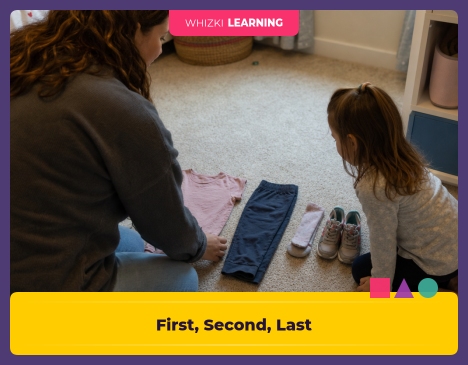
Use a three-to-five minute dressing, table-setting, or toy-line routine to teach first, second, middle, and last without turning math into a worksheet.
Get exclusive activities, expert tips, and inspiration for a more meaningful, offline family life.