Cultures and traditions → Notice family and community practices → Builds words for talking about familiar and new ways people celebrate.
Worksheet prompts → Follow simple directions → Supports careful looking, pointing, and responding during shared adult-child practice.
Preschool social studies → Compare everyday customs → Helps children describe same and different ideas during a short guided conversation.

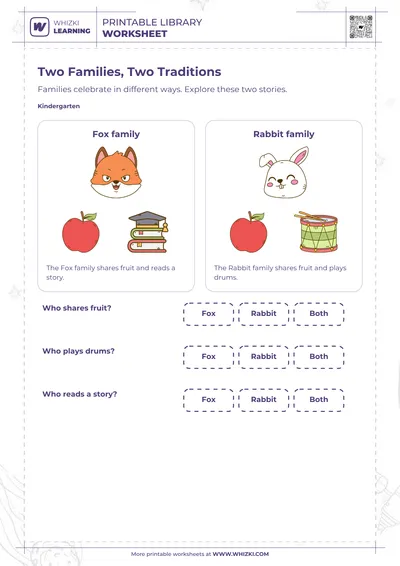
Four-year-olds often have plenty to say about their own family routines, then freeze when the word culture shows up. This printable keeps the idea small and concrete. Sit together, read each direction, and let your child respond to the cultures and traditions prompts with talking, pointing, or the simple mark the page asks for.
This page is a good fit when a preschooler can listen to a short direction and stay with one printed task for a few minutes. You do not need a long lesson first. A quick chat about what your family does for special days, meals, greetings, or getting together can help the words cultures and traditions feel less abstract.
The practice is about noticing and naming, not memorizing facts. As you move through the page, invite your child to say what seems familiar, what seems different, and what questions they have. For another short sitting on the same theme, try this preschool cultures and traditions worksheet, which keeps the social studies idea in a familiar printable format.
If attention fades, stop after a few prompts and come back later with a crayon or pencil. You can read the words aloud, model one answer, then give a quiet pause before helping. When this page feels comfortable, use the related cultures and traditions printable as a next step so the practice feels familiar without repeating the exact same page.
Boost your child’s skills with our discounted workbooks. Engaging activities for preschool, kindergarten, and grade 1 - now at special sale prices!


Fast shipping
Secure Payment
Licensed Teachers
For the planet
Printed in the USA
Helpful guides for parents and teachers, and tips for making learning at home super fun.

Help young children measure with paper clips before a ruler, using equal units, clear endpoints, and quick fixes for gaps, overlaps, and different answers.

Picture labels can build meaning, first-sound attention, or guessing habits. Use this parent-friendly decision tree to know when to cover or reveal the picture.

A vague school screening notice can leave families guessing, so start with seven plain questions about the test, timing, language, evidence, and next steps.

A field note on the May 2026 move to one shared worksheet generator API, with a simple parent preview for print consistency and handwriting comfort.
Get exclusive activities, expert tips, and inspiration for a more meaningful, offline family life.