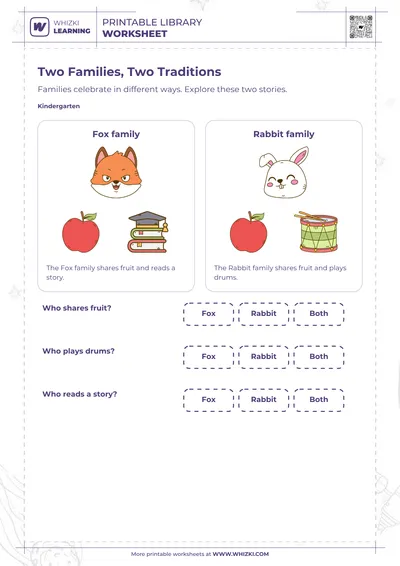
Cultures and traditions worksheet → Identify familiar customs → Children recognize that families and communities may celebrate in different meaningful ways.
Cultures and traditions worksheet → Compare daily life examples → Children describe similarities and differences without judging another family or community.
Cultures and traditions worksheet → Discuss respectful choices → Children practice kind words when talking about traditions different from their own.

The cultures and traditions worksheet is a printable kindergarten social studies page for practicing cultures and traditions in clear, child-friendly language. The worksheet helps a 6-year-old notice that families and communities may celebrate, eat, dress, speak, and gather in different meaningful ways.
At age 6, children are starting to compare home, school, holidays, and family routines with the wider world. Five-year-olds and six-year-olds can get bored fast when social studies feels too big or too abstract, so a focused worksheet gives culture and tradition talk a small, friendly shape.
Use the worksheet as a shared conversation page. Read each prompt aloud, give your child time to answer, and ask one gentle follow-up such as, “Have you seen a tradition like that?” or “What tradition does our family enjoy?” Keep the pencil work short, then let the discussion do the deeper learning.
The cultures and traditions worksheet is useful because the page keeps the skill concrete instead of asking a young child to memorize facts about faraway places. The layout supports short attention spans, respectful noticing, and real parent-child talk, which makes the printable feel more like a conversation than a quiz.
Boost your child’s skills with our discounted workbooks. Engaging activities for preschool, kindergarten, and grade 1 - now at special sale prices!


Fast shipping
Secure Payment
Licensed Teachers
For the planet
Printed in the USA
Helpful guides for parents and teachers, and tips for making learning at home super fun.

Picture labels can build meaning, first-sound attention, or guessing habits. Use this parent-friendly decision tree to know when to cover or reveal the picture.

A vague school screening notice can leave families guessing, so start with seven plain questions about the test, timing, language, evidence, and next steps.

A field note on the May 2026 move to one shared worksheet generator API, with a simple parent preview for print consistency and handwriting comfort.

A seven-minute apple observation helps children compare color, stem, skin, weight, smell, and a cut surface, then draw what children noticed before any craft begins.
Get exclusive activities, expert tips, and inspiration for a more meaningful, offline family life.