Learning Outcomes
First graders → compare two numbers using greater, smaller, or equal to → gain accuracy during early addition and subtraction reasoning.
Students learning addition and subtraction → spot number relationships on the page → reduce rushed guessing by checking which amount is bigger.
Children → practice number comparison sentences → improve clarity when explaining why numbers are greater or equal.
Numbers & Counting
123
Learn numbers, counting, and early number sense through simple examples
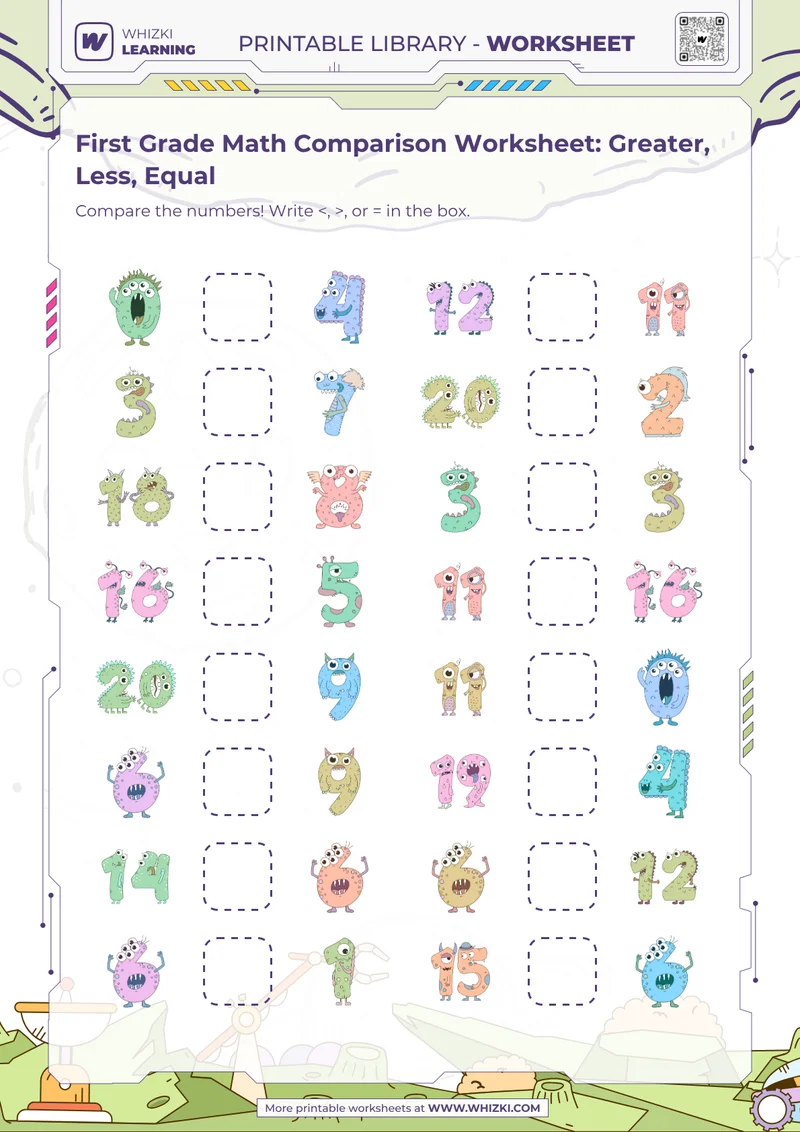
First Grade Math Comparison Worksheet: Greater, Less, Equal
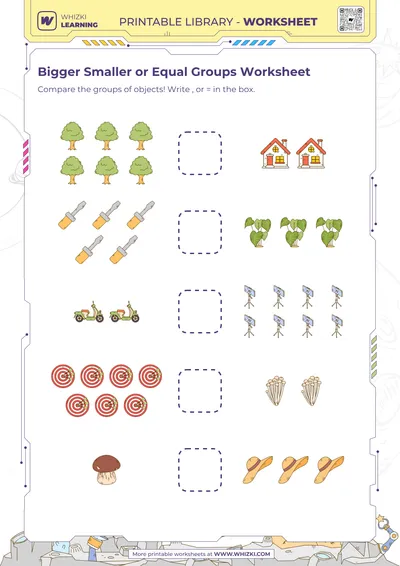
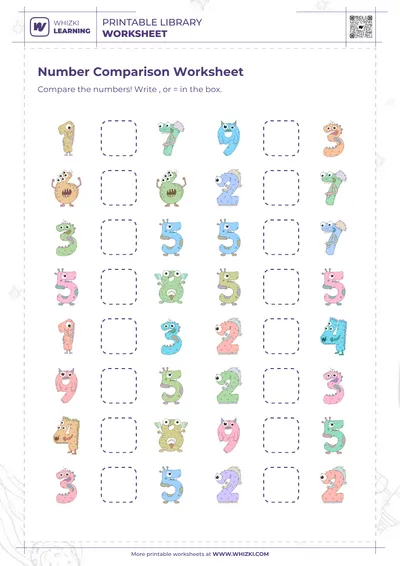
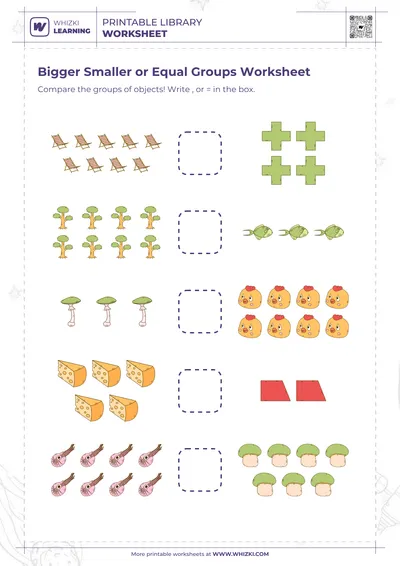
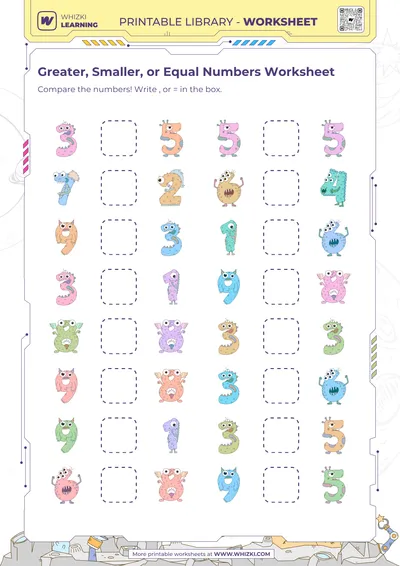
This worksheet asks children to compare two numbers and decide which one is greater, smaller, or equal to. It supports early addition and subtraction thinking by building the habit of checking relationships between amounts.
At this age, kids can get bored fast with counting, and many parents notice kids start guessing instead of comparing. When that happens, a simple “bigger or same?” routine helps children slow down without making it feel like a long lesson.
Pick the first problem and cover it with your finger. Ask your child to point to the larger number, then say a full sentence together: “The first number is greater than the second number,” or “They are equal.” Use small counters, pennies, or blocks for one or two problems so the choice feels real.
This page is useful because every question uses the same clear choices, so practice stays focused on greater, smaller, and equal to. It is also different from a generic printable because it trains number comparison skills children can reuse right away in addition and subtraction word problems.
Limited Time Sale
Kids’ Workbooks!
Boost your child’s skills with our discounted workbooks. Engaging activities for preschool, kindergarten, and grade 1 - now at special sale prices!


Fast shipping
Secure Payment
Licensed Teachers
For the planet
Printed in the USA
Find fresh ideas
To help your little learners grow!
Helpful guides for parents and teachers, and tips for making learning at home super fun.

A practical printable roundup for cutting practice preschool, ordered by scissor-skill stage with what to watch for at each step.
Sunny Hedge
Most children start with supervised snipping at 2 to 3, short lines around 4, and simple shapes around 5 to 6. Here is a calm way to begin.
Sunny Hedge
A parent-friendly guide to number bonds to 10, with a simple chart, hands-on teaching steps, and printable practice for ages 3 to 7.
Sunny Hedge
Most 5-year-olds do not need to read yet. Learn what kindergarten children are usually working on, what counts as progress, and when to ask the teacher for input.
Sunny HedgeJoin the Screen-Free Movement.
Get exclusive activities, expert tips, and inspiration for a more meaningful, offline family life.