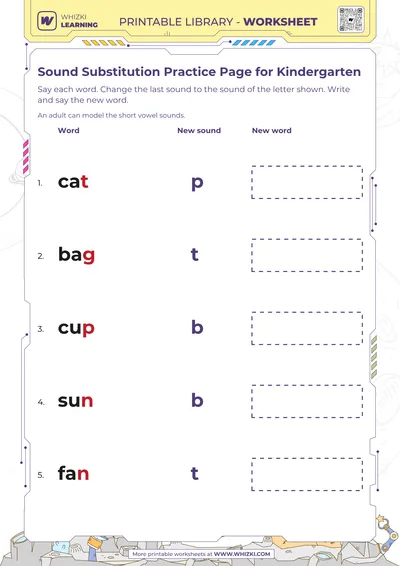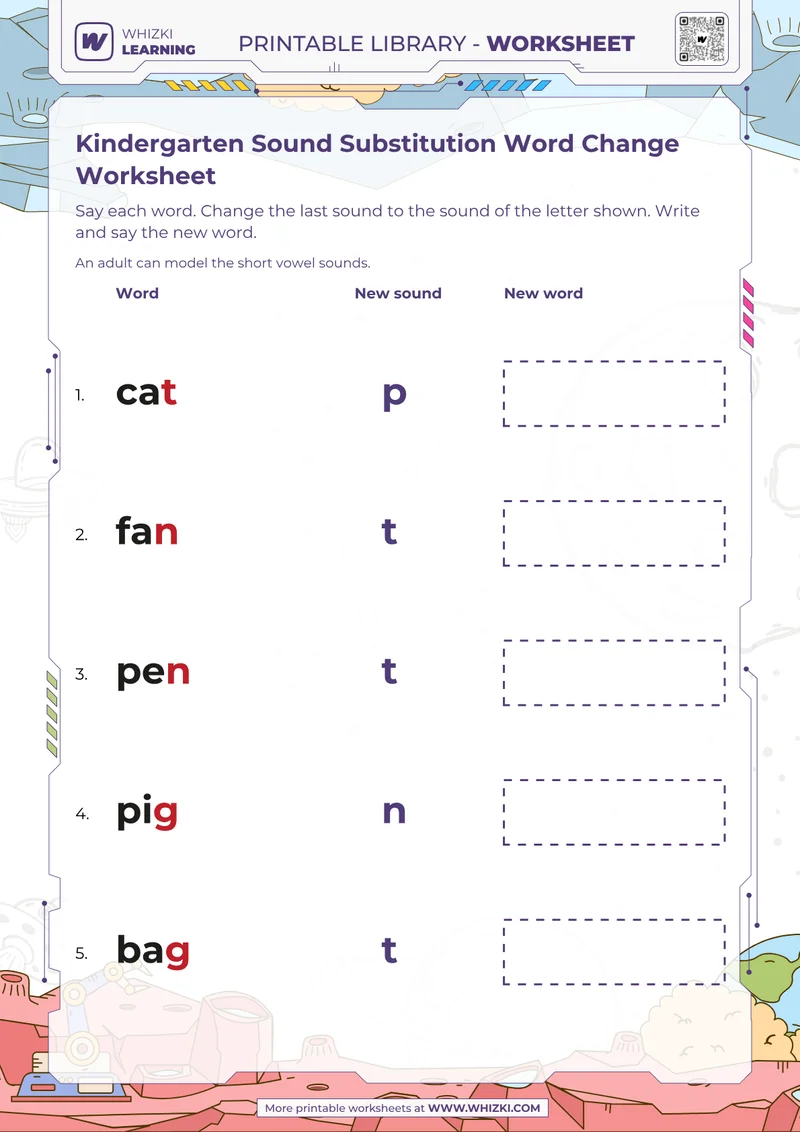


Hear and replace the last sound in short spoken words, starting with cat and cap.
Connect each replacement-letter cue with its sound in the target word while keeping the other sounds unchanged.
Blend and say the new word, then write or copy its spelling and compare it with the starting word.

Say a short word, change one sound, and listen to the new word. This last-sound substitution worksheet pairs written starting words with replacement-letter cues and spaces for new words. The five changes are cat to cap, fan to fat, pen to pet, pig to pin, bag to bat. Use the page with an adult who can model the sounds and help with writing, keeping each spoken change clear before moving to the next row.
Begin with cat. Read it aloud, then point to the letter p in the cue column. Model the sound that letter represents in cap, replace the last sound, and blend the new word. Say cat and cap again so your child can compare them. Write cap in the answer space after the spoken change makes sense.
Try fan to fat next. Keep the other sounds in place while changing the last one. If the task feels difficult, use three counters to represent the spoken sounds and replace only the counter in that position. The oral version practices phonemic awareness. Connecting those sounds with the printed letters adds phonics practice; an adult can handle the writing while the child concentrates on listening and speaking.
Work through one or two rows, then return to the others when your child is ready. Read a completed pair and ask what changed, giving a model again when needed. The Phonics and Sounds set offers related letter-and-sound activities. For a later writing task, explore the Spelling and Word Building set. Choose the next exercise according to the support your child needs with sounds, letters, or spelling.
Boost your child’s skills with our discounted workbooks. Engaging activities for preschool, kindergarten, and grade 1 - now at special sale prices!


Fast shipping
Secure Payment
Licensed Teachers
For the planet
Printed in the USA
Helpful guides for parents and teachers, and tips for making learning at home super fun.

Use one familiar snack to build science talk and vocabulary without pressure to taste. This kitchen-table investigation honors allergies, texture needs, and child choice.

Help young children measure with paper clips before a ruler, using equal units, clear endpoints, and quick fixes for gaps, overlaps, and different answers.

Picture labels can build meaning, first-sound attention, or guessing habits. Use this parent-friendly decision tree to know when to cover or reveal the picture.

A vague school screening notice can leave families guessing, so start with seven plain questions about the test, timing, language, evidence, and next steps.
Get exclusive activities, expert tips, and inspiration for a more meaningful, offline family life.