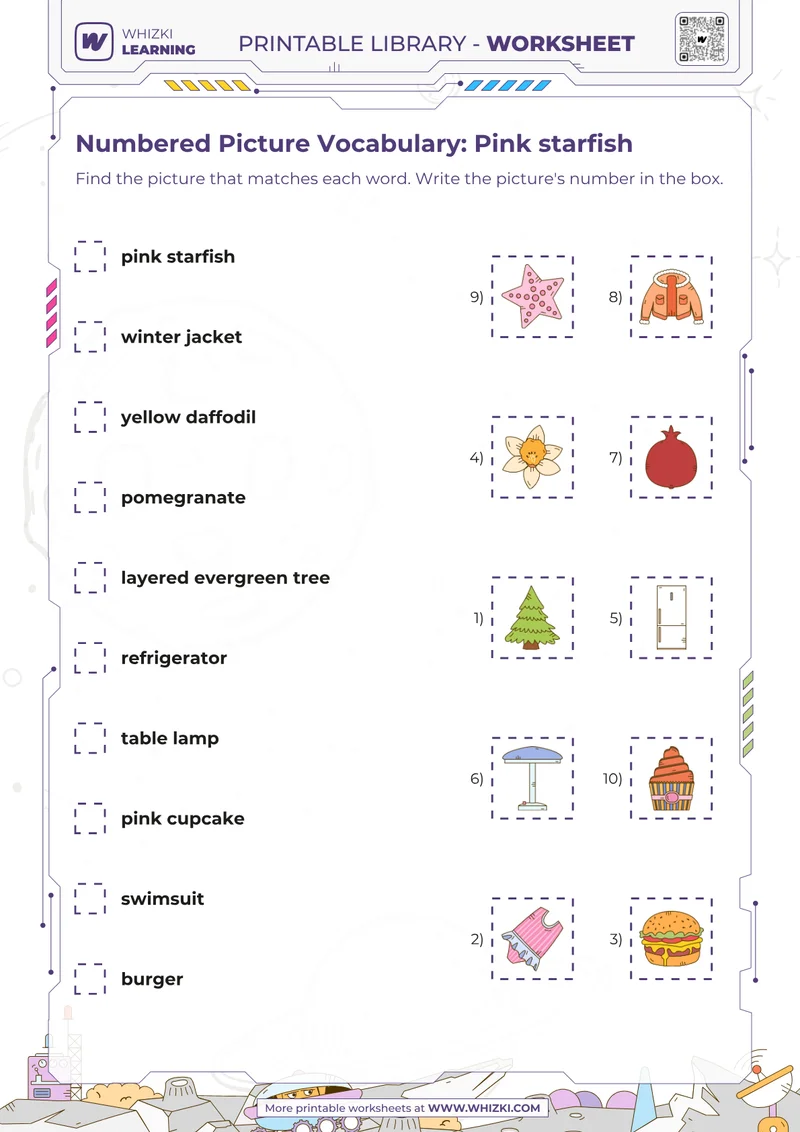
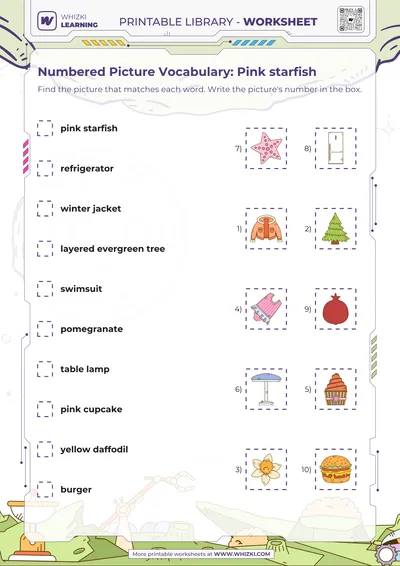
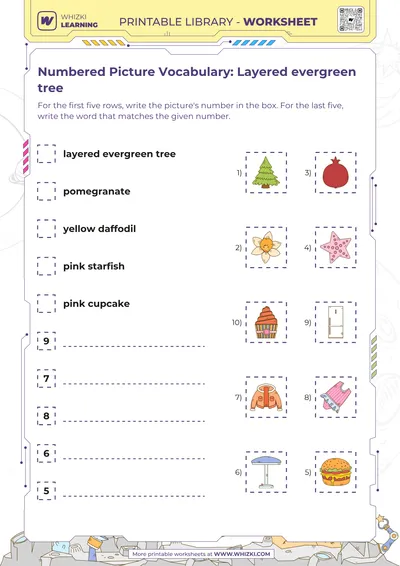
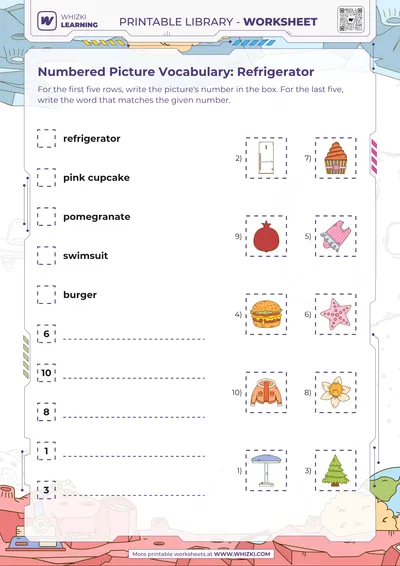
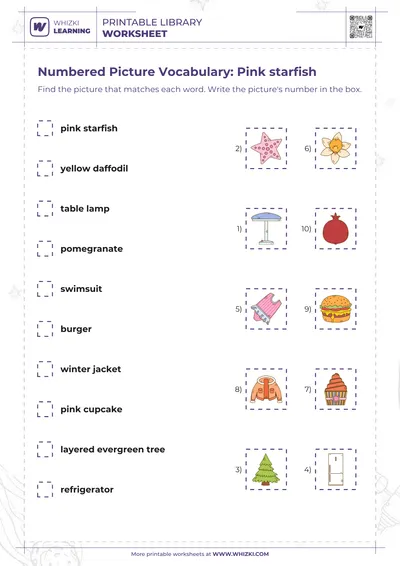
This numbered picture vocabulary worksheet connects ten written names with illustrated objects. Read ten labels and write the matching picture number in each answer box. The selection includes pink starfish, winter jacket, yellow daffodil. Name unfamiliar pictures together before asking the child to read or write their labels. The activity uses concrete picture vocabulary; it is not a designated list of high-frequency sight words.
Begin with “pink starfish” and find its illustration, labeled 9, in the picture column. Write 9 beside the word. The numbers identify pictures rather than counting groups of objects. Continue through the remaining labels, searching the whole picture column each time. A picture’s vertical position beside a word does not establish the match.
Read a label aloud when the spelling is unfamiliar and connect it with something visible in the picture. Let the child make the choice after receiving that vocabulary support. Check the numeral as well as the object: recognizing a picture and copying its identifying number are two separate steps. This work combines print with picture meaning. It should not be described as an oral phonemic-awareness exercise.
Explore the Early Words: Reading and Spelling pack for related supported reading formats. Save a suitable next page in the Family Learning Planner. Begin with a few prompts and return to the rest later if needed. After checking an answer, say a short sentence using that picture’s name. Keep the sentence connected to the object so the written label has a clear everyday meaning.