Learning Outcomes
Maze adventures → Path tracking → Children follow connected routes from a named character to a goal with fewer wrong turns.
Library characters → Visual attention → Children scan pictures, notice path openings, and stay focused through easy and challenge mazes.
Colored paths → Problem solving → Children plan next steps, try again after dead ends, and explain route choices aloud.

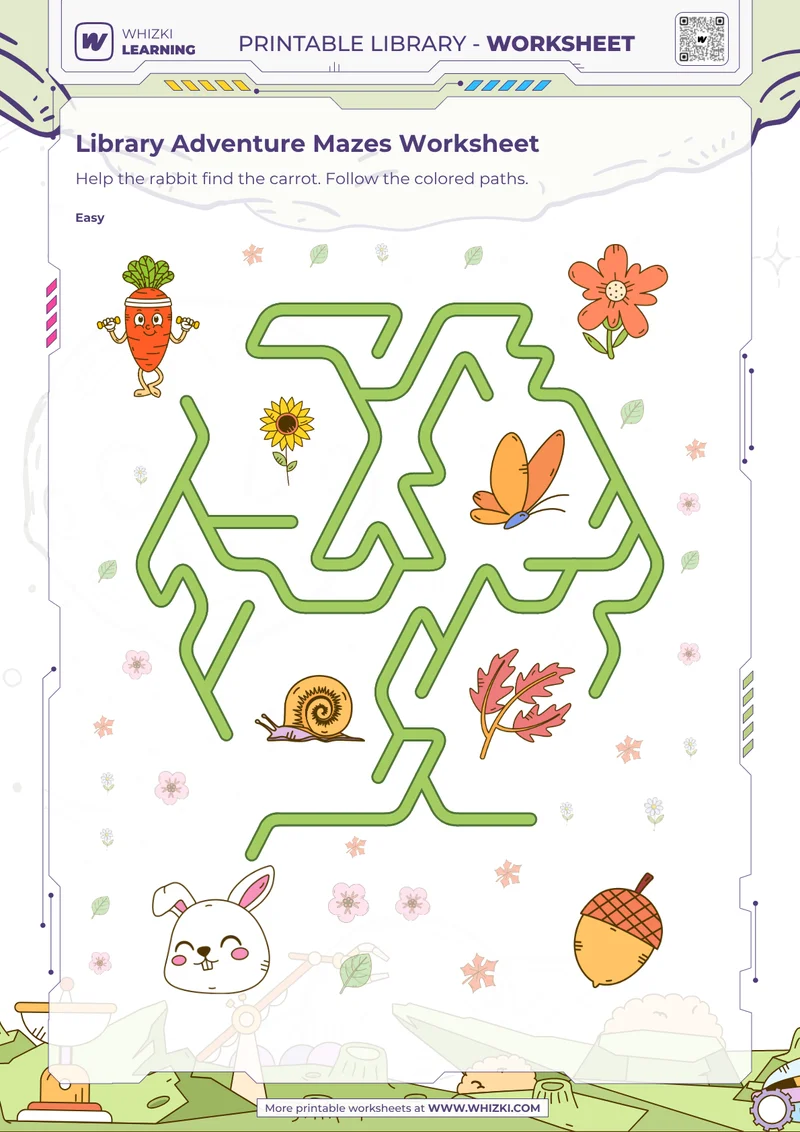
Library Adventure Mazes Worksheet
Kids can spot fun pictures before kids can always plan a route. The maze adventures worksheet asks children to follow connected paths from a named library character to a pictured goal in circular space, triangular castle, and honeycomb garden scenes. The page practices mazes and problem solving with broad colored paths made for kindergarten hands.
Five-year-olds get bored fast when a puzzle looks too crowded or the lines feel hard to follow. Maze work helps children slow down, look ahead, and try a new route when a path does not work. Those small choices build early logic, visual tracking, and confidence with kindergarten puzzle tasks.
Sit next to the child and read the character name first. Ask the child to point to the destination picture, then trace the path with a finger before using a crayon or pencil. For an extra talking step, pause at a turn and ask, “Which path stays connected to the goal?”
The worksheet feels different from a plain line maze because each scene gives children a reason to keep going. The circular space, triangular castle, and honeycomb garden pages add variety, while the easy and challenge levels let a parent or teacher match the puzzle to the child’s attention that day.
Limited-time savings
on Whizki workbooks.
Boost your child’s skills with our discounted workbooks. Engaging activities for preschool, kindergarten, and grade 1 - now at special sale prices!


Fast shipping
Secure Payment
Licensed Teachers
For the planet
Printed in the USA
Find fresh ideas
To help your little learners grow!
Helpful guides for parents and teachers, and tips for making learning at home super fun.

A seven-minute apple observation helps children compare color, stem, skin, weight, smell, and a cut surface, then draw what children noticed before any craft begins.
Sunny Hedge
A field note on why Ukrainian-English workbook pages need fresh design choices for letters, examples, space, and language-specific skills.
Sunny Hedge
A fast weather window journal helps ages 3-7 notice sky and temperature feeling with simple symbols, compare a few days, and learn observation versus forecast.
Sunny Hedge
A five-minute snack sort turns crackers, berries, or allergy-friendly objects into early data practice as children sort, count, compare, and clean up.
Sunny HedgeJoin the Screen-Free Movement.
Get exclusive activities, expert tips, and inspiration for a more meaningful, offline family life.