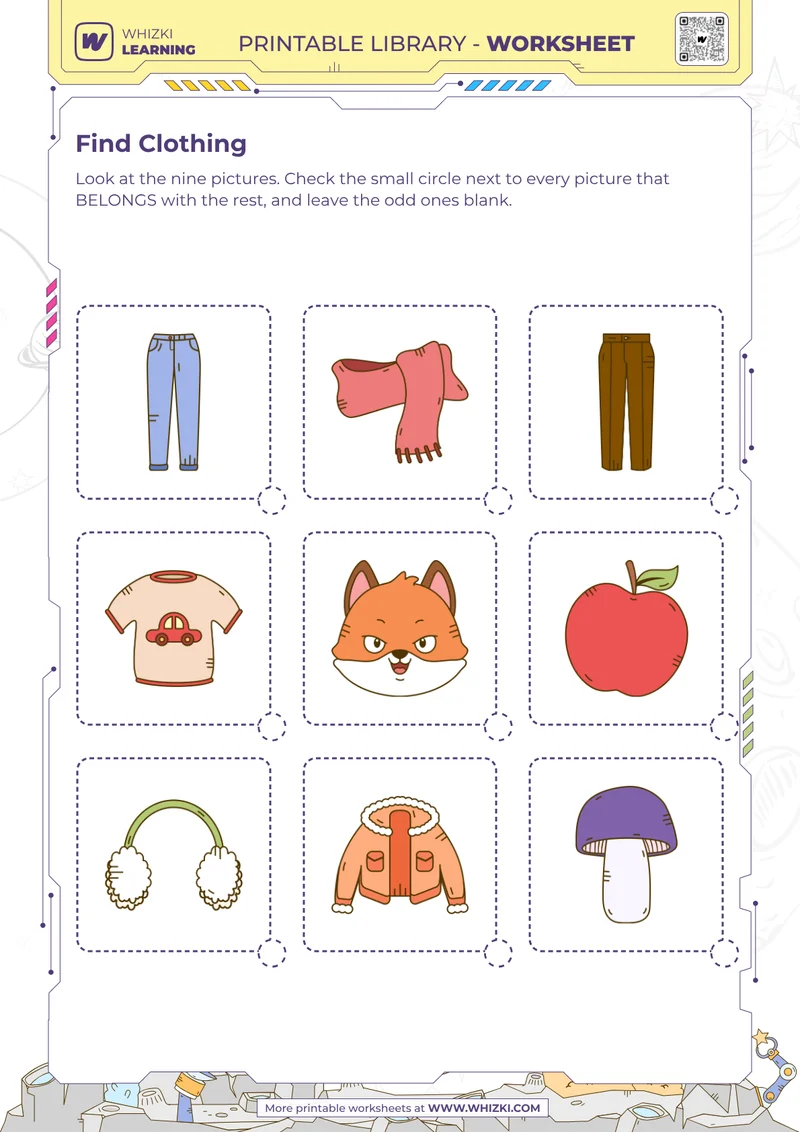
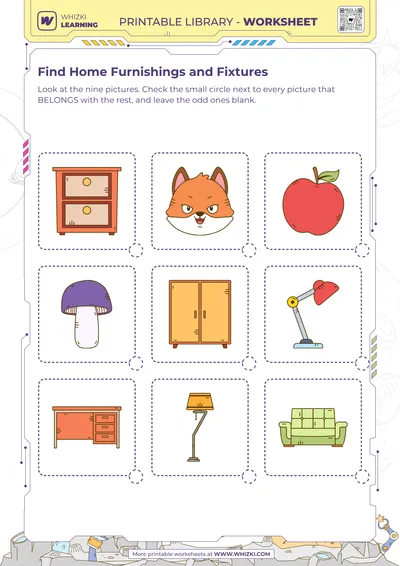
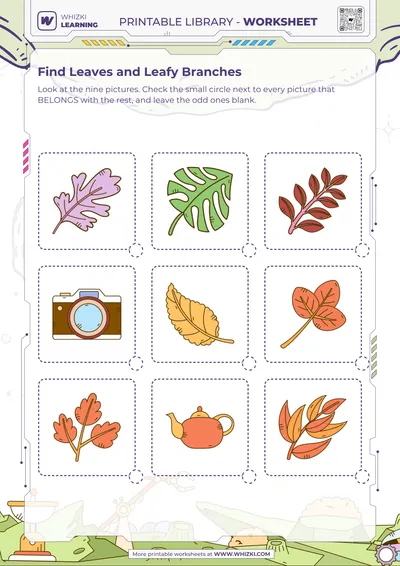
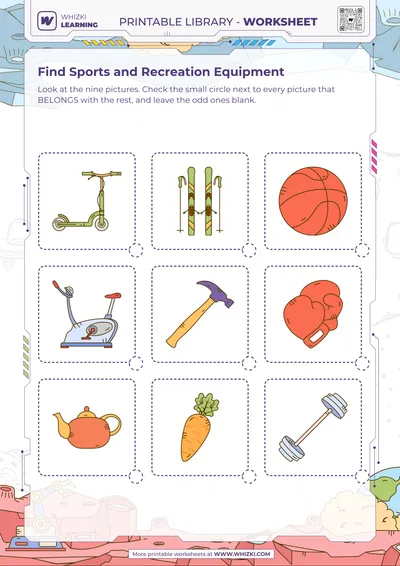
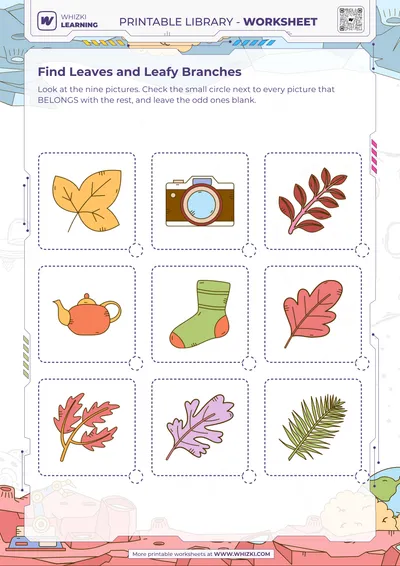
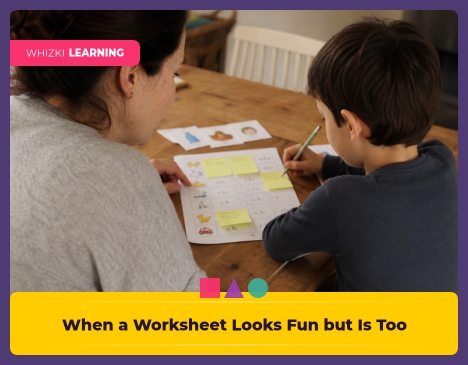
This picture grouping worksheet asks children to find clothing among nine illustrated cards. Check the small circle beside each picture that belongs to that group, and leave the other circles blank. There are 6 matching pictures and 3 distractors, so the task is to check the whole grid rather than locate just one odd picture. Read the group name aloud before beginning.
The pictures to mark are jeans, scarf, pants, graphic T-shirt, earmuffs, winter jacket. Leave fox, apple, purple mushroom unmarked. Name an unfamiliar picture and briefly explain what it shows before asking for a decision. Compare each card with the group named in the title. An unrelated feature such as a shared color does not make two objects members of the same category for this activity.
Point to one clear group member and explain why it belongs before looking at the other cards. Work one card at a time, allowing a spoken choice before a pencil mark. Listen to a different association the child suggests, then return to the named group to check the intended answer.
The Picture Sorting and Logic Pack includes more grouping and matching formats. Save a suitable next activity in the Family Learning Planner. After the page, revisit one marked card and one blank card, asking for a reason for each choice. Invite your child to name another familiar member of the same group. Stop after a few clearly explained decisions if the vocabulary or comparison is tiring.