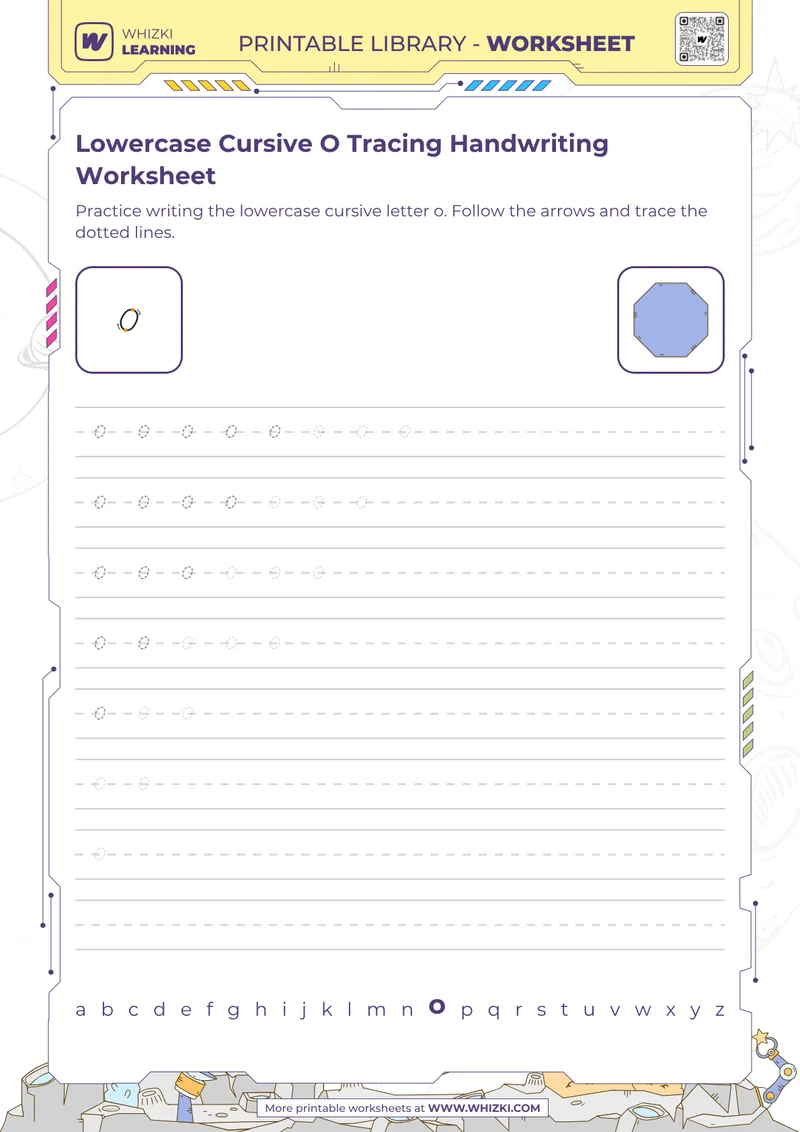
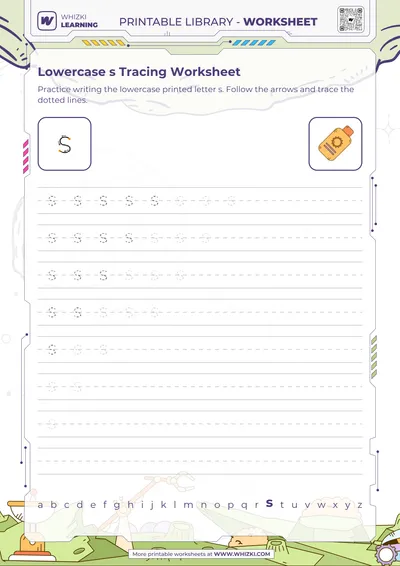
Recognizing a letter and forming it with a pencil can take different amounts of practice. This lowercase cursive o tracing worksheet gives your child a large formation model, direction cues, and rows of dotted letters to follow. The shape picture supplies the page’s visual theme. Use it for a first-grade handwriting lesson, a small-group writing center, or a short session at home when your child is ready to follow a letter path.
Look closely at the entry stroke, main letter shape, and finishing stroke shown in the cursive model. Follow this model’s connecting movement at a comfortable pace, returning to the larger example whenever a turn is unclear. The practice on this page concentrates on one letter; joining it to another letter can be a separate next step. Begin with a few letters and leave time to look at each attempt.
An adult can name the letter, discuss the shape picture, trace its path with a finger, and then demonstrate it with a pencil. The handwriting task practices the written shape of o; a brief conversation about a familiar word can accompany it. When introducing a sound, choose a word whose spelling and pronunciation you can explain and distinguish the letter’s name from the sound it represents in that word. Keep the main pencil task focused on the printed model.
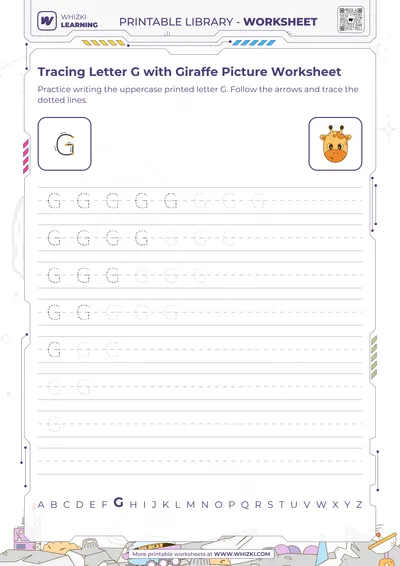
The letter O guide provides a related reference for discussion. Choose another page from the handwriting and letter formation worksheets when your child is ready for a different model. For support, draw a larger version on separate paper and practice one difficult turn together. Later, invite an independent attempt and compare it with the model. Stop while pencil control is still comfortable and return to unused rows another day.