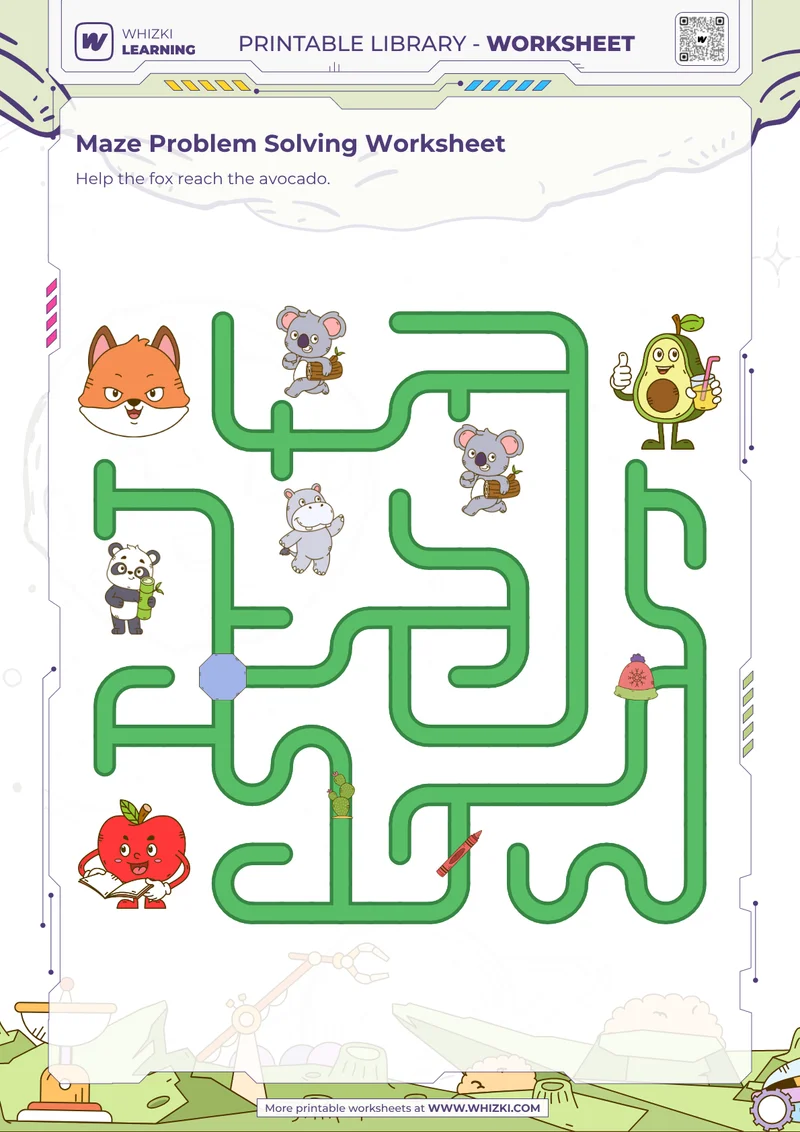
Help the fox reach the avocado by following a connected path. This picture maze worksheet gives your child a clear starting character and a named destination, with branches to inspect along the way. Read the direction at the top to identify which pictured destination to seek. Begin together so your child can point to both ends before drawing a route.
Start at the fox and trace a possible route with a finger. At a junction, pause and look ahead before choosing a branch. Stay on the connected path rather than jumping across the spaces between routes. If a branch stops or leads away from the avocado, return to the last junction and try another direction. An adult can help locate that decision point while leaving the next choice to the child.
After a finger-first attempt, follow the chosen route with a pencil and check the connection at each turn. Other pictured objects can appear around the maze, but the direction names the destination to reach. Keep the avocado in mind while comparing branches. The useful practice is explaining a choice and changing it when the route does not work, with adult support for following a busy part of the page.
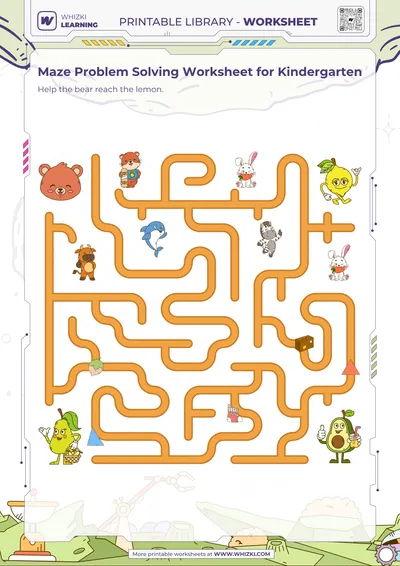
Explore the Maze Adventures set for related path-finding activities. You can make room for another short session with the Family Learning Planner. Pause at a clear junction if attention or pencil control starts to fade, then return from that point later. After reaching the destination, ask your child to show one place where a decision mattered and describe how they checked which way to go.