

Identify the last sound in a short spoken word, using adult modeling before responding to its replacement cue.
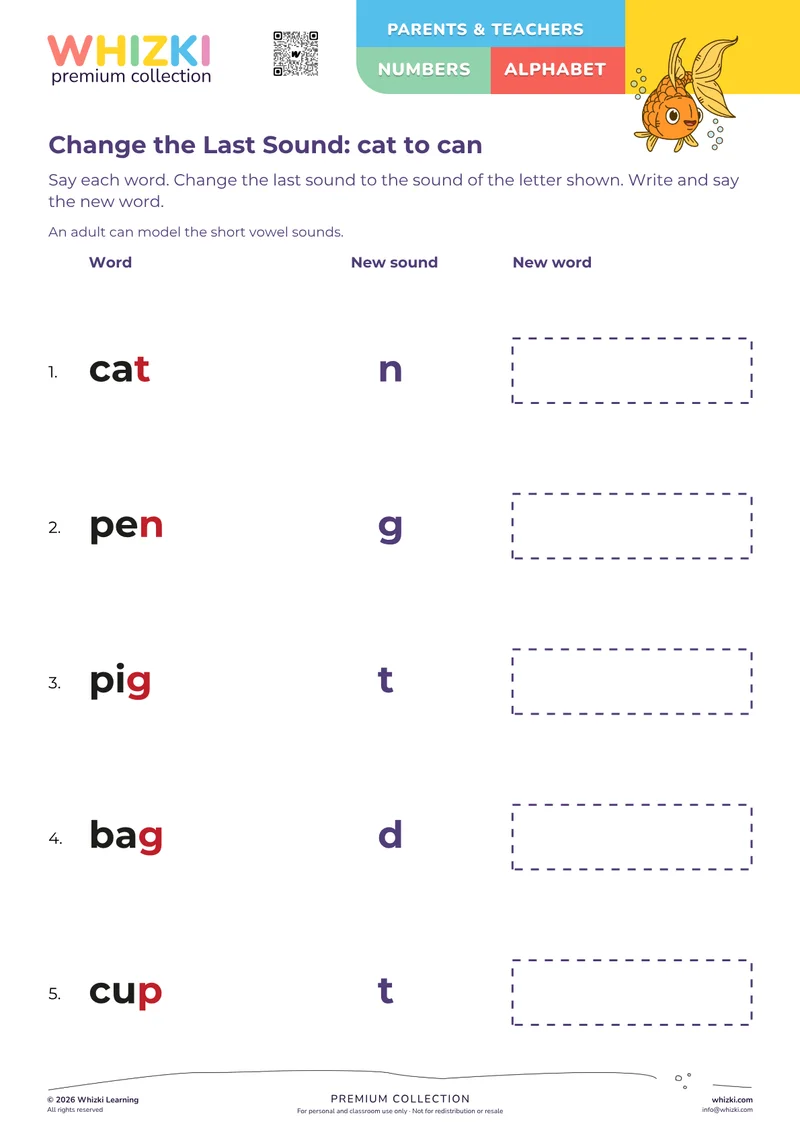
Substitute the cued sound to make a new word while keeping the other sounds in the same order.
Connect the spoken sound change with a changed letter in the written word, then read the result to check it.

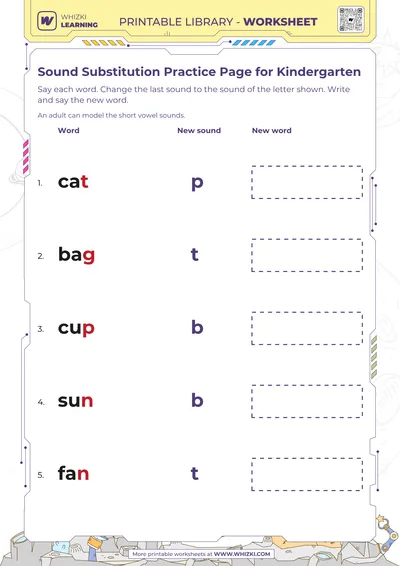
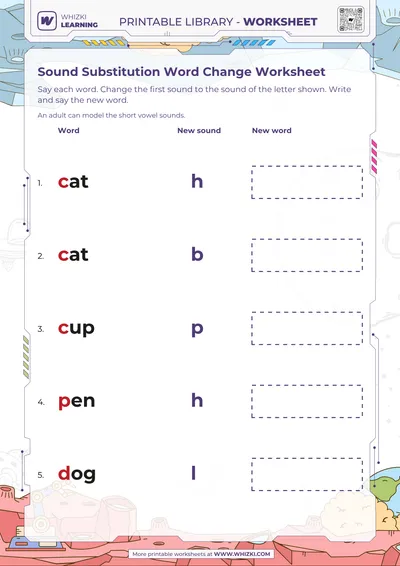
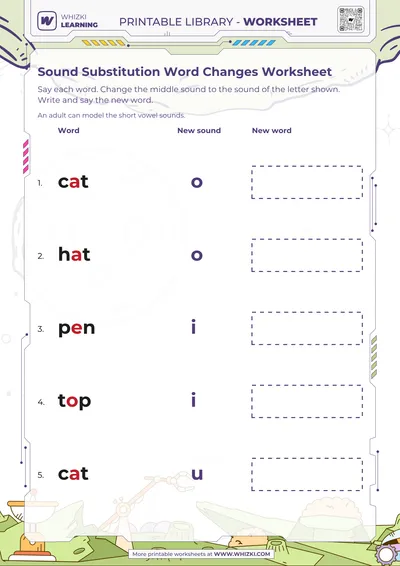
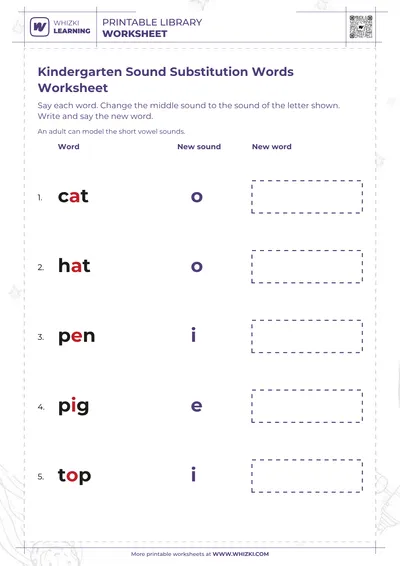
This last-sound substitution worksheet uses five short words and a printed replacement-letter cue for each one. Children say the starting word, change its last sound, and write the new word in the answer box. The activity connects a small spoken change with the corresponding change in the word's spelling.
Begin with the example cat. Read the cue n, say its sound, and model how that sound changes the word to can. Point to the other letters that stay the same. The selected pairs use short-vowel spellings and a single changed sound; work through the spoken words before expecting a child to write an answer independently.
An adult can read each starting word and model a sound without adding an extra vowel to it. Say the result together and discuss its meaning if the new word is unfamiliar. A child who can hear the change but needs spelling help may dictate an answer or copy a model. Reading the finished word provides a useful check that the intended sound was changed in the correct position.
Find related practice in the Phonics and Sounds Pack, or try the Spelling and Word Building Pack for another way to work with written words. You can also try one pair aloud with the paper covered. That separate oral version focuses on hearing and changing sounds, while the printed page adds letter cues and writing.
Boost your child’s skills with our discounted workbooks. Engaging activities for preschool, kindergarten, and grade 1 - now at special sale prices!


Fast shipping
Secure Payment
Licensed Teachers
For the planet
Printed in the USA
Helpful guides for parents and teachers, and tips for making learning at home super fun.

Use a grocery receipt for a short, screen-free letter hunt that compares uppercase and lowercase, spots repeated words, and stops before print feels tiring.

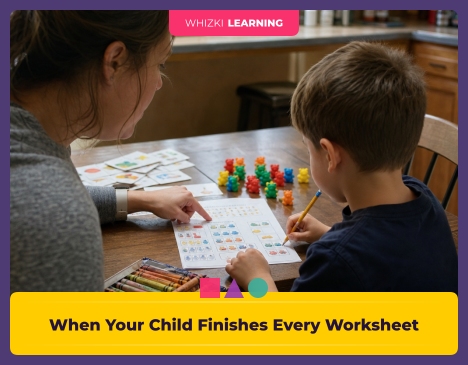
A practical decision tree for checking fast worksheet work, changing the response style, and deciding whether a harder page actually helps ages 3 to 7.

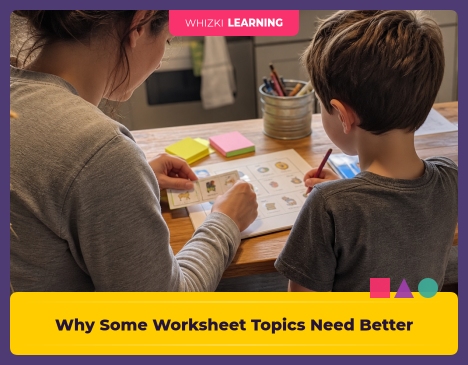
A field note on May audit gaps in early learning worksheets, with a simple home check for spotting when clearer artwork matters more than extra directions.

Teaching a child to read often creates immense anxiety for parents, leading to frustrating flashcard memorization. This comprehensive guide details a proven, Montessori-inspired phonics method that prioritizes letter sounds over letter names. Learn how screen-free, hands-on learning activities build essential phonemic awareness and prepare preschoolers for fluent reading without academic pressure.
Get exclusive activities, expert tips, and inspiration for a more meaningful, offline family life.