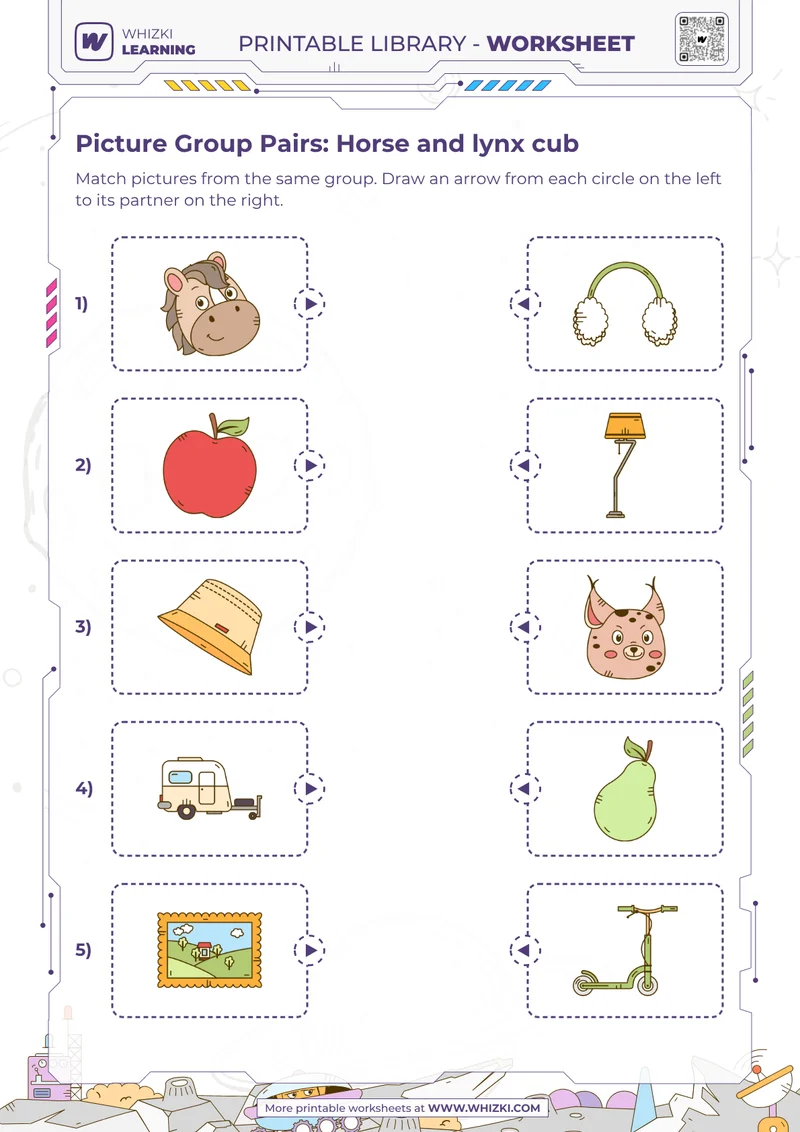
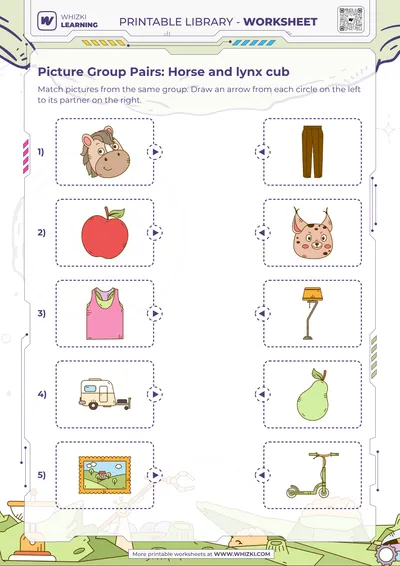
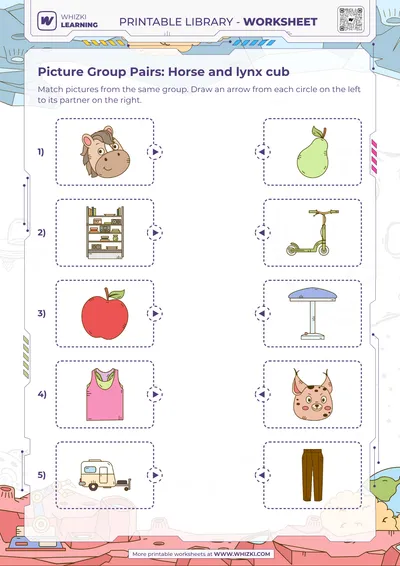
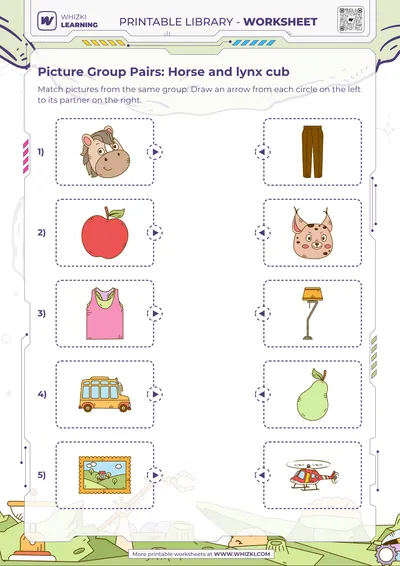
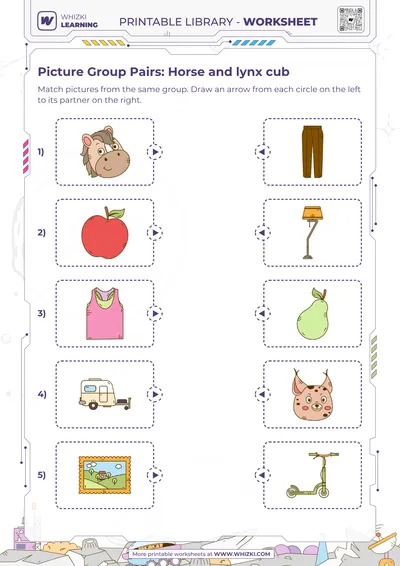
This picture category matching worksheet shows ten illustrations in two columns. Each picture on the left has one partner on the right from the same everyday group. The five groups are animals, fruits, clothing, vehicles, and home furnishings. Draw a line between each pair’s circles after deciding what the two pictures have in common. The pictures within a pair are different objects, so look for a shared category instead of an identical drawing.
The horse and lynx cub belong together as animals. The apple and pear belong together as fruits. The bucket hat and earmuffs belong together as clothing. The camper and scooter belong together as vehicles. The painting and floor lamp belong together as home furnishings. Use these pairs as an adult checking guide. Name a picture that is unfamiliar before asking the child to choose its partner, and explain its ordinary use when that helps establish the group.
Start with one picture in the left column, then compare all five choices on the right. Point to the proposed pair and say a reason before drawing its line. Continue until each picture has one partner. Check a connection by following it from one endpoint to the other; crossing lines can still connect correct pairs. Keep the same five group meanings throughout the page, even when two unrelated objects share a color.
Explore the Picture Sorting and Logic Pack for more category choices. Save a suitable next page in the Family Learning Planner. After checking the five pairs, invite your child to name one more familiar member of a group. Explain why it fits before introducing another category. A short conversation about a single pair can be enough when the vocabulary or line tracking is new.