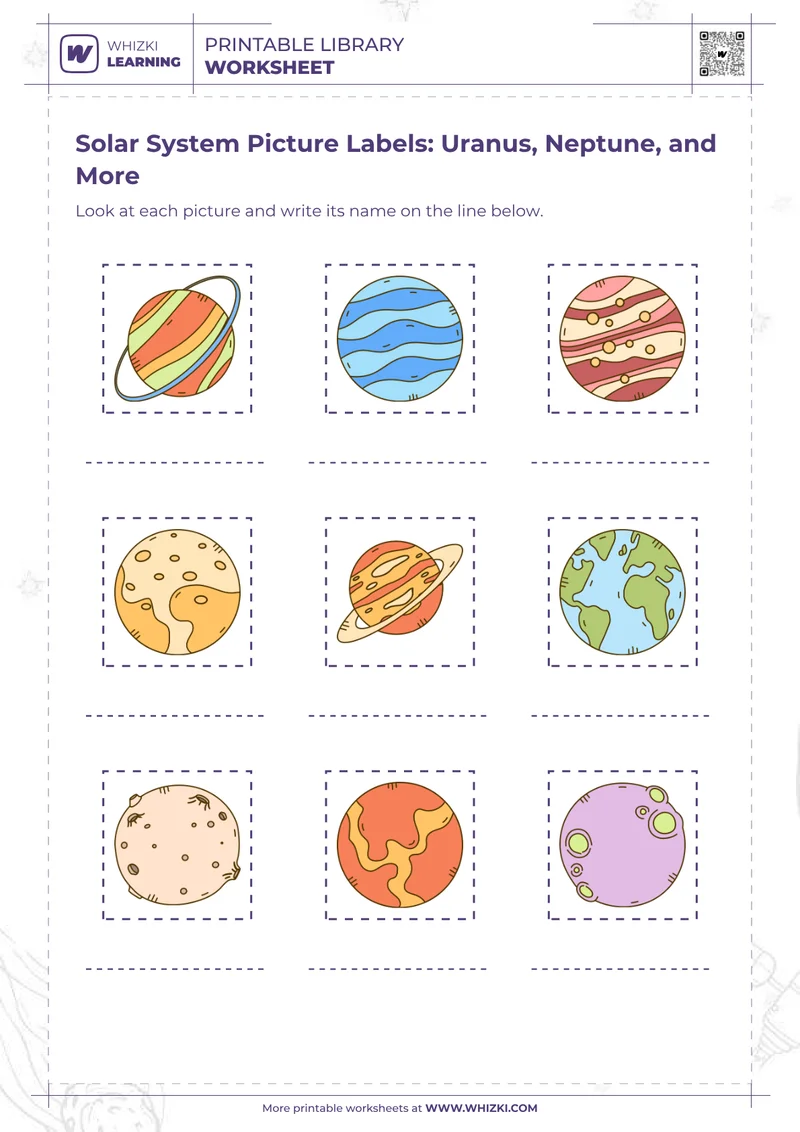
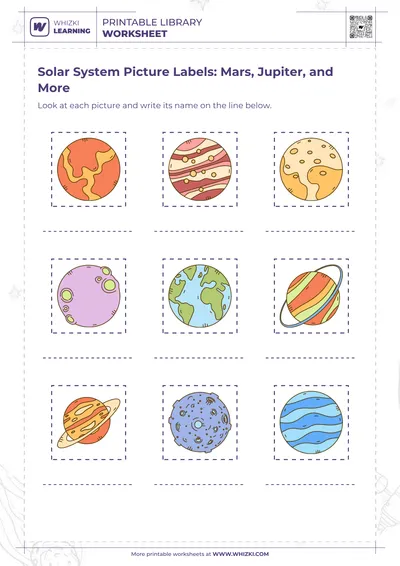
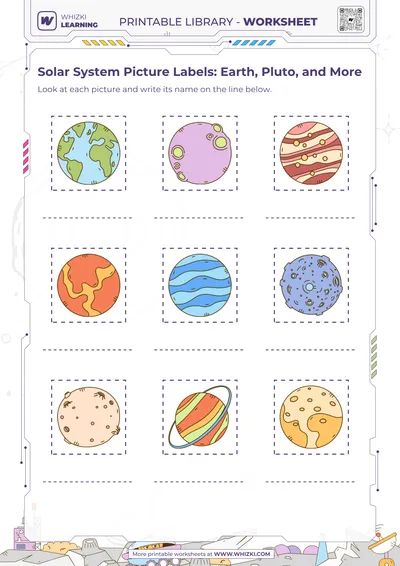
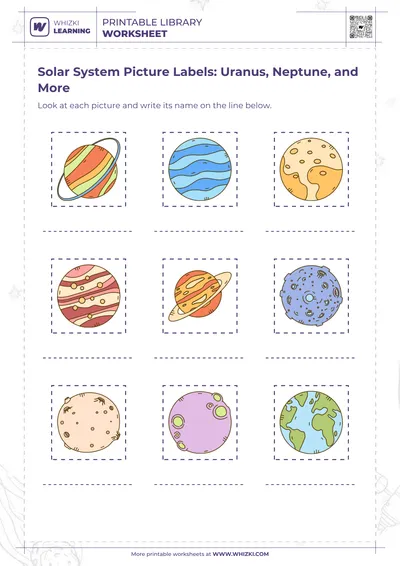
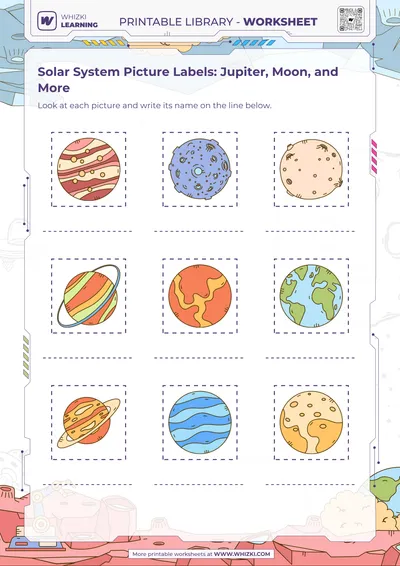
This solar system picture labeling worksheet gives children nine illustrated objects to name, with a writing line beneath each picture. The page includes Uranus, Neptune, Jupiter, Venus, Saturn, Earth, Mercury, Mars, Pluto. Introduce the names together before asking your child to write them. The activity combines space vocabulary with supported labeling; it does not include a printed word bank, matching column, or model of the bodies’ positions in space.
Start with Uranus in the first card and Neptune in the next. Say each name clearly, then write it on separate paper for your child to copy onto the line. Move across each row from left to right. Check the picture and its line together before moving on, and help with longer names. An adult can record a spoken answer when writing the whole word would distract from learning the name.
Our solar system has eight planets. The Moon is Earth’s natural satellite, and Pluto is a dwarf planet; a selection of nine pictures is not a list of nine planets. These colorful drawings are simplified illustrations, not photographs or a scale comparison. Use a labeled reference alongside the page when a picture is unfamiliar. Do not expect a child to identify every body from its color alone, and avoid treating the equal-sized picture boxes as evidence of equal real sizes.
Explore related vocabulary in the Earth and space worksheet collection. Add a suitable next activity to the Family Learning Planner when it fits your week. After labeling a few cards, invite your child to choose one body and ask a question about it. Look up the answer together in an age-appropriate illustrated reference, then return to the page to practice that name again.