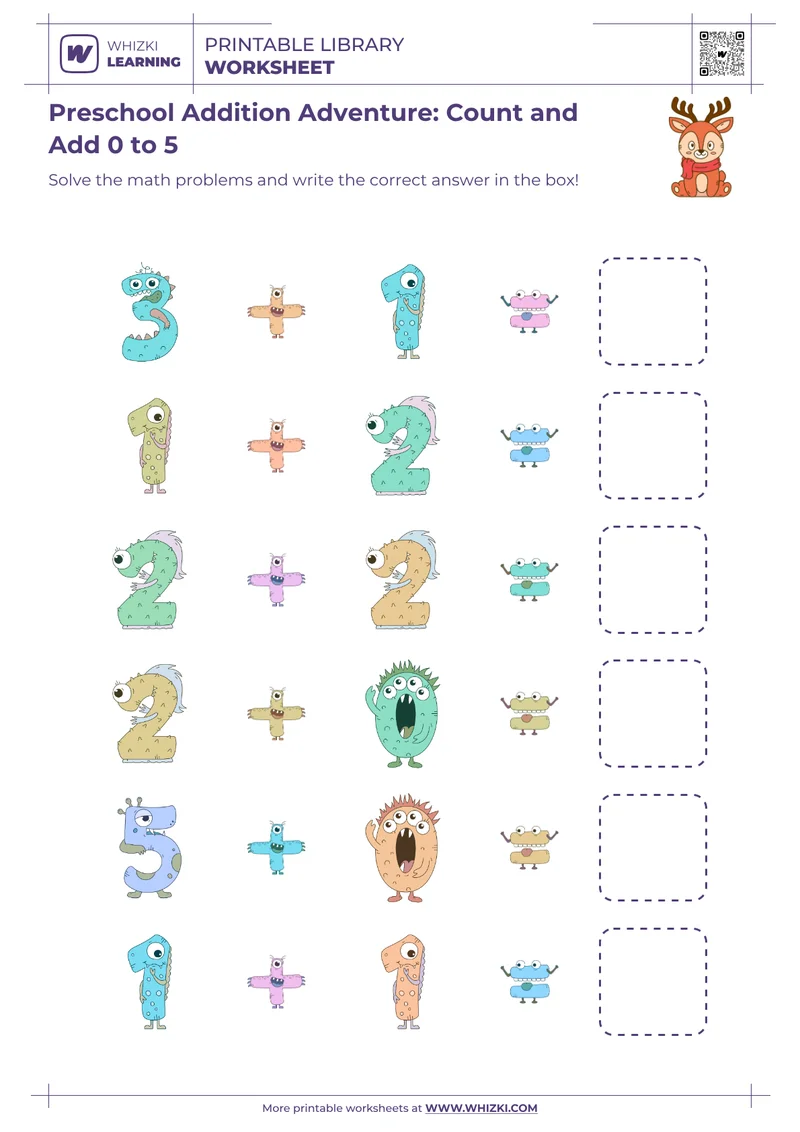
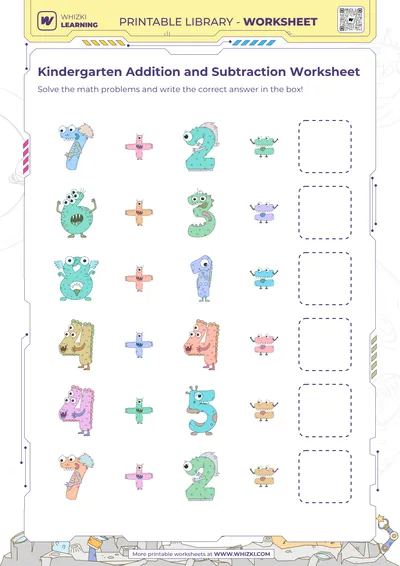
Children can practice explaining an answer as they work through this addition worksheet. The page contains 6 equations and asks them to find each sum. Illustrated numerals present the numbers while the operation signs indicate the calculation or comparison. The largest number in the equations and their answers in this selection is 5; choose the page when that range is comfortable with support.
The first question represents 3 + 1 = 4. Identify the two addends and combine their quantities. A child may count every object at first, then try counting on from a known amount when ready. Read the printed numerals carefully before beginning; their decorative features do not change the values they represent.
Read a completed equation from left to right and ask the child to explain its meaning. Check addition by rebuilding the two groups or recounting the combined quantity. Discuss whether the written result makes sense for the amounts that were joined. Model one example, then give the child time to attempt the next.
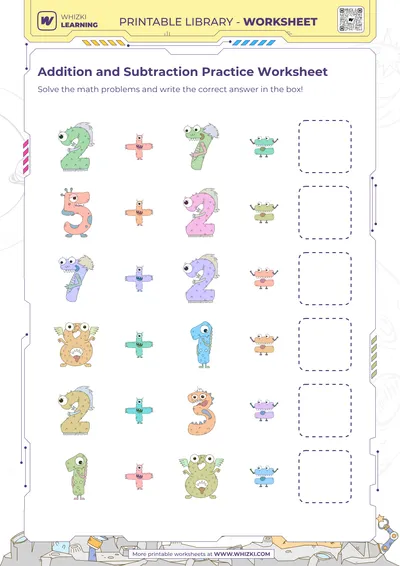
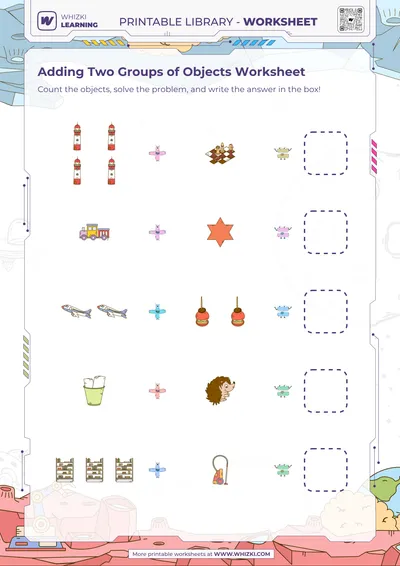
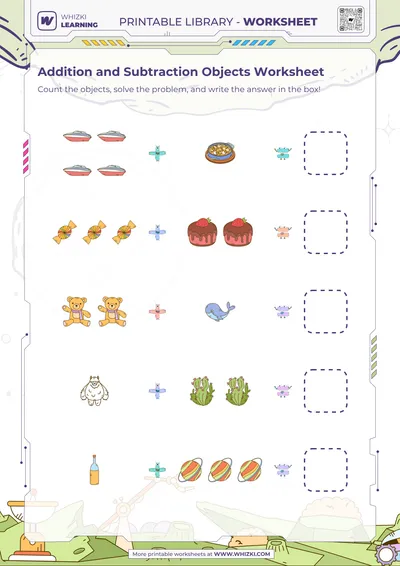
For another page at a similar stage, browse the addition and subtraction worksheets. The Addition and Subtraction Pack set offers related formats. Use a few questions during a short home practice session, math center, or supported lesson. Pause when the child needs a new explanation, and return to unfinished questions after revisiting the quantities with a simpler example.