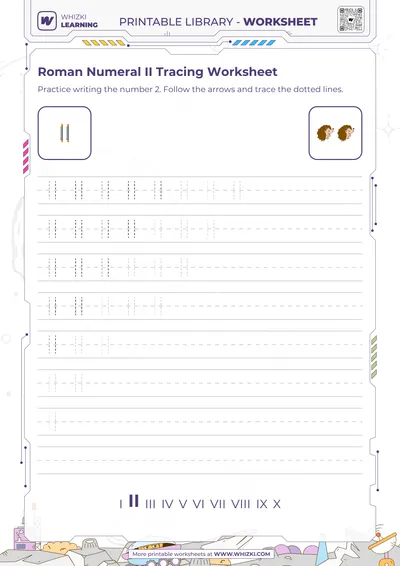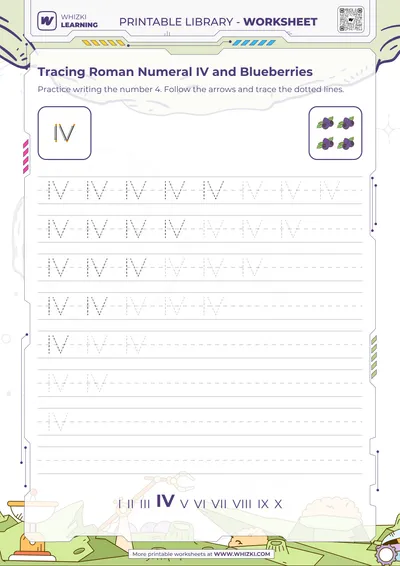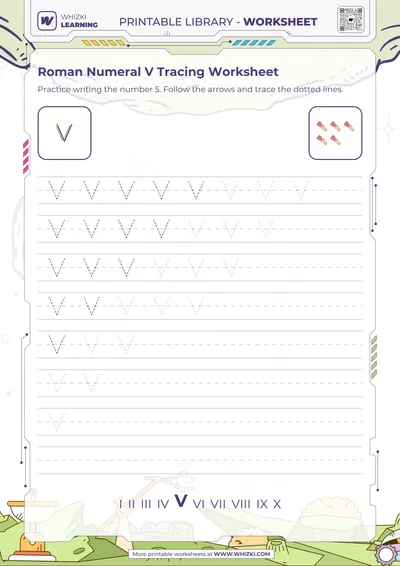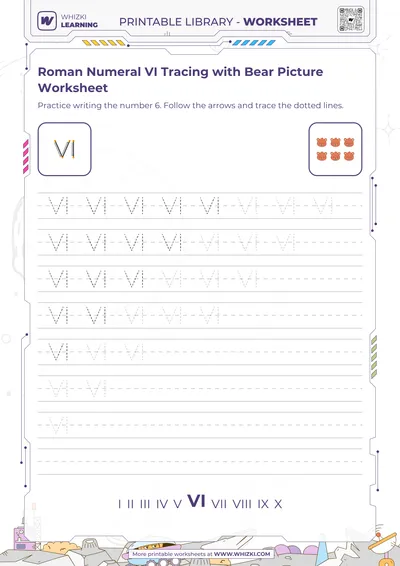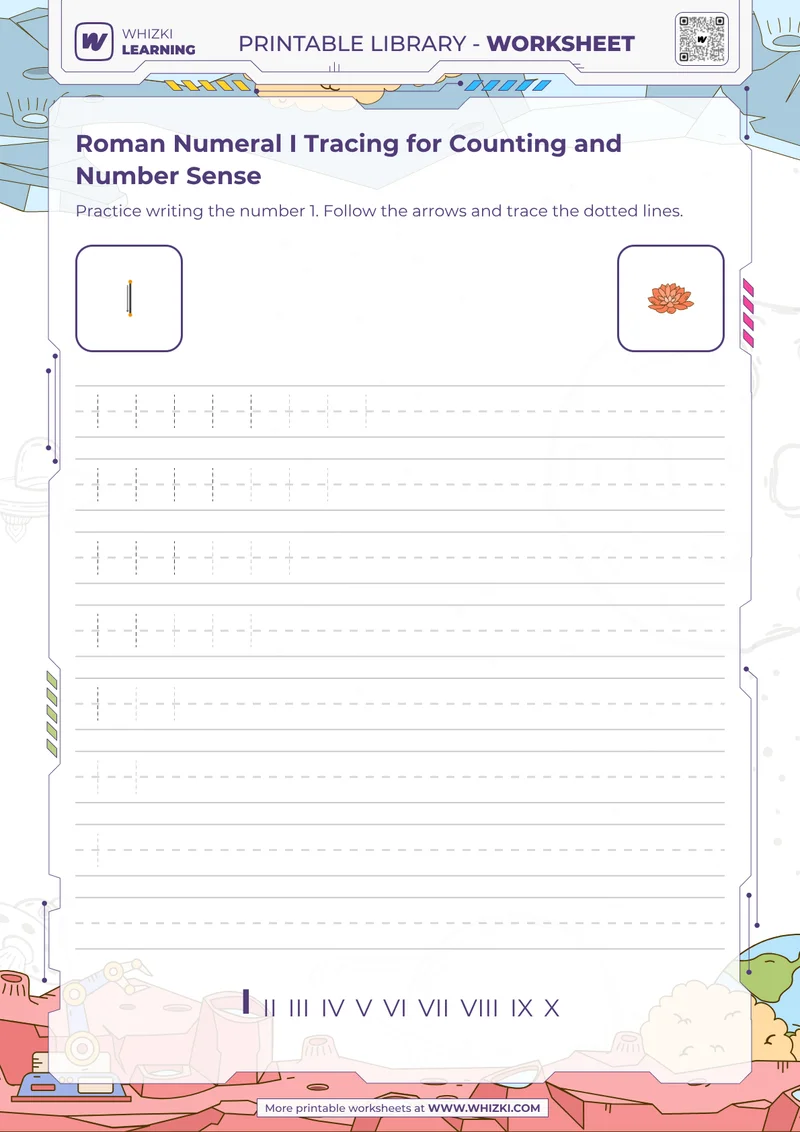


Follow the model and direction cues to practice forming I, attending to the shape of the symbol in I.
Compare a traced example with the model and adjust a stroke, curve, or spacing choice in the next attempt.
Connect I with the value 1 through an adult-led explanation of the Roman symbols.

A child can recognize a number before writing it feels comfortable. This Roman numeral I tracing worksheet provides a large model, direction cues, and repeated dotted examples for pencil practice. The symbols spell out the value 1 in Roman notation. Begin with a short look at the large example, then choose a few tracing attempts for a supported lesson at home or in a classroom writing center.
I represents one. Point to each symbol as you explain its place in the numeral. Read the complete numeral before tracing; changing the order can change the value. Look at the shape of the symbol in I. Model the starting point and movement once, then let your child follow the dotted path. Compare one finished attempt with the large model before moving to the next.
The printed activity concentrates on forming I. Roman symbols provide another way to record a quantity that the child may already know using ordinary digits. Write the two forms beside each other on separate paper and discuss what stays the same: the amount they represent. Keep this follow-up brief and distinguish the movable objects from the tracing models on the worksheet.
The Roman numeral I guide offers a related explanation of the value and notation. For another practice format, explore the Early Math Essentials set. If a turn is difficult, draw a larger model on plain paper and try that movement together. Use a comfortable pace, leave unused rows for another session, and later invite one independent attempt beside the printed example.
Boost your child’s skills with our discounted workbooks. Engaging activities for preschool, kindergarten, and grade 1 - now at special sale prices!


Fast shipping
Secure Payment
Licensed Teachers
For the planet
Printed in the USA
Helpful guides for parents and teachers, and tips for making learning at home super fun.

Use one familiar snack to build science talk and vocabulary without pressure to taste. This kitchen-table investigation honors allergies, texture needs, and child choice.

Help young children measure with paper clips before a ruler, using equal units, clear endpoints, and quick fixes for gaps, overlaps, and different answers.

Picture labels can build meaning, first-sound attention, or guessing habits. Use this parent-friendly decision tree to know when to cover or reveal the picture.

A vague school screening notice can leave families guessing, so start with seven plain questions about the test, timing, language, evidence, and next steps.
Get exclusive activities, expert tips, and inspiration for a more meaningful, offline family life.