Learning Outcomes
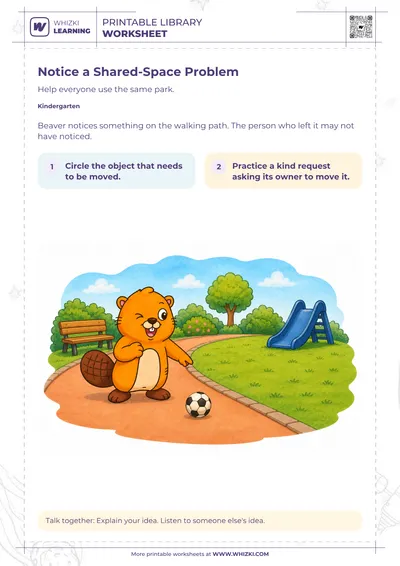
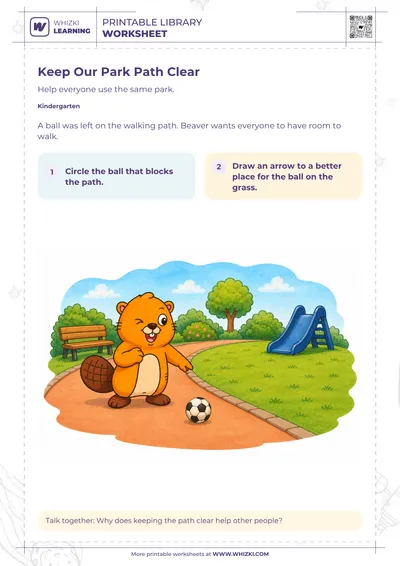
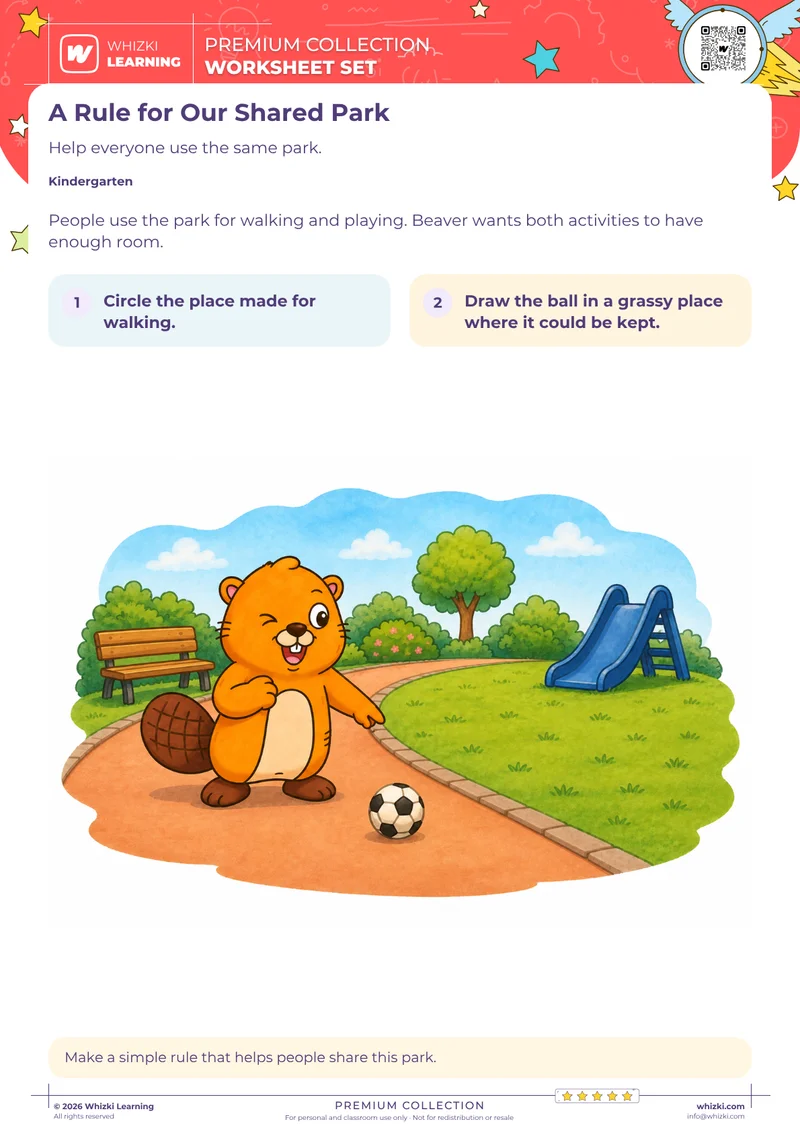
Identifies a shared walking area. The child circles the path in the park scene to show where walkers need space.
Places play equipment thoughtfully. The child draws the ball on grass away from the path to practice safe sharing choices.
Explains a simple community rule. The child says a rule that helps walkers and players use the same park.

Shared Park Rules: Walk, Play, and Draw Safely
Park conversations can get sticky when one child wants to run, another wants to walk, and everyone feels sure their idea is fair. This page gives you a calm, concrete way to talk about rules without turning it into a lecture or a long sit-down lesson.
Children look at a friendly park scene with a beaver helper, then circle the place made for walking. Next, they draw the ball in a grassy place where it could be kept, away from the walking path. As they mark and draw, they practice observation, spatial reasoning, fine motor control, and early citizenship vocabulary.
Use the worksheet after a park visit, before recess, or during a community helpers unit. Read the short story aloud, pause for your child to point to the path, then ask where the ball could go so walkers still have room. Write down or repeat their simple sharing rule.
This printable belongs to the premium Kindergarten Social Studies Adventures set in the Whizki Plus tier. It fits the set's everyday social studies focus by helping children connect places, choices, and responsibilities in a familiar shared space, with drawing and conversation built into the page.
Keep the session short and hands-on. Five to ten minutes is enough: color the scene if interest stays high, act out one safe park rule with toy figures, then praise the thinking behind the child's rule.
Limited-time savings
on Whizki workbooks.
Boost your child’s skills with our discounted workbooks. Engaging activities for preschool, kindergarten, and grade 1 - now at special sale prices!


Fast shipping
Secure Payment
Licensed Teachers
For the planet
Printed in the USA
Find fresh ideas
To help your little learners grow!
Helpful guides for parents and teachers, and tips for making learning at home super fun.

A seven-minute apple observation helps children compare color, stem, skin, weight, smell, and a cut surface, then draw what children noticed before any craft begins.

A field note on why Ukrainian-English workbook pages need fresh design choices for letters, examples, space, and language-specific skills.

A fast weather window journal helps ages 3-7 notice sky and temperature feeling with simple symbols, compare a few days, and learn observation versus forecast.

A five-minute snack sort turns crackers, berries, or allergy-friendly objects into early data practice as children sort, count, compare, and clean up.
Join the Screen-Free Movement.
Get exclusive activities, expert tips, and inspiration for a more meaningful, offline family life.