Learning Outcomes
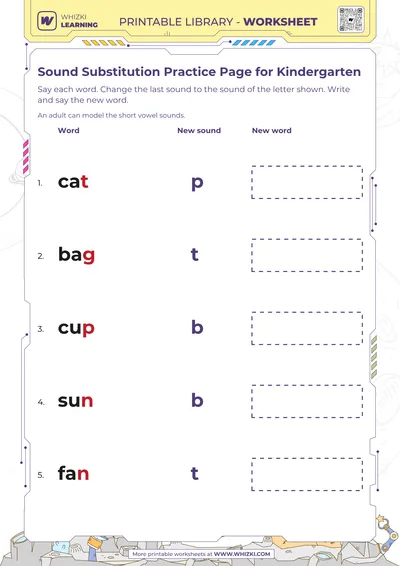
Student replaces the last sound in a word → sound substitution → makes a new word, like pig to pie.
Student practices mapping sounds to spellings at the end of words → phoneme awareness → reads and writes new words more confidently.
Student uses one-sound changes across many word pairs → careful listening and decoding → improves fluency when spelling and sounding out.

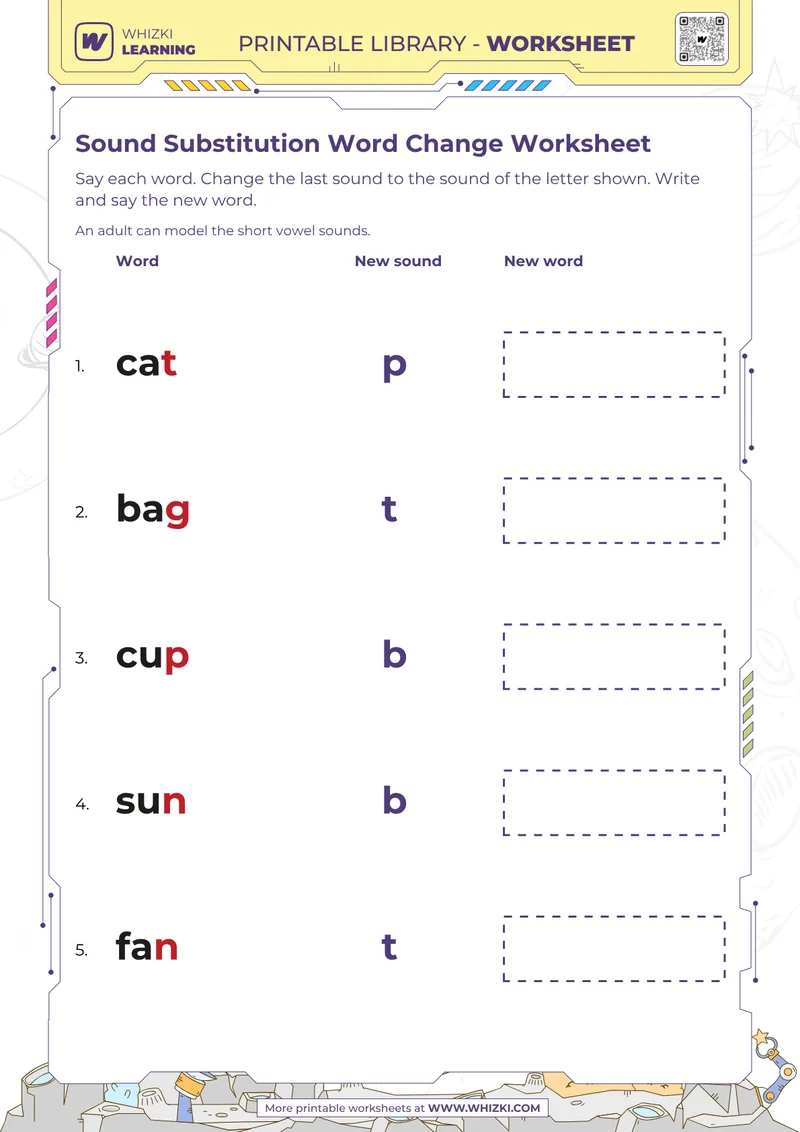
Sound Substitution Word Change Worksheet
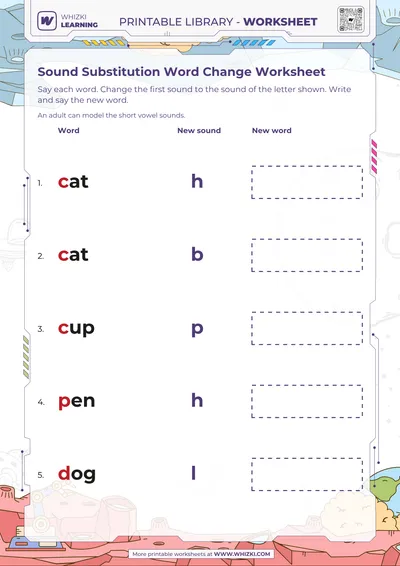
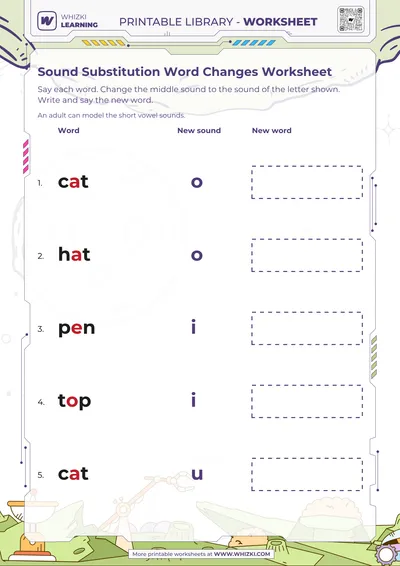
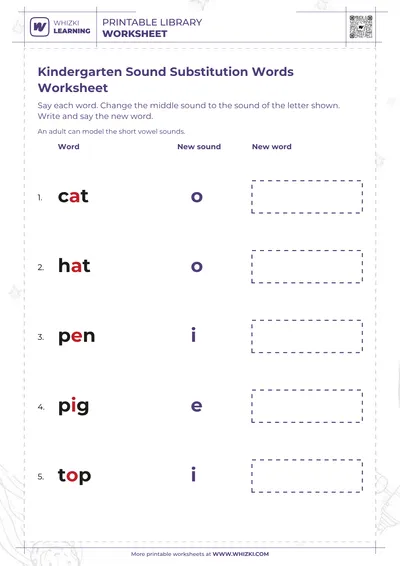
This worksheet practices sound substitution by asking your child to change the last sound of each word to make a new word, like pig to pie or cow to cog.
At age 7, many kids get stuck because letter changes feel easier than sound changes, or focus slips fast when the task feels repetitive. Doing the swap one sound at a time helps your child stay on the listening job.
Use this page for a quick 5 to 8 minute sit-down: read the first word aloud, pause, and ask your child to say the new word with a changed last sound. After your child writes the answer, point to the new word and have your child read it one more time.
The worksheet is useful because every item targets the same “last sound” move, so practice feels clear and repeatable. Each word pair gives your child a concrete example of how small sound changes create new words.
Limited Time Sale
Kids’ Workbooks!
Boost your child’s skills with our discounted workbooks. Engaging activities for preschool, kindergarten, and grade 1 - now at special sale prices!


Fast shipping
Secure Payment
Licensed Teachers
For the planet
Printed in the USA
Find fresh ideas
To help your little learners grow!
Helpful guides for parents and teachers, and tips for making learning at home super fun.

A practical printable roundup for cutting practice preschool, ordered by scissor-skill stage with what to watch for at each step.
Sunny Hedge
Most children start with supervised snipping at 2 to 3, short lines around 4, and simple shapes around 5 to 6. Here is a calm way to begin.
Sunny Hedge
A parent-friendly guide to number bonds to 10, with a simple chart, hands-on teaching steps, and printable practice for ages 3 to 7.
Sunny Hedge
Most 5-year-olds do not need to read yet. Learn what kindergarten children are usually working on, what counts as progress, and when to ask the teacher for input.
Sunny HedgeJoin the Screen-Free Movement.
Get exclusive activities, expert tips, and inspiration for a more meaningful, offline family life.