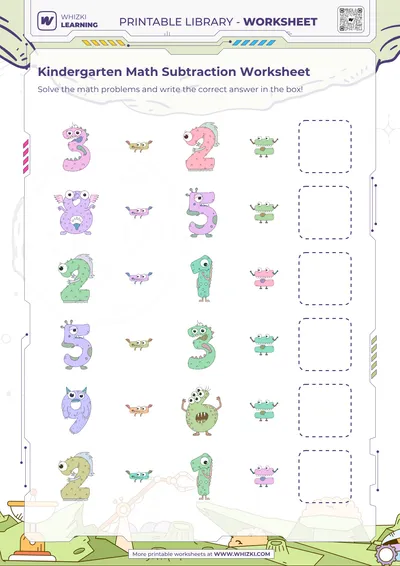
Find the difference between two nonnegative whole-number amounts, using the printed picture groups as the starting information.
Read an equation from left to right and connect its operation sign with joining amounts or taking an amount away.
Check a difference by adding back the amount taken away, explaining the result during an adult-supported discussion.

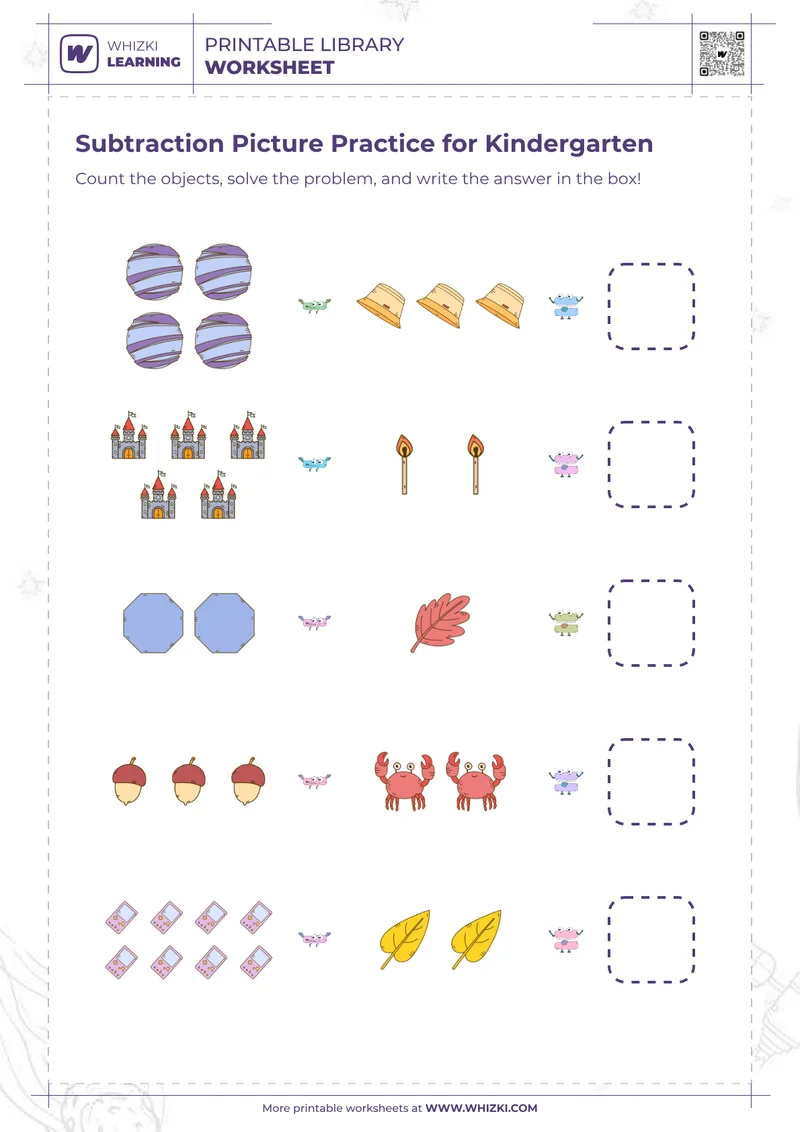
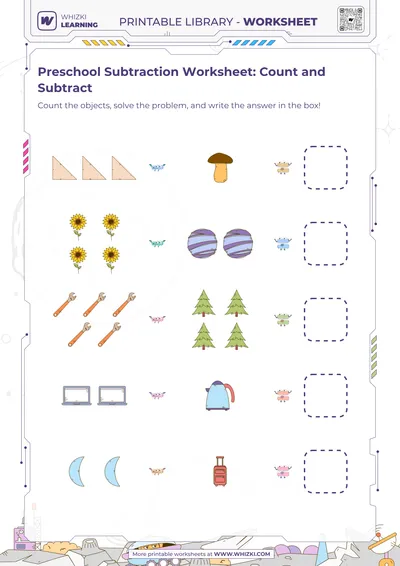
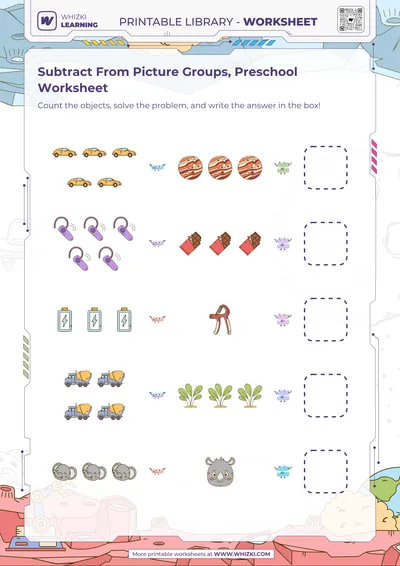
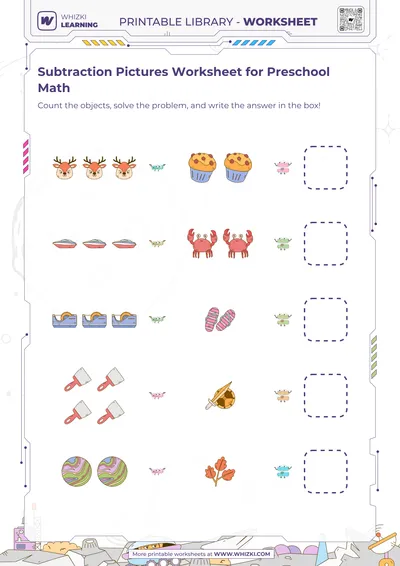
Children can practice explaining an answer as they work through this picture-based subtraction worksheet. The page contains 5 equations and asks them to find each difference. The pictured groups give a visible representation of the quantities. The largest number in the equations and their answers in this selection is 8; choose the page when that range is comfortable with support.
The first question represents 4 − 3 = 1. Start with the first amount and take away the second. A drawing or movable counters can show what remains before the child records the difference. Touch each picture once when counting a group, and return to the counted total before writing.
Read a completed equation from left to right and ask the child to explain its meaning. Check subtraction by adding the removed amount back to the difference. The result should match the starting number. This provides another way to notice an accidental counting slip. Model one example, then give the child time to attempt the next.
For another page at a similar stage, browse the addition and subtraction worksheets. The Addition and Subtraction Pack set offers related formats. Use a few questions during a short home practice session, math center, or supported lesson. Pause when the child needs a new explanation, and return to unfinished questions after revisiting the quantities with a simpler example.
Boost your child’s skills with our discounted workbooks. Engaging activities for preschool, kindergarten, and grade 1 - now at special sale prices!


Fast shipping
Secure Payment
Licensed Teachers
For the planet
Printed in the USA
Helpful guides for parents and teachers, and tips for making learning at home super fun.

A warm decision guide for asking how a preschool or kindergarten screening handles testing language, interpretation, observations, and home-language evidence.

Use one familiar snack to build science talk and vocabulary without pressure to taste. This kitchen-table investigation honors allergies, texture needs, and child choice.

Help young children measure with paper clips before a ruler, using equal units, clear endpoints, and quick fixes for gaps, overlaps, and different answers.

Picture labels can build meaning, first-sound attention, or guessing habits. Use this parent-friendly decision tree to know when to cover or reveal the picture.
Get exclusive activities, expert tips, and inspiration for a more meaningful, offline family life.