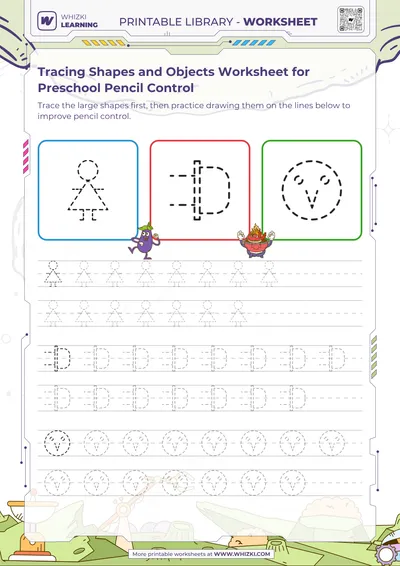
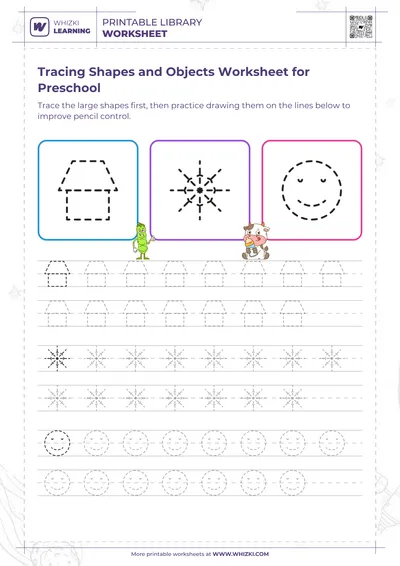
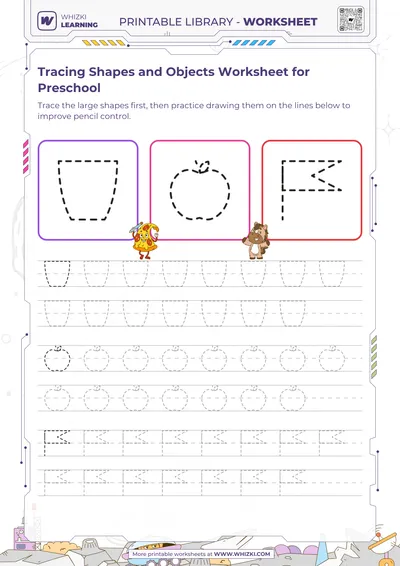
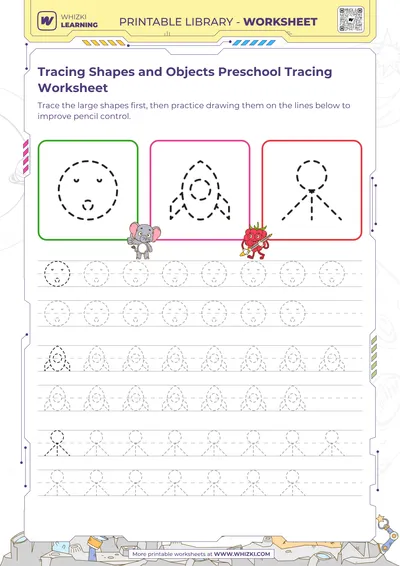
Follow the printed paths in the acorn, cat face, and rocket designs, noticing turns and separate details.
Control pencil placement while moving from a large model to smaller repeated outlines within the writing rows.
Compare a traced or drawn attempt with its model and identify one line or turn to try again with adult guidance.

A familiar outline can give a child a reason to slow down and follow a pencil path. This object tracing worksheet presents three designs: acorn, cat face, and rocket. Begin with the large dotted models, then use the smaller practice examples and writing lines below. The page provides supported pre-writing practice for a child who is ready to follow visible lines during a short home session or classroom writing activity.
Look at the acorn model together and choose one section to trace. Notice where a line bends, meets another line, or ends. Lift the pencil when the model has a separate detail, rather than adding a connector that is not shown. Follow the large outline with a finger first if that makes the path easier to understand, then try a few smaller pencil attempts.
Use the cat face and rocket models to compare different movements. Ask the child to point to a part that seems easy and one that needs a slower attempt. An adult can model that short section on separate paper at a larger size. Keep the practice focused on following and reproducing the visible design; naming an unfamiliar object is a conversation you can have alongside the pencil task.
Explore the Pre-Writing Warm-Ups set for another selection of outlines. For a later step with letters, visit the Alphabet Starter Pack. Choose a few comfortable attempts rather than filling every row at once. Compare a traced example with its model and revisit one turn if needed. Later, invite a drawing on plain paper and return to the worksheet whenever the child wants a visible guide.
Boost your child’s skills with our discounted workbooks. Engaging activities for preschool, kindergarten, and grade 1 - now at special sale prices!


Fast shipping
Secure Payment
Licensed Teachers
For the planet
Printed in the USA
Helpful guides for parents and teachers, and tips for making learning at home super fun.

A practical decision tree for checking fast worksheet work, changing the response style, and deciding whether a harder page actually helps ages 3 to 7.

A field note on May audit gaps in early learning worksheets, with a simple home check for spotting when clearer artwork matters more than extra directions.

Teaching a child to read often creates immense anxiety for parents, leading to frustrating flashcard memorization. This comprehensive guide details a proven, Montessori-inspired phonics method that prioritizes letter sounds over letter names. Learn how screen-free, hands-on learning activities build essential phonemic awareness and prepare preschoolers for fluent reading without academic pressure.

Seeing your child hold a pencil like a dagger can trigger instant panic. But constantly 'correcting' their grip often leads to tears and a hatred of drawing. This How-To guide reveals gentle, occupational therapist-approved tricks-like the 'Broken Crayon' and the 'Pinch and Flip'-to naturally fix pencil grip without the power struggles. Learn why tactile resistance matters and how to set your child up for handwriting success.
Get exclusive activities, expert tips, and inspiration for a more meaningful, offline family life.