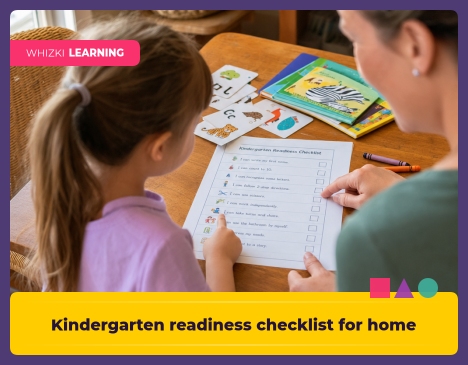
If kindergarten registration has you wondering whether your child can zip a coat, join play, hold a pencil, and sit for a story without a battle, choose one ordinary day and mark only what you can actually see. A kindergarten readiness checklist is a conversation starter, not a score sheet, and a calm scan gives parents and teachers better information than a rushed quiz. Start with breakfast, bathroom time, play, cleanup, and bedtime reading, then write one small note beside any skill that still needs practice.
Reviewed by Marcus Rivera, M.Ed., Kindergarten Teacher, 12 years.
How to use the checklist without turning it into a test
The kindergarten readiness checklist works best when the adult watches real life instead of staging a performance. NAEYC guidance reminds teachers to look at the whole child through play, routines, relationships, and family context, so a child who refuses a worksheet after a long day may still show strong readiness during block play or snack setup.
The checklist should be used over several days because young children have uneven moments. A Reggio-style observation habit helps the adult notice what the child can do with materials, language, friends, and choices, and the notes can sound as simple as, “buttoned coat with help” or “retold two parts of a story.”
The printable can sit beside the full kindergarten readiness guide when you want a bigger map of school entry. The checklist can also pair with the skills that matter most and the hands-on pages in our printable library when a child needs gentle practice in one area.
Social readiness you can observe at home
Social readiness means the child can enter a group, handle small frustrations, and recover with help from a trusted adult. Reggio-inspired classrooms treat social behavior as something children build through real relationships, so the home checklist should look at play with siblings, cousins, neighbors, or classmates rather than a forced “be nice” moment.
The social section can include observable items such as waits for a short turn, asks an adult for help, uses words or gestures to solve a small problem, follows a simple group direction, and stays near an activity for several minutes. The adult should mark the item when the child shows the skill during play, snack, cleanup, or a short family game.
NAEYC practice also asks adults to respect temperament, culture, and family routines. A quiet child who watches before joining may be ready for kindergarten when the child can warm up with support, follow classroom safety rules, and show interest in other children without needing constant adult rescue.
Self-care and routine skills for a school day
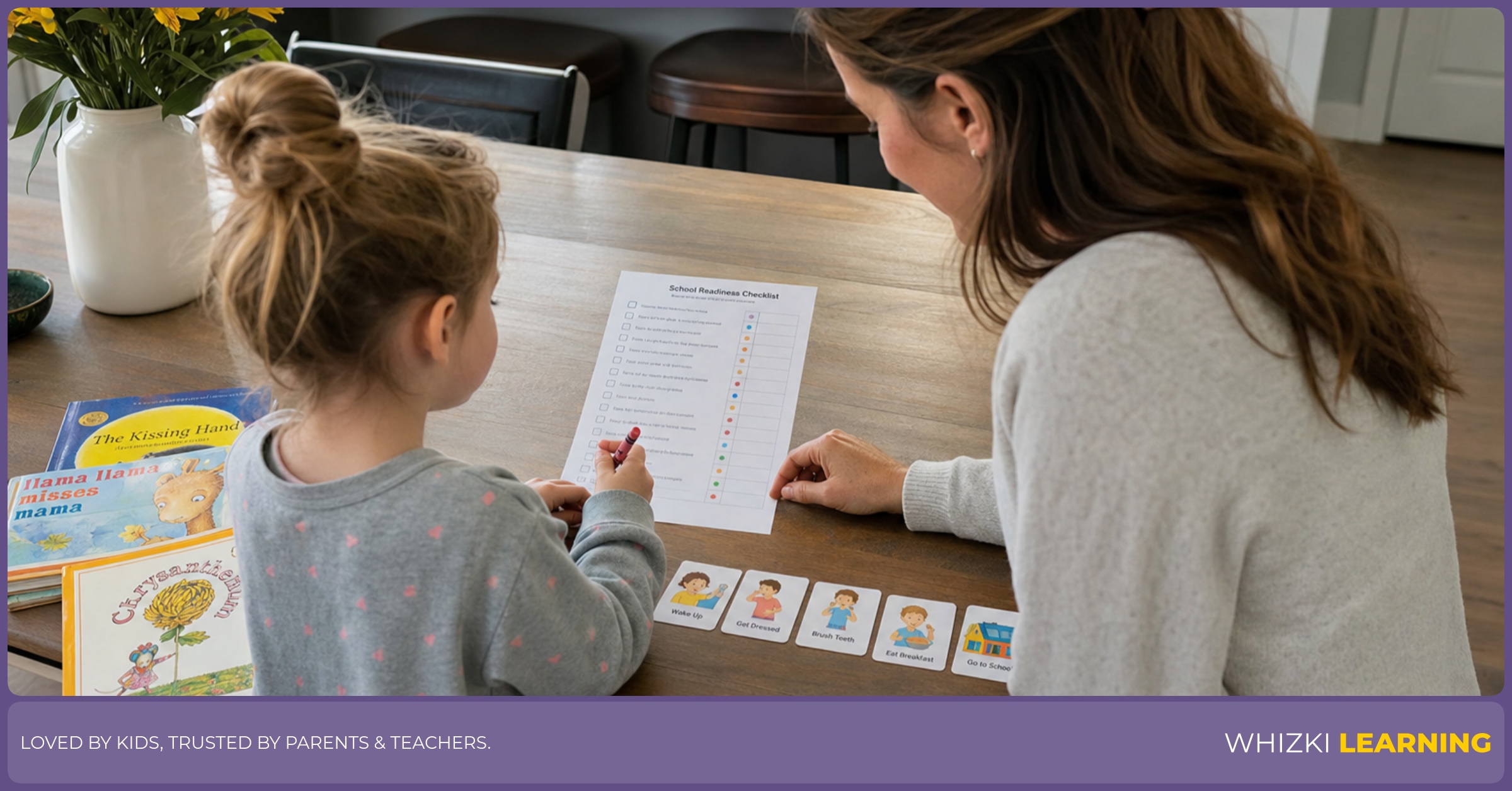
Self-care readiness shows up in the ordinary parts of a school day, especially bathroom routines, clothing, snacks, and cleanup. Montessori practice values independence through carefully prepared materials, and the same idea fits home practice when the adult sets out a low hook, an easy snack bin, and a small cleanup basket.
The self-care section can include observable items such as puts on shoes with little help, opens a lunch container, washes hands, uses the toilet routine, hangs a backpack, and cleans a small spill. Occupational-therapy basics suggest looking at the task size first, because a zipper pull, tight shoe, or stiff container may be the barrier rather than motivation.
The routine section should also check whether the child can handle transitions with a cue. A visual first-then card, a song, or a two-minute warning can show whether the child understands the sequence, and that information is more useful than writing “does not listen” on a form.
Language and early literacy signs to notice
Language readiness means the child can understand classroom talk and share ideas with adults or peers. Speech-language pathology practice looks at listening, expressive language, and social communication together, so the checklist should include follows two-step directions, answers simple questions, tells about an event, and asks for help when words are hard.
Early literacy readiness does not mean a child must read before kindergarten. The Orton-Gillingham approach begins with sound awareness, clear letter-sound links, and multisensory practice, so a home checklist can watch for rhyming play, name recognition, interest in books, and the ability to notice the first sound in a familiar word.
Printable practice should stay short and playful for ages 3 to 7. A child who enjoys tracing a name may also like a letter A practice page for sound matching or a letter S sound page for beginning-sound work, especially when the adult says the sound and lets the child move, tap, or build with blocks.
The premium School Readiness worksheet set in our worksheet sets gathers name practice, scissor work, tracing, sorting, and routine cards in one place. The complete pack lives in Whizki Plus, and the best use is one page at a time beside real play and family routines.
Motor and early academic skills to check gently
Motor readiness covers the hands and the whole body, and both matter in kindergarten. Occupational-therapy heuristics ask adults to notice posture, shoulder stability, hand strength, and sensory comfort before blaming pencil grip, because a child who slides off a chair may need body support before handwriting practice.
The fine-motor section can include observable items such as uses crayons with control, copies a simple line or circle, snips paper, turns book pages, builds with small blocks, and presses stickers onto a page. The gross-motor section can include runs safely, jumps, climbs playground steps, balances briefly, and carries a backpack without falling.
Early academic readiness should be light, concrete, and connected to daily life. NAEYC guidance supports meaningful learning through play, so the checklist can note counts small sets, sorts by color or size, matches shapes, recognizes name letters, and understands words such as more, less, same, first, and last.
Number practice can happen with socks, crackers, steps, and toy cars before a pencil comes out. When a child wants a page, a number 1 worksheet can support counting and tracing, and the adult can stop while the child still feels successful.
What to do when a skill is still growing
A readiness gap is information, not a failure. Kindergarten teachers expect uneven development, and NAEYC-aligned classrooms plan for children who are still learning to separate, write names, manage fasteners, or sit for a group story.
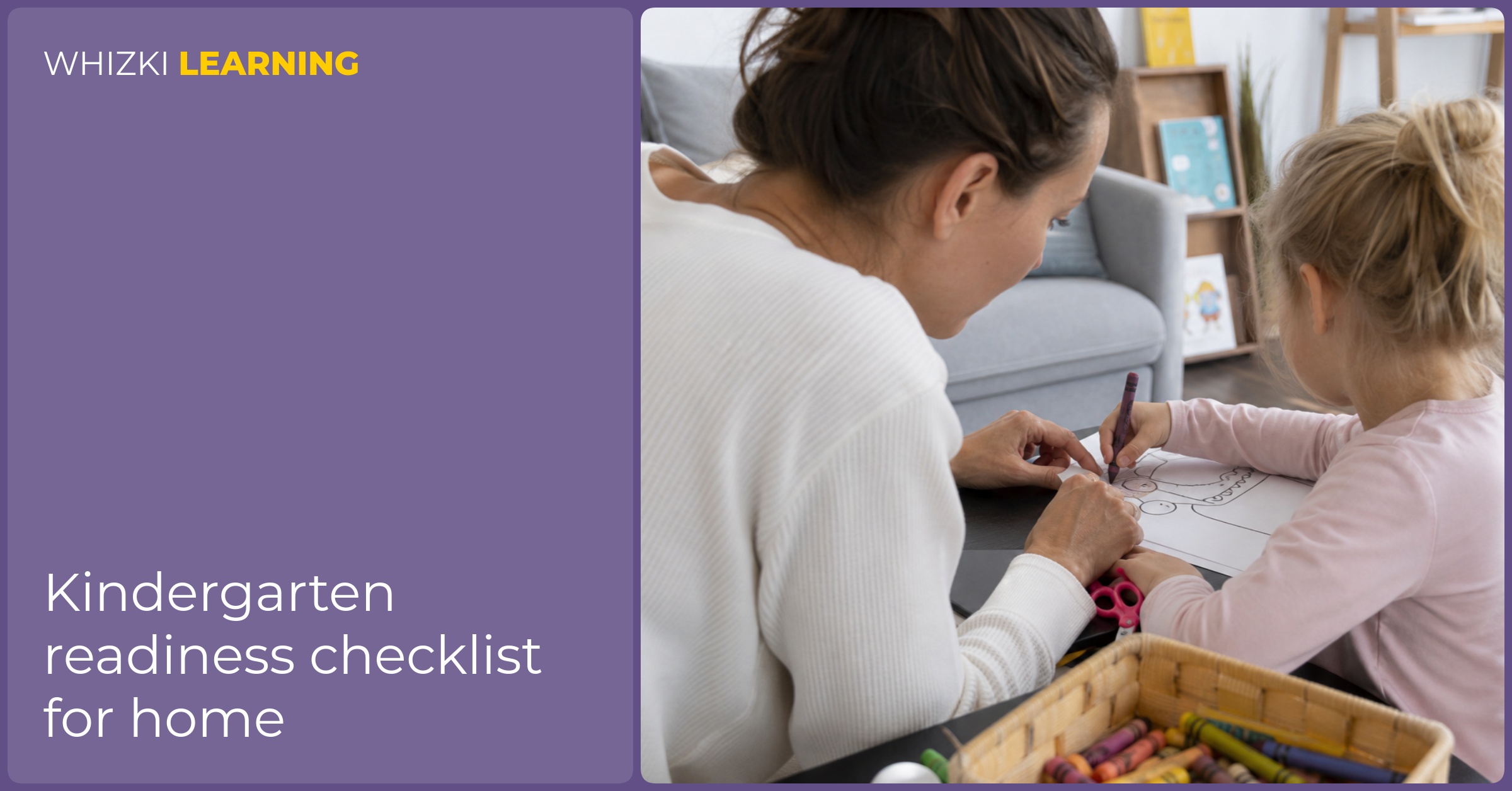
The next step is to pick one skill and practice the skill inside a real routine for two weeks. Buttoning can happen before leaving the house, turn-taking can happen during a board game, and name writing can happen on a lunch note or drawing instead of a long worksheet packet.
A professional conversation is wise when a child loses skills, cannot be understood by familiar adults near age 4 or 5, avoids many daily textures or movements, or struggles with toileting after steady practice. A pediatrician, speech-language pathologist, occupational therapist, or school team can help sort out whether the child needs extra support before or during the kindergarten transition.
The kindergarten readiness checklist should leave the grown-up with a plan, not a pit in the stomach. Print the checklist, watch the child across real routines, and bring the notes to a preschool teacher, kindergarten teacher, or homeschool planning session.
The best readiness work still looks like childhood. Shared books, pretend play, outdoor movement, simple chores, songs, crayons, and patient coaching give young children the daily practice that school asks them to use.