Kindergarten screening can feel like one more thing to worry about when lunchboxes, forms, and big feelings are already filling the kitchen table, so start with one small step tonight: play a five-minute name, counting, and drawing game after snack. The screening is usually a short snapshot of school readiness, not a verdict on parenting or on a child's future. A calm child who has had a little practice with familiar tasks often shows more of what the child already knows.
Reviewed by Whizki Editorial Team, Early Childhood Education Editors.
What kindergarten screening usually checks
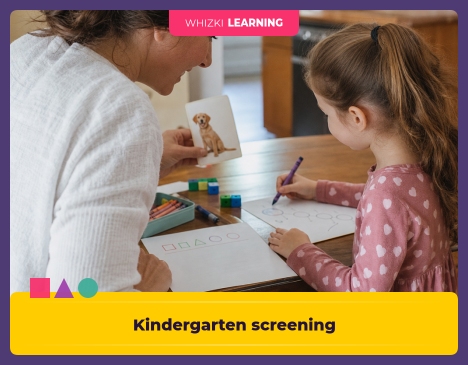
A kindergarten screening usually checks a child's name, age, basic language, early letters, counting, drawing, and simple movement skills. The kindergarten teacher or screener may ask a child to say a full name, identify a few letters, count objects, copy a shape, draw a person, follow a direction, and talk about a picture. The NAEYC guidance on developmentally appropriate practice reminds teachers to look at many skills, because young children show readiness through language, play, movement, and relationships.
The letter part of a kindergarten assessment often looks lighter than parents expect. A child may name some uppercase letters, say a few letter sounds, or point to the first letter in the child's name. In Orton-Gillingham teaching, letter work is strongest when a child sees the letter, says the sound, traces the shape, and connects the sound to a real word.
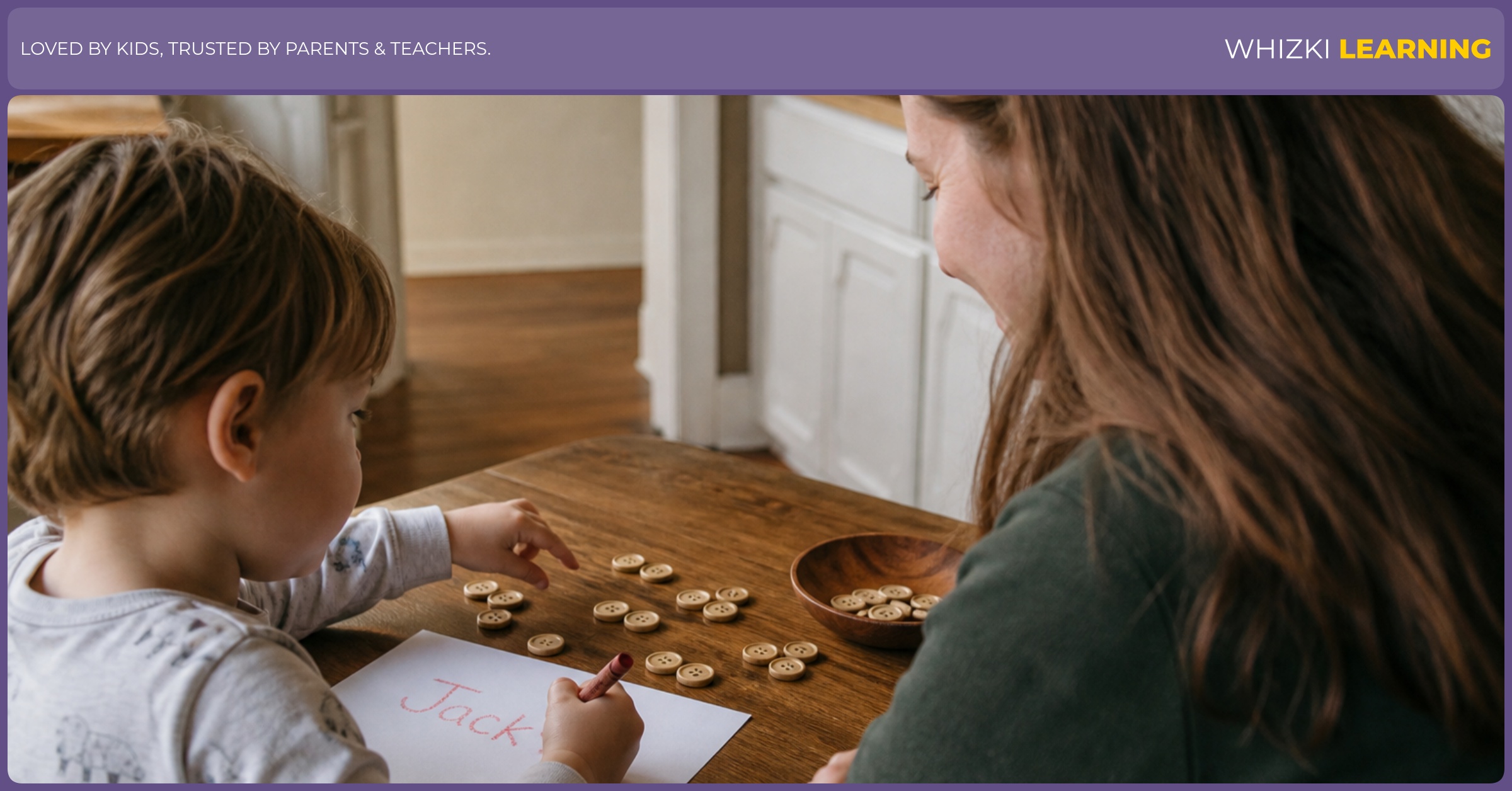
The number part of a screening usually checks rote counting, one-to-one counting, and basic quantity sense. A screener might place buttons on a table and ask the child to count each button, or ask which group has more. A child who skips a number during a nervous moment may still understand quantity, so the screener watches the counting behavior as much as the final answer.
What results do and do not mean
Kindergarten screening results help schools plan support, group children thoughtfully, and notice whether a child may need another look in speech, hearing, vision, motor skills, or language. Screening results do not label a child as ready or not ready for life, and screening results do not measure curiosity, kindness, persistence, or imagination. Reggio and Montessori observation traditions both remind educators to watch the whole child across real activities, not one worksheet moment.
A low score in one area often points to a skill that needs practice, not a crisis. A child who cannot copy a triangle may need more fine-motor time with crayons, tongs, play dough, and scissors. An occupational therapy rule of thumb is to look at posture, hand strength, finger control, and task stamina before assuming a child does not understand the direction.
A language concern is worth taking seriously when a child cannot answer simple questions, follow one-step directions, or make needs understood most of the time. Speech-language pathology practice looks at both understanding and speaking, because a quiet child may know more than the child says during a new adult's questions. Parents can ask the school what was observed, what will be watched next, and whether a referral is needed.
How to prepare gently in two weeks
A gentle two-week plan works best when practice feels like family life, not a bootcamp. The goal is to make the screening tasks familiar enough that a child can try without freezing or guessing wildly. For a wider view of school-readiness skills, compare daily habits with the readiness checklist and choose two skills to practice first.
Name practice can take three minutes at breakfast. A child can find the first letter of the child's name on mail, trace the name in the air, and write the name on a sticky note for a bedroom door. Orton-Gillingham multisensory habits fit beautifully here, because the child is seeing, saying, moving, and writing rather than staring at a flashcard stack.
Counting practice can happen during cleanup, snack, socks, or blocks. A parent can ask the child to touch each cracker while counting, move each toy car into a bin, or check whether five spoons are on the table. The occupational therapy side matters too, because small-object play builds the finger strength needed for pencil control and drawing.
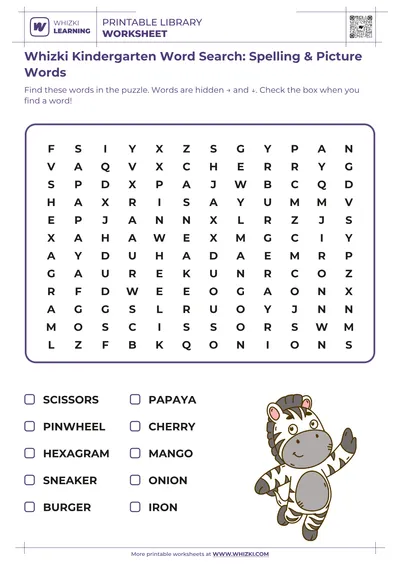
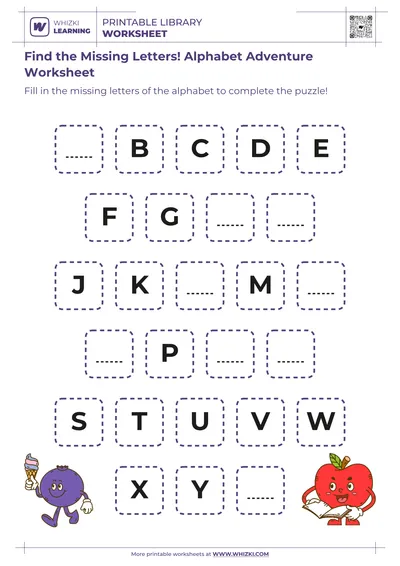
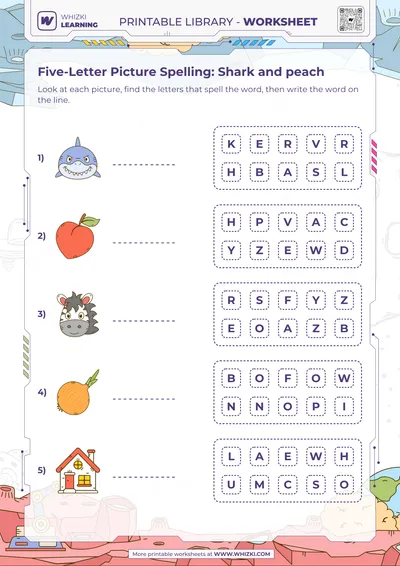
A calm two-week plan is easier when the paper is already on the table. For name practice, letter matching, counting pages, and simple drawing prompts, keep our printable library nearby and choose one page at a time. Short, repeatable practice beats a long worksheet session with a tired child.
Helping shy, wiggly, or big-feeling kids
A shy child may need practice talking to a warm adult who is not a parent. A grandparent, neighbor, librarian, or preschool teacher can ask gentle questions such as the child's name, favorite animal, or what is happening in a picture book. NAEYC guidance supports relationship-based teaching, because young children often show skills best when the adult feels safe and respectful.
A wiggly child may need a movement break before table tasks. A child can push a laundry basket, do wall presses, carry books, or hop to the table before drawing. Occupational therapy basics call that heavy work, and many children settle into pencil tasks better after muscles have had a job.
A child with big feelings may need a simple script before the screening day. A parent can say, "A teacher will ask you to try some school games, and you can say, 'Can you tell me again?' if you forget." Speech-language pathologists often teach children to ask for repetition, because asking again is a communication skill, not misbehavior.
A simple two-week practice rhythm
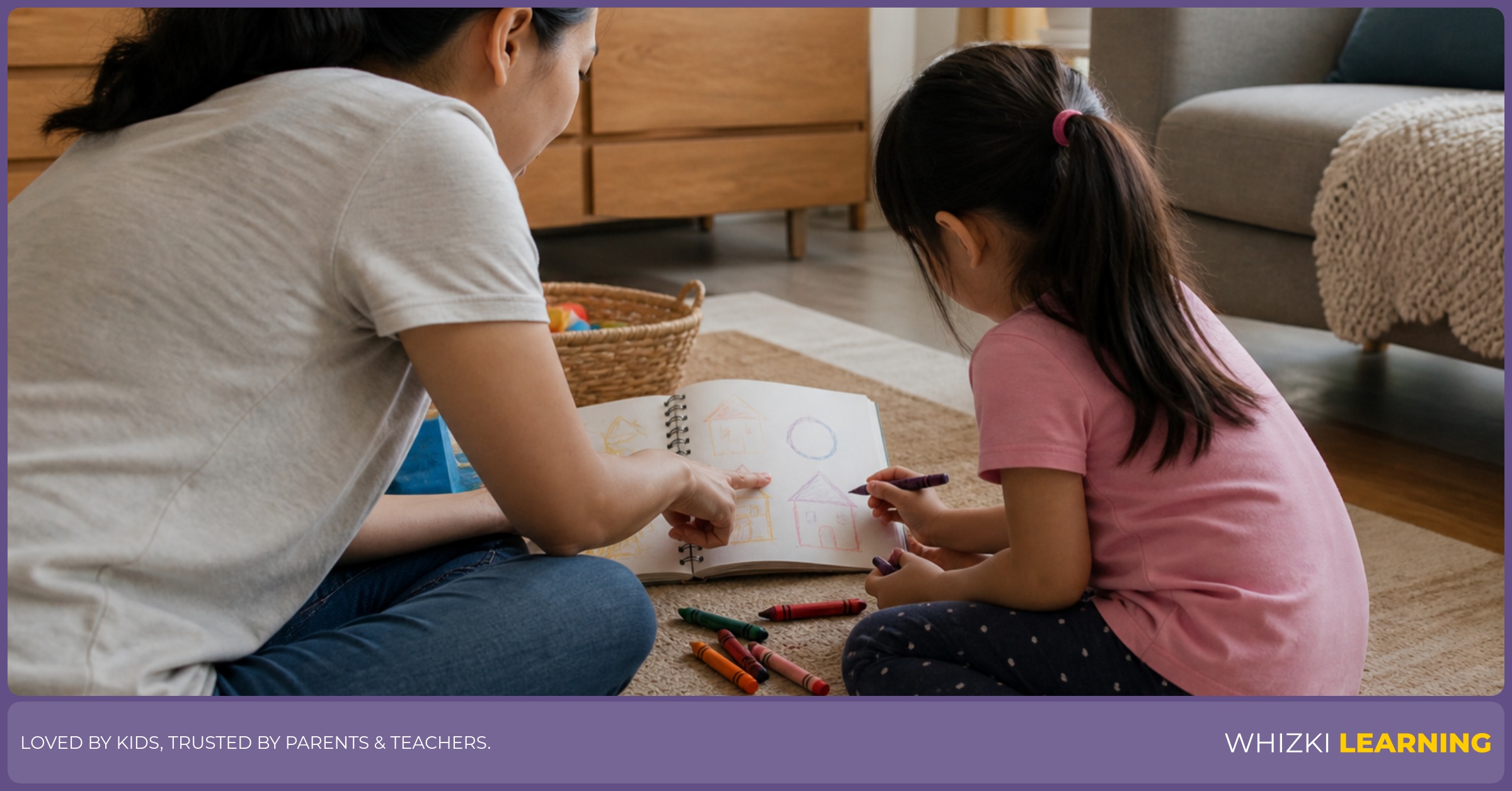
A two-week rhythm should touch the same few skills in tiny doses. On most days, a child can write or trace a name, count real objects, name a few letters, draw one picture, and answer one question about a book. Montessori and Reggio classrooms use repetition with choice, and home practice can borrow that calm rhythm without turning the living room into a testing room.
The first week can focus on comfort and routine. A parent can say, "Today we are doing three school games," then stop while the child still feels successful. For practical expectations beyond the screening tasks, what teachers wish kids knew can help families balance academics with bathroom, backpack, listening, and friendship skills.
The second week can add mild novelty so the child is not surprised by a new adult or a new setting. A parent can move practice from the kitchen table to the porch, ask another trusted adult to give one direction, or use a different pencil. Orton-Gillingham review routines use the same idea, because steady practice with small changes helps a child use a skill in more than one place.
Kindergarten screening is one small doorway into a much bigger school year. If kitchen-table school prep is on your mind, join the weekly newsletter for more calm, practical ideas.