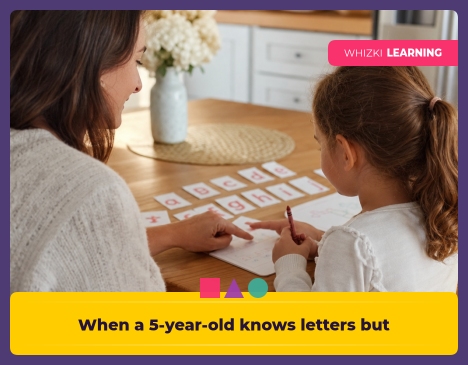
If your 5-year-old can name letters but freezes at mmm-ahh-p, put the book down for two minutes and play the sounds out loud with no print. Letter knowledge matters, but blending is a separate listening skill that often arrives on a different schedule. A short car or kitchen game can give the brain less to juggle and give the child a quick win.
Reviewed by Whizki Editorial Team, Early Childhood Education Editors.
Blending is its own skill
A child can point to M, A, and P and still have trouble hearing mmm-ahh-p as map. The Orton-Gillingham approach treats letter-sound knowledge and blending as related skills, not as the same skill. Blending asks the child to hold sounds in order, slide sounds together, and notice the word that pops out.
Phonemic awareness is the listening part underneath blending, and the skill can be practiced before a child sees any letters. If that term is new, the guide to phonemic awareness explained in parent language gives the simple background. Speech-language pathology practice often starts with hearing and playing with sounds first because print can add extra load.
A 5-year-old who knows letters but cannot blend is not automatically behind in every reading skill. NAEYC guidance reminds adults to look at the whole child, including attention, language, play, and emotional readiness. A calm response helps because frustration can make a child avoid the exact practice that would help.
Try oral blending before print
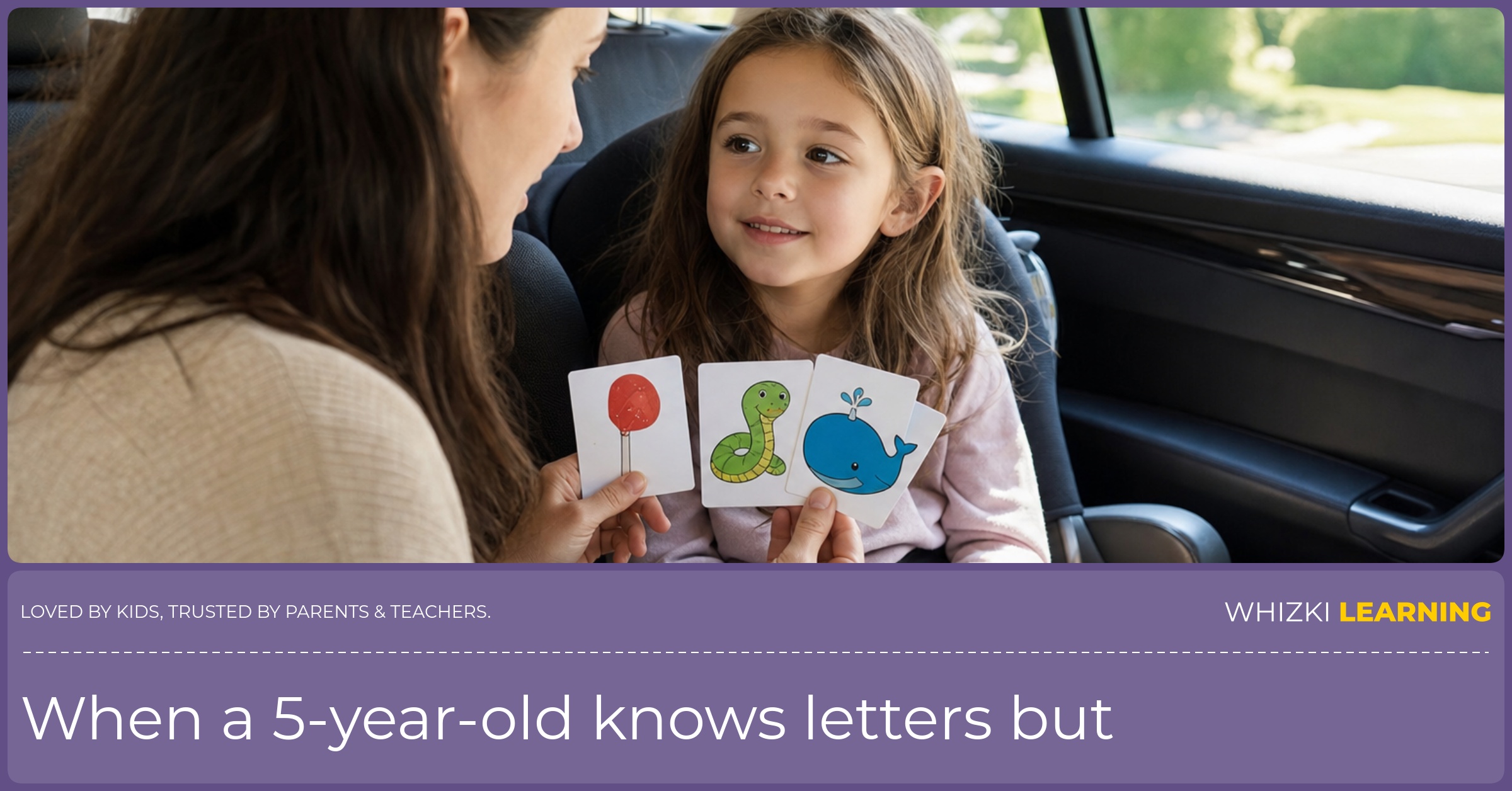
Oral blending means the adult says the sounds and the child guesses the word without looking at letters. The car, bathtub edge, snack table, and walk to the mailbox all work because no pencil or page has to be managed. Montessori and Reggio teachers use short observation-rich moments like these because the adult can see whether listening is the hard part or print is the hard part.
Start with two or three turns, then stop while the game still feels light. Say "mmm-ahh-p" slowly, ask "What word?", and smile at any close try before giving the answer. If three sounds feel too heavy, use two-sound words like me or up so the child can feel the sounds snap together.
Keep oral blending playful and concrete. A parent can say "Touch your nnn-ose" or "Find the c-uuu-p" during real routines, which gives the child a reason to listen. The occupational-therapy rule of thumb I use is simple: if the body is wiggly, hungry, or melting down, the sound game waits.
For low-prep paper practice, our printable library can give a short follow-up page after the sound game. Choose one page, use a crayon or finger point, and stop before practice turns into a battle.
Use successive blending
Successive blending sounds fancy, but the parent version is simple: keep the first sound going while adding the next sound. For map, say "mmmmma" first, then say "mmmmmap." The Orton-Gillingham lesson pattern often uses that smooth slide because the child does not have to hold three separate sound pieces in memory at once.
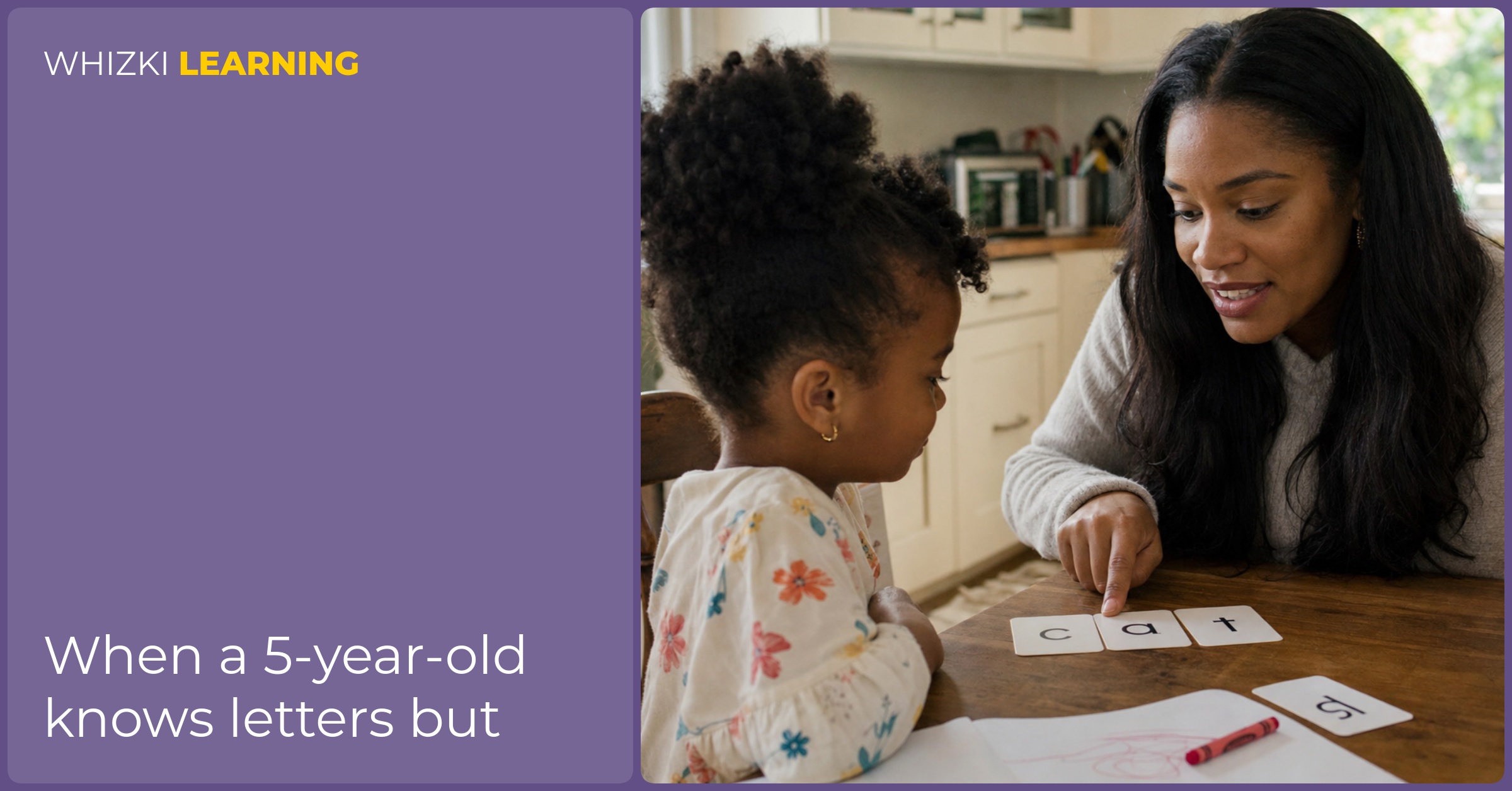
Successive blending works best when the adult models first and the child copies second. Put a finger under the first letter, stretch the first sound, slide to the second sound, and finish the word without stopping between every letter. The child hears a growing word rather than three lonely noises.
If the child says mat for map, treat the mistake as useful information. The final sound may have dropped out, so the next turn can be shorter, slower, and more exaggerated at the end. A teacher using structured literacy language might call that attending to all sounds in the word, but at home the script can stay as simple as "Listen for the last sound too."
When to check in with the teacher
A teacher check-in makes sense when calm practice happens several times a week for four to six weeks and blending still feels stuck. The kindergarten teacher can watch the child during songs, rhymes, shared reading, and small-group word work. NAEYC-aligned practice looks for patterns across real classroom routines instead of judging a child from one hard moment.
A helpful teacher conversation can be very specific. Ask whether the child hears rhymes, claps syllables, remembers common letter sounds, and can blend spoken sounds without print. A speech-language pathologist may be worth asking about if the child has a history of speech sound errors, frequent ear infections, or trouble hearing small differences in words.
Strong feelings are also useful information. If reading practice brings tears, hiding, anger, or shutdown every time, the first goal is to make the task smaller and safer. An occupational-therapy lens would check posture, pencil fatigue, visual clutter, and sensory load before assuming the child is refusing to learn.
A simple week of practice
A simple week can include three oral blending games and two very short print moments. Reggio-inspired observation helps here because the adult watches what the child can do with ease before adding another layer. The goal is steady information, not a perfect performance.
On oral days, say sounds for real objects and let the child point, touch, or answer out loud. On print days, use a few short words with clear consonant-vowel-consonant patterns, and choose from a small bank of CVC words to practice blending if you want ready examples. Keep the word set tiny so the child practices the blending move instead of guessing from a crowded page.
End each practice with something the child can already do. The ending might be naming favorite letters, hearing a silly rhyme, or reading one memorized word in a familiar book. In real teaching, that last easy success often brings a child back to the table the next day.
Blending can grow in small, ordinary moments, and a child does not need a long lesson to make progress. For more kitchen-table early literacy notes, join the weekly newsletter.