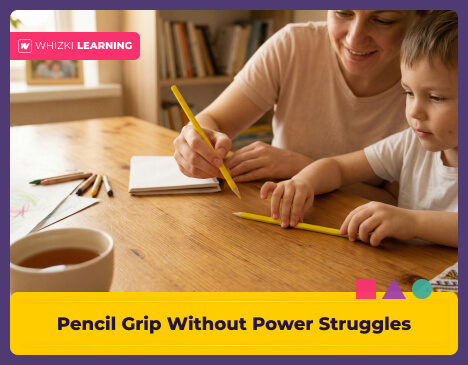
You set up a beautiful coloring activity. Your preschooler sits down, grabs the crayon, and holds it in a tight, white-knuckled fist. Your instinct is to immediately reach over and move their fingers. 'No, honey, hold it like this.' Two minutes later, it’s back in a fist. You correct them again. They sigh. By the third correction, there are tears, the crayon is thrown, and 'art time' is officially over.
Welcome to the Pencil Grip Power Struggle.
As parents, we know that a proper 'dynamic tripod' grip matters for fast, pain-free writing later in school. And we also know how hard it is to watch a child struggle, then keep your voice calm when the grip is clearly not there yet. Constant verbal correction is one of the fastest ways to kill a child's love for drawing and writing. It can make them feel micro-managed and frustrated, and then the whole activity turns into a fight instead of fun.
We must shape the environment to guide the hand, rather than forcing the hand to fit the environment.- Sunny Hedge
In this guide, we are going to drop the verbal corrections. Instead, we will use 'stealth' occupational therapy tricks to naturally encourage the right grip. We will also explore a surprising factor that affects how tightly your child grips: the quality of the paper they are writing on.
Chapter 1: The Evolution of the Grip
First, take a deep breath. If your 3-year-old is using a 'fisted' (palmar) grasp, they are perfectly normal. Pencil grip is a developmental milestone that evolves as the muscles in the hand and core grow stronger, a process we detailed in our Pre-Writing Skills Guide.
Children typically progress from a fist, to a four-finger grasp, to a static tripod, and finally (usually around age 5 or 6) to the mature dynamic tripod grip. The goal isn't to force a 3-year-old into a 6-year-old's grip. The goal is to gently guide them to the next natural stage using clever, physical cues.
How to Gently Fix Pencil Grip Without Yelling
Three occupational therapist-approved 'stealth' tricks to physically encourage a tripod grip without constant verbal nagging.
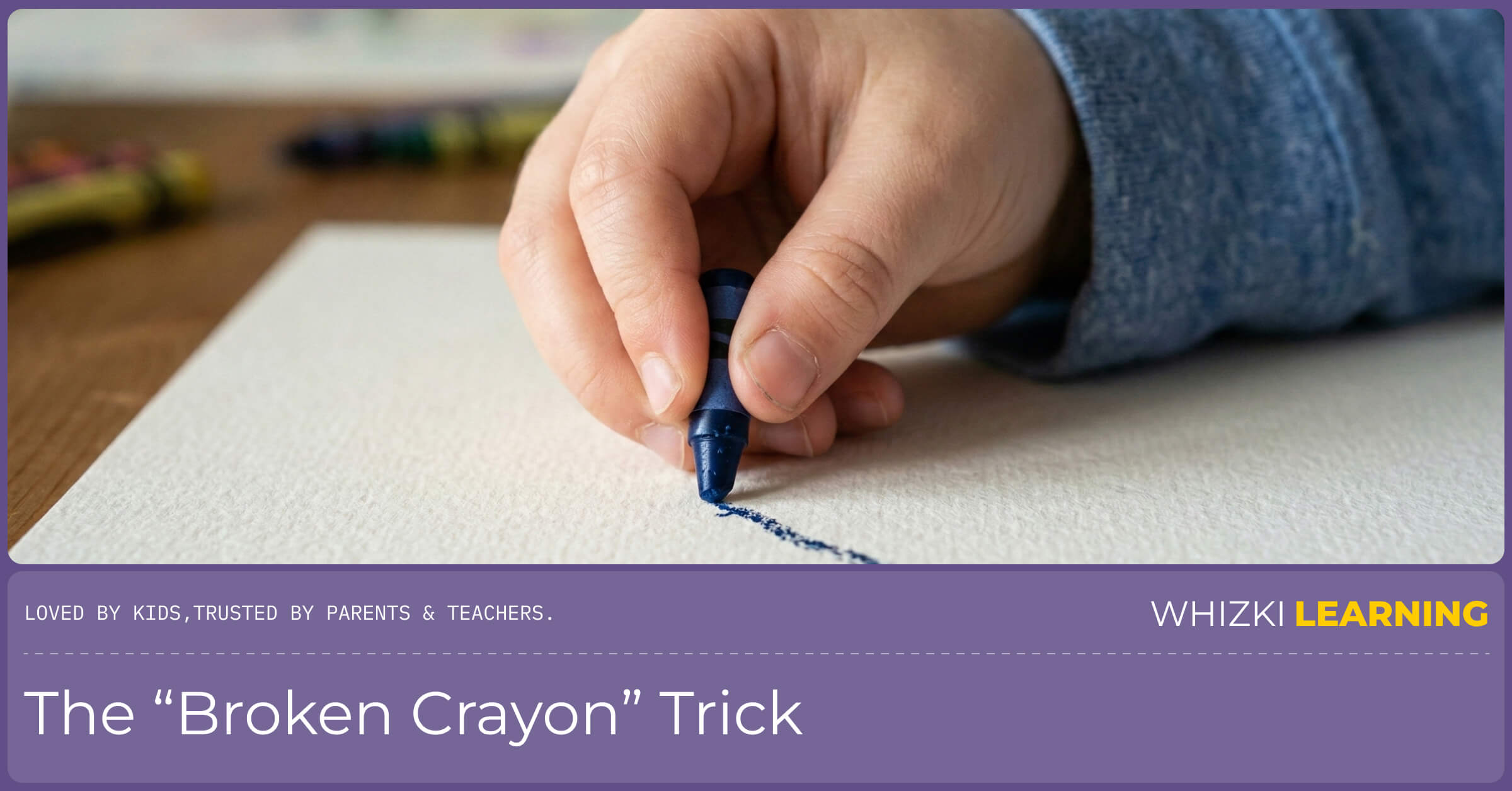
Step 1: The 'Broken Crayon' Trick
This is the oldest and most effective trick in the book. A long pencil or crayon is easy to grab with a whole fist. A tiny, one-inch piece of a broken crayon is physically impossible to fist-grip.
How to do it: Break your child's crayons into small, one-inch pieces. When they want to color, hand them the tiny piece. Their hand will naturally form a 'pincer' grasp (thumb and index finger) to hold it, completely bypassing the power struggle.
If your child tends to get frustrated fast, pair this with a quick reset first. Try a few calming routines from 10 Calm-Down Activities Before Tracing and Writing (Ages 4-6), then bring out the broken-crayon pieces when their body feels ready.
Step 2: The 'Pinch and Flip' Method
When they are ready for a full-sized pencil, teaching them how to pick it up solves half the battle.
How to do it: Place the pencil on the table with the writing tip pointing towards your child. Tell them to 'pinch' the painted part of the pencil right where the paint meets the wood (using their thumb and index finger). Then, tell them to 'flip' the pencil back over their hand so it rests in the web space between their thumb and index finger. It’s a fun little gymnastics move for the pencil!
And if you notice the pencil grip only falls apart when the activity feels like “work,” you can help by building a short, calm focus routine. When kids are ready to concentrate, their hands cooperate more easily. You can use ideas from How to Build a 15-Minute Focus Habit Before Kindergarten to make writing time feel predictable and manageable.
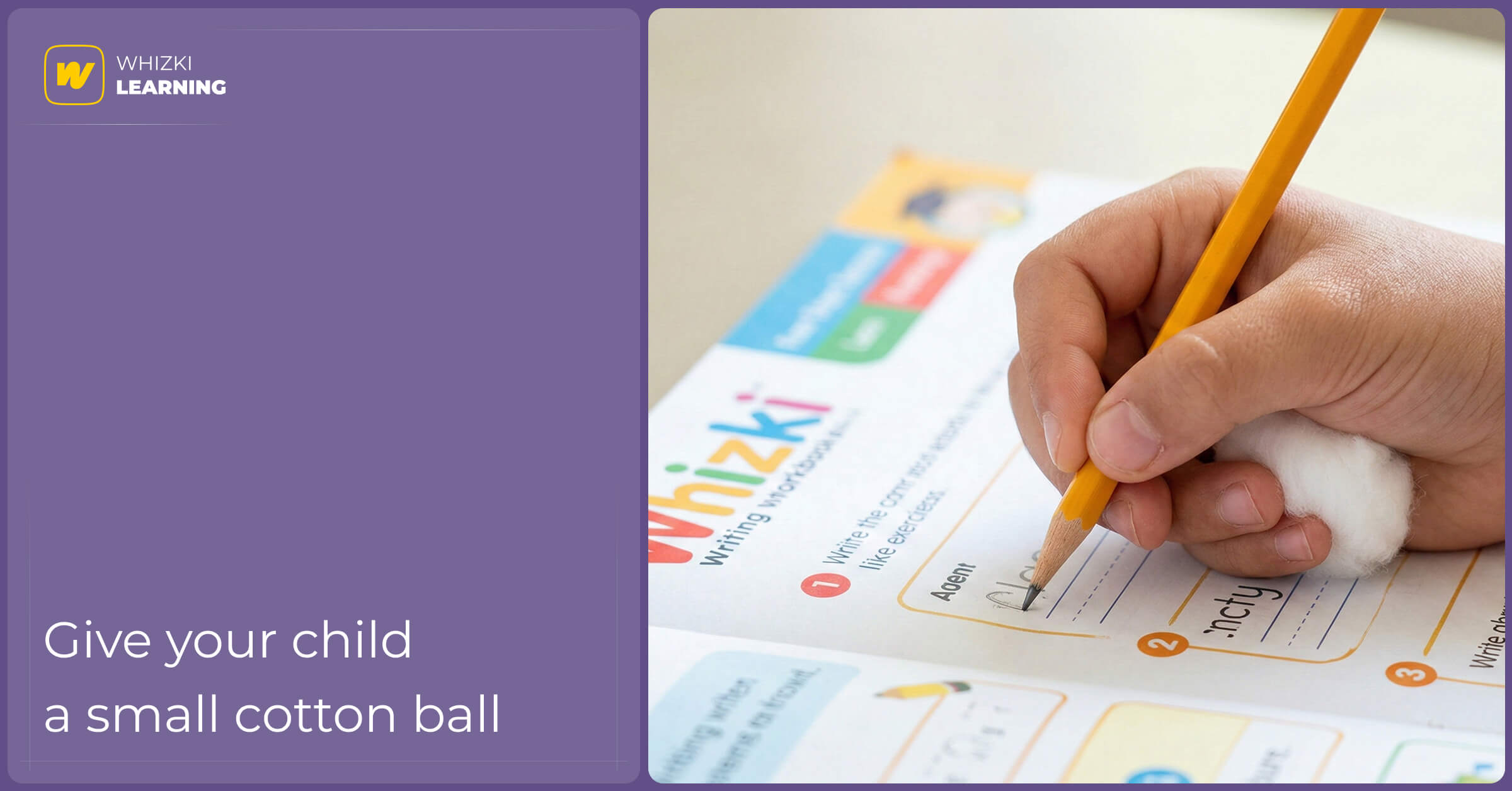
Step 3: The 'Cotton Ball' Secret
A mature grip requires the 'skill side' of the hand (thumb, index, middle finger) to work independently from the 'stability side' (ring and pinky finger). Many kids struggle to separate these.
How to do it: Give your child a small cotton ball or a crumpled-up piece of tissue. Ask them to 'hide' it in their palm by holding it tight with their pinky and ring fingers. While those two fingers are busy holding the 'treasure,' hand them a pencil to hold with the remaining three fingers. This instantly stabilizes the hand arches.
The Missing Link: Tactility and 'Quality You Can Feel'
There is one physical reason children grip pencils too tightly that parents rarely consider: slippery paper. If a child is tracing on a glossy screen or using cheap, thin paper, the pencil slides uncontrollably. To compensate, the child 'white-knuckles' the pencil to gain control, leading to hand cramps and a poor grip.
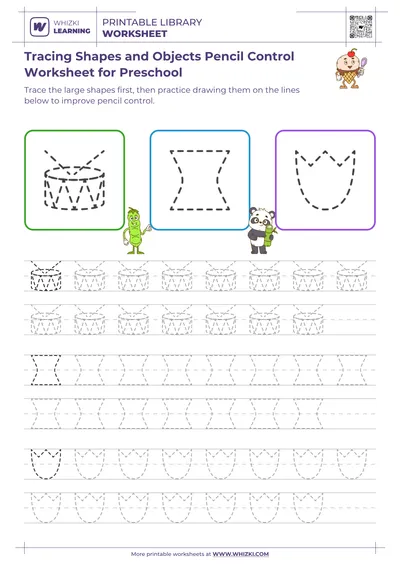
This is why Whizki focuses so heavily on tactility. Our Trace & Write workbooks are printed on thick, high-quality paper that provides the perfect amount of sensory resistance. This 'pencil drag' sends tactile feedback to the brain, allowing the child to relax their grip because the paper is helping them do the work. Plus, our smudge-free design means left-handed writers won't end up in tears over ruined work. It is an act of hands-on learning.
And when kids enjoy the process, they tend to stay calmer and more willing to try. If you want a simple way to reduce power struggles during practice time, revisit Why "Boredom" is the Ultimate Screen-Free Teacher for ideas on how to make practice feel less like a battle and more like a normal part of the day.
Patience Over Perfection
Fixing a pencil grip isn't a one-day event. It takes time for muscles to rewire. Use the broken crayons. Play the 'pinch and flip' game. Provide high-quality, tactile materials. And most importantly, praise their effort, not just their technique. When drawing feels like a joyful game rather than a test of compliance, the right grip will naturally follow.
Concrete next step: Today, set up a 5-minute “stealth grip” session. Start with one-inch broken crayon pieces, then switch to a full pencil using the pinch-and-flip method. If frustration starts to rise, pause and reset before you correct the grip again.