
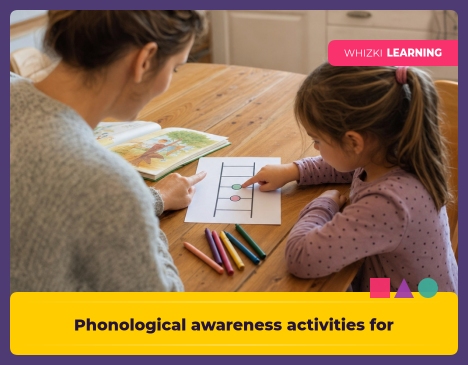
If car-seat whining, dinner prep, and the advice to sound out words are all colliding, start today with a two-minute listening game: say toothbrush and invite your child to clap the parts. Phonological awareness grows best in tiny, playful doses, and preschoolers do not need a worksheet stack to begin. A calm game in the car or at the table gives the ear practice before print asks the brain to match sounds with letters.
Reviewed by Whizki Editorial Team, Early Childhood Education Editors.
What the phonological awareness ladder means
The phonological awareness ladder starts with big sound chunks and moves toward tiny sound parts. Speech-language pathology practice and NAEYC guidance both remind adults to begin with playful listening before asking young children to analyze individual sounds. The ladder order in my classroom is words, syllables, rhymes, first sounds, and then phonemes.
The word rung asks a child to hear that a sentence is made of separate spoken words. A car-friendly game is Word Catcher: say a short sentence such as Mama drives slowly, and ask your child to hold up one finger for each word. The adult can repeat the sentence with a steady beat on the steering wheel at a red light, then let the child make a sentence for the adult to count.
The teacher move on the word rung is to keep the sentence short and the mood light. Orton-Gillingham lessons often use oral rehearsal before print, because children need to hear language clearly before letters carry the load. For a plain parent refresher on the smaller end of the ladder, read what phonemic awareness is and then come back to these bigger listening games.
Move from words to syllables
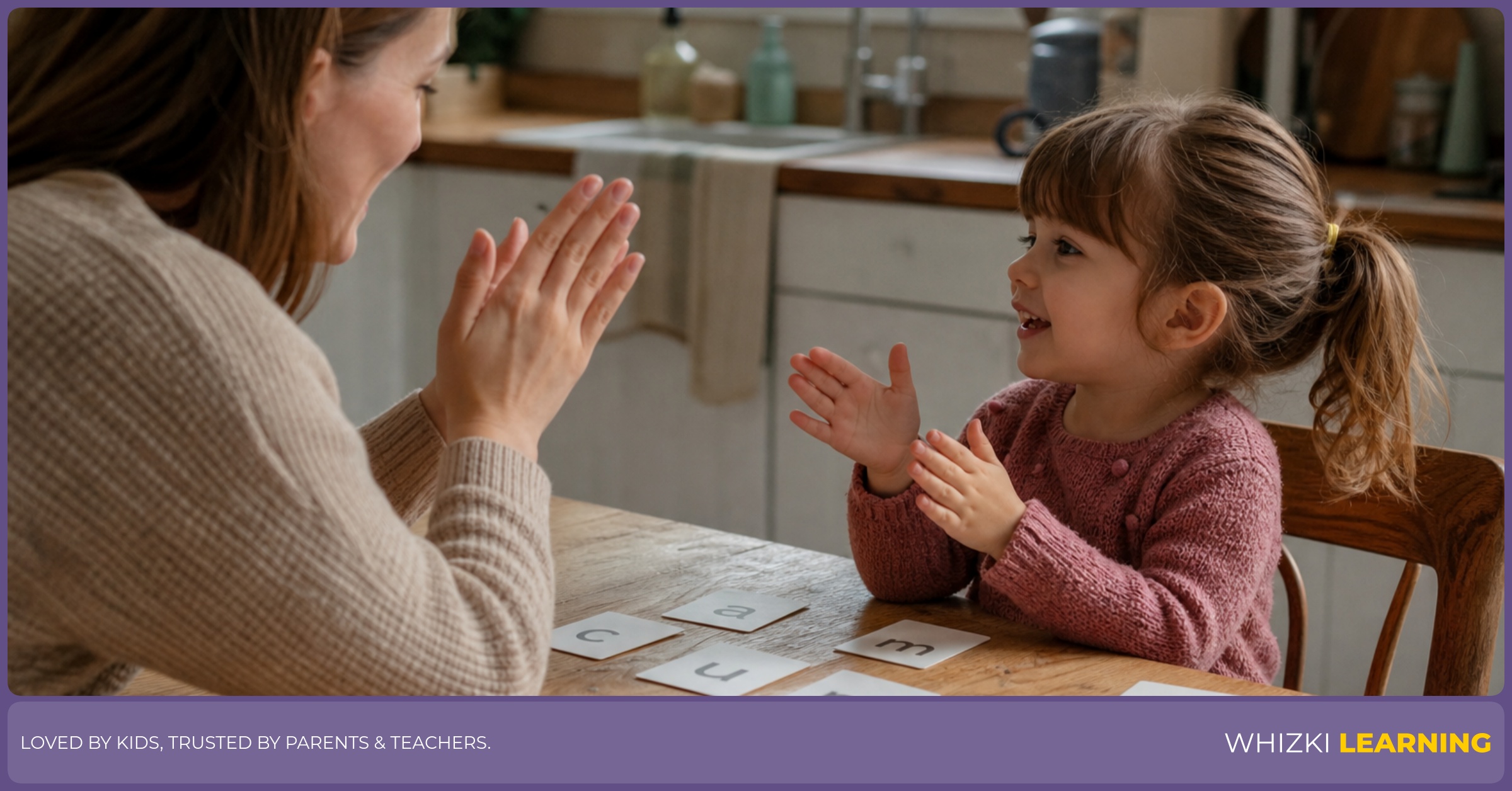
The syllable rung asks a child to hear the beats inside a single word. Occupational-therapy basics support using bigger body motions before tiny pencil work, so clapping, tapping knees, or stepping the beats makes sense for ages 3 to 7. The adult does not need to explain syllable rules; the adult needs to model a steady rhythm.
The car-friendly game is Dashboard Drummer, with the adult saying a familiar word and the child tapping the beats on legs or a soft book. Try names first, because a child usually cares about family names more than random vocabulary. If the word has two parts, the child taps twice, and if the word has three parts, the child taps three times.
The syllable routine works best when the adult accepts close attempts and keeps moving. In Orton-Gillingham practice, multisensory work means the mouth, ear, and body all help the child notice language. A preschooler who says butterfly with two taps still heard the word as a sound shape, and the adult can simply model three gentle taps next time.
Print the sound ladder page from the printable shop and tape the page beside the breakfast table or car-door pocket. The page should show five rungs, spoken words, syllable beats, rhymes, first sounds, and tiny sounds, so the next game is easy to pick without building a lesson plan.
Add rhymes without making rhymes a quiz
The rhyme rung asks a child to hear when word endings sound alike. Reggio-inspired teaching treats a child response as information, not a score, so the adult listens for what the child notices and follows the interest. Rhyming can be silly, musical, and brief, which is exactly why rhyming fits preschool attention spans.
The car-friendly game is Rhyme Ride, with the adult saying two words and the child answering same sound or different sound. Pairs such as cat and hat are easier than pairs with longer words, so start with very clear endings. When the child invents a nonsense word, the adult can celebrate the sound match because nonsense rhymes still build listening skill.
The rhyme routine can borrow from songs, read-alouds, and family jokes. Kindergarten teachers often use chant and repetition because rhythm gives children another path into sound awareness. When an adult needs fresh pair ideas, rhyming word lists can keep the game from turning into the same three examples every ride.
Listen for first sounds before naming letters
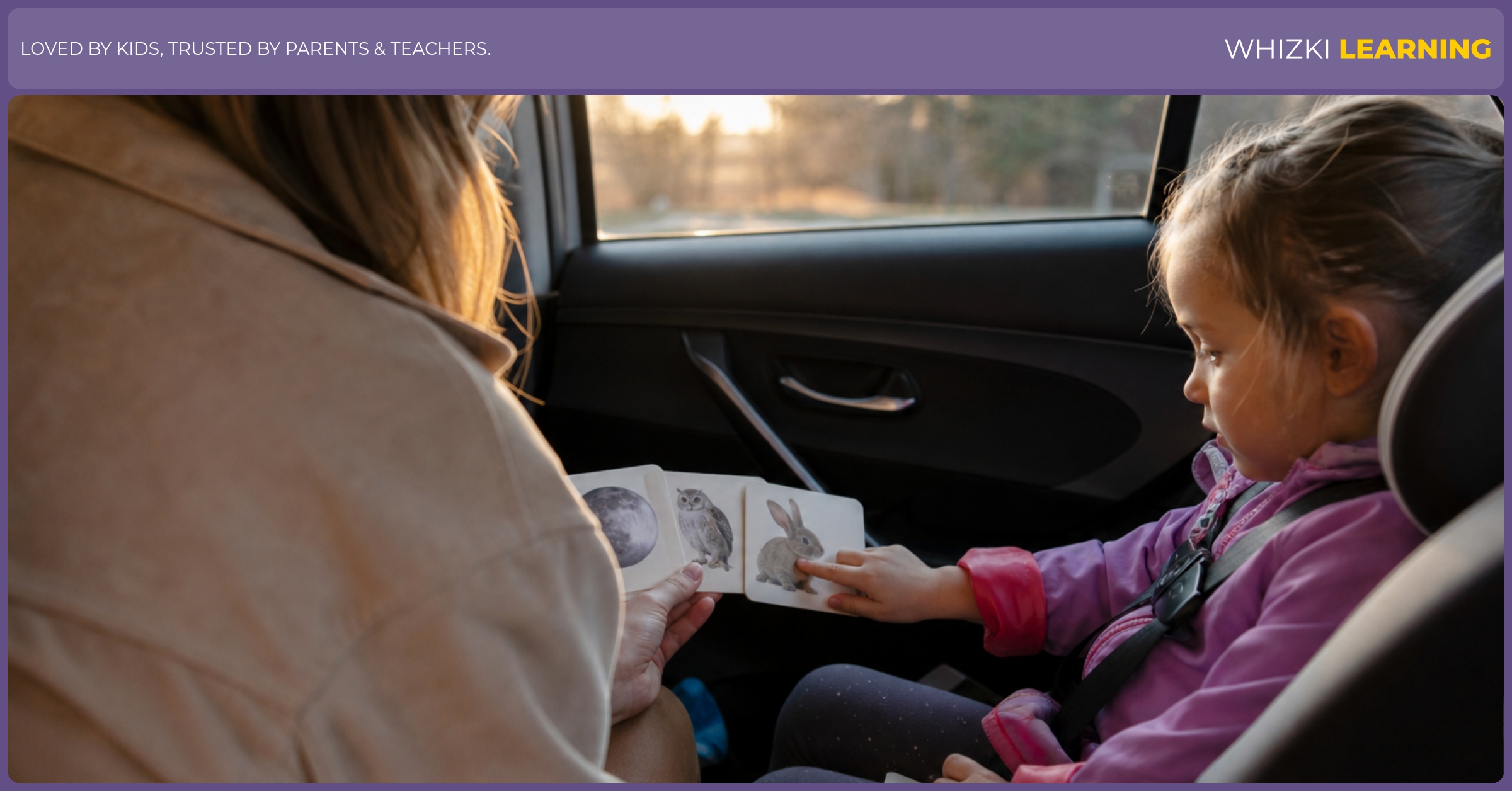
The first-sound rung asks a child to notice the first sound in a spoken word, not the first letter on a page. Orton-Gillingham teaching often separates sound work from letter naming at first, because the child can hear mmm in moon before the child remembers the letter name em. The adult can say the sound clearly without adding a heavy extra vowel.
The car-friendly game is Sound Spy, with the adult saying, I spy something that starts with sss, and the child looking for a seat, sign, or sock. The game works better with stretchy sounds at first, such as mmm, sss, fff, and nnn. Short stop sounds such as b or t can come later because those sounds are harder to hold in the mouth.
The first-sound routine becomes letter learning only when the child is ready to connect sound and symbol. Montessori sandpaper-letter work and many kindergarten routines both pair touch, sight, and sound after the ear has had practice. When your child begins asking which letter shows the sound, the alphabet learning hub can support that sound-to-letter bridge.
Finish with phonemes, the tiny sounds inside words
The phoneme rung asks a child to hear the smallest sounds in a word. Speech-language pathologists often call the key early moves blending and segmenting, and both moves can happen with no printed letters at all. The adult should keep the words short and the pace gentle, because tiny sound work is demanding for young ears.
The car-friendly game is Robot Talk, with the adult saying sss-uuu-nnn and the child blending the sounds into sun. The adult can switch roles after a few turns, letting the child be the robot while the adult guesses. Three-sound words are plenty for preschool and kindergarten practice, and four-sound words can wait until the child handles the easier pattern comfortably.
The phoneme routine should feel like a listening puzzle, not a reading test. Orton-Gillingham lessons use careful sound-by-sound work, but skilled teachers adjust the task when the child starts guessing or getting tired. If a child cannot hear the difference between many speech sounds, or if family members are worried about speech clarity, a speech-language pathologist can give targeted guidance.
Keep the ladder playful and short
The practice length matters more than the number of activities. NAEYC guidance favors developmentally appropriate play, and most 3- to 7-year-olds do better with two happy minutes than with fifteen corrected minutes. A short routine also protects the parent-child relationship, which is the real engine behind daily learning.
The ladder can move up or down on any day. A child who is tired may need a word-counting game instead of phoneme blending, and a child who is giggling through rhymes may be ready for first sounds tomorrow. Reggio-style observation gives the adult permission to watch the child and choose the rung that matches the moment.
The adult response should name the sound skill instead of naming failure. Say, Your ears heard the rhyme, or Let me stretch the first sound again, and then model the answer. Occupational-therapy practice reminds adults that regulation and motor comfort affect attention, so snack, movement, and rest can matter as much as the activity choice.
Phonological awareness activities for preschool do not need to look like school. A car ride, a kitchen counter, a stroller walk, or a bedtime song can carry the whole ladder when the adult keeps the game small and warm.
The next step is simple: choose one rung for the week and play the matching car game three times. When the child begins noticing sounds in daily talk, the ladder is doing the quiet work early reading needs.