
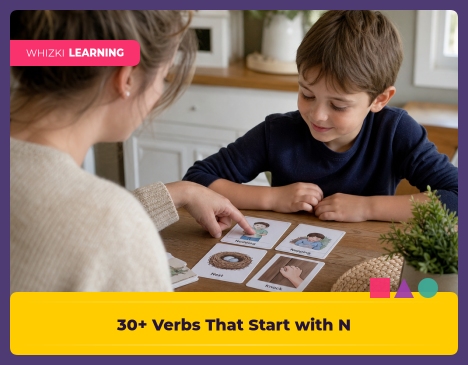
If your child knows the letter N but stares at you when asked for an N action word, start with one verb your child can do right now: nod. N verbs are not as easy to collect as run or jump words, so the goal is a short, playful practice round rather than a perfect vocabulary lesson. Say the word, act the word, and let the body help the mouth remember the sound.
Reviewed by Whizki Editorial Team, Early Childhood Education Editors.
What counts as an N verb for young readers?
An N verb is an action word that starts with the letter N, such as nap, nod, name, or notice. In Orton-Gillingham practice, the child hears the first sound, says the word, and connects the sound to a real movement. The movement matters because a preschool or kindergarten child remembers a word better when the word has a body action attached.
This guide stays with verbs, which means action words children can say and act out. If your child is collecting objects instead, use first words starting with N for nouns, and use describing words starting with N for adjectives. For letter sound practice before the verb game, visit our letter N learning page.
Body actions that start with N
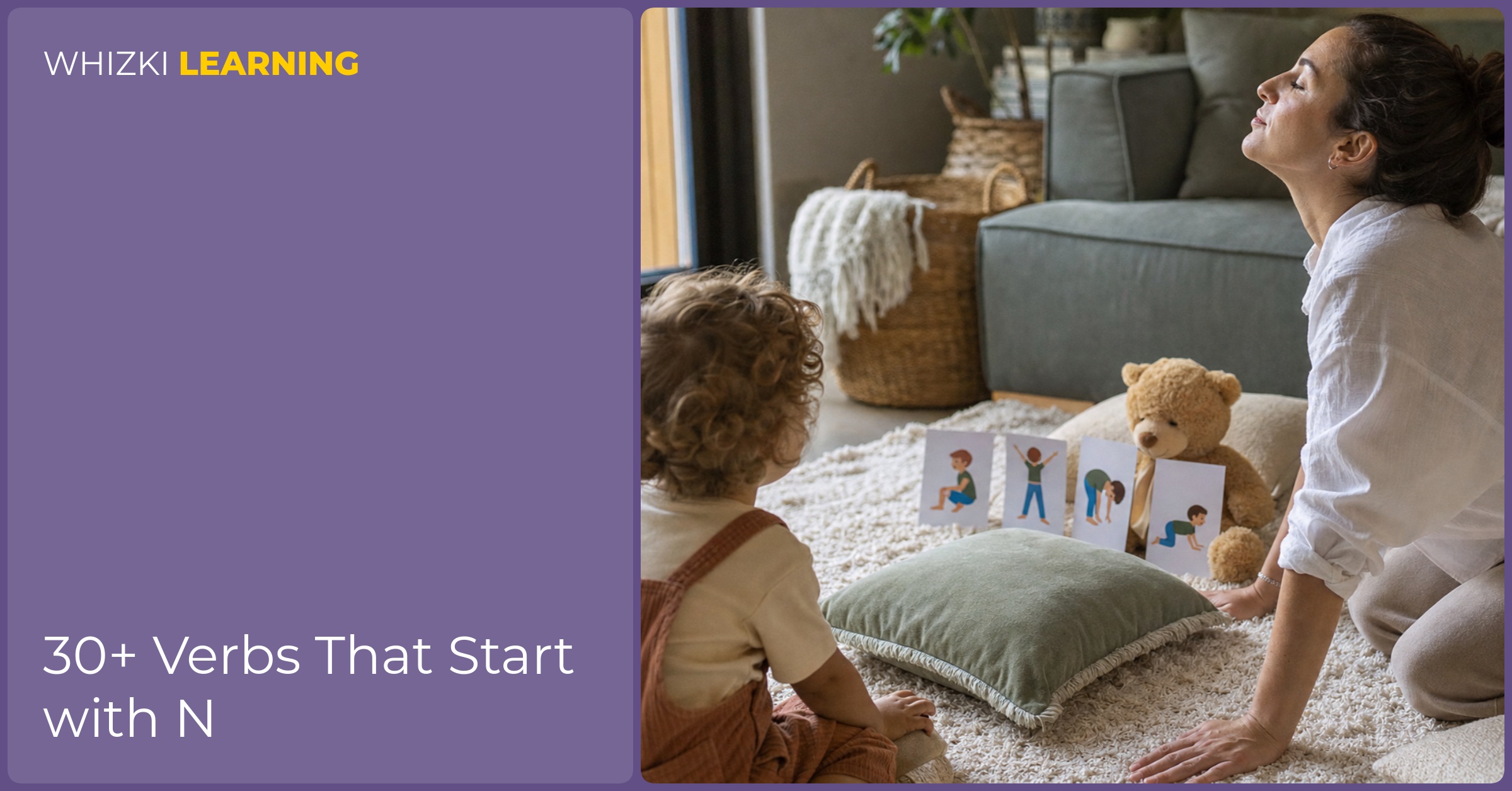
Body verbs are the easiest N words to teach first because the child can feel the action. Speech-language practice often pairs a spoken word with a gesture, especially when a child needs help turning vocabulary into real use. The adult says the word once, the child copies the action, and the child says the word back when ready.
Occupational-therapy basics also remind parents to keep movement small and safe indoors. A child can nod, nuzzle, or noodle arms around without turning the living room into a crash zone. I use these quick words during carpet time, transition time, and those five spare minutes before snack.
Nap: Nap on the rug. Nibble: Nibble one apple slice. Nod: Nod your head yes. Nuzzle: Nuzzle your soft bear. Nestle: Nestle in the blanket.
Nudge: Nudge the pillow over. Near: Near the red chair. Nose: Nose the beach ball. Neigh: Neigh like a pony. Noodle: Noodle your arms around.
Household actions that start with N
Household verbs work well because the child already sees the action during daily routines. Montessori practical-life work and NAEYC guidance both value real tasks, such as sorting, caring, and cleaning, because children build language while doing meaningful jobs. A verb lesson can happen while a child puts away socks or waters a plant.
The household word should stay light and doable. A three-year-old may only name a spoon, while a six-year-old may number napkins for family dinner. The point is not a chore chart, but a tiny action that gives the N word a place in the day.
Name: Name the brown teddy. Need: Need a clean spoon. Neaten: Neaten the shoe row. Notice: Notice the missing sock. Number: Number three paper cups.
Note: Note the red sticker. Nourish: Nourish the tiny plant. Nest: Nest bowls together gently. Nail: Nail the toy peg. Nurse: Nurse the baby doll.
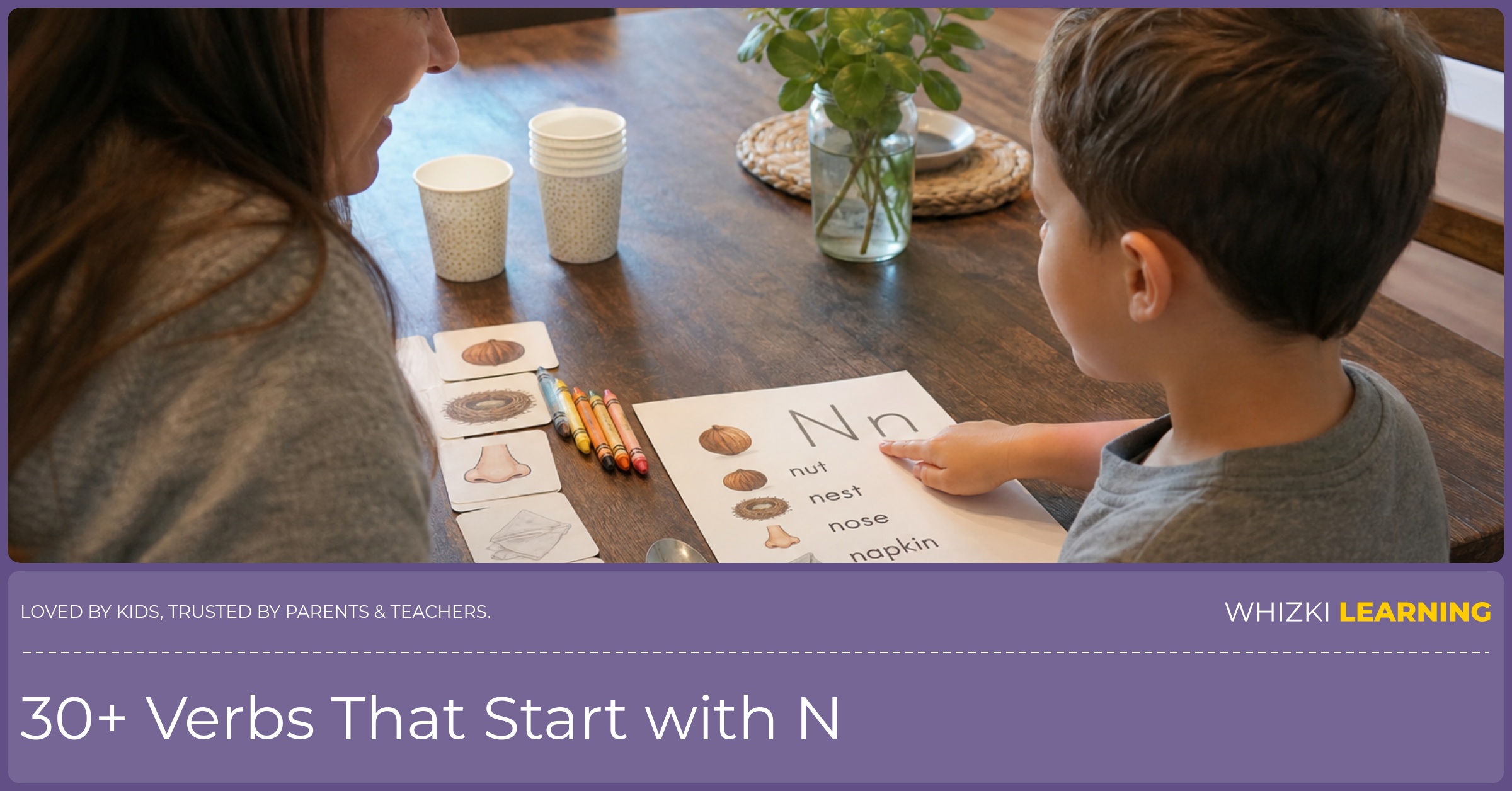
For a matching printable mid-routine, open our sight-words printables, print one N word page, and tape the sheet near the snack table or play shelf. A wall sheet turns “say the word” into “touch the word, act the word, and say the word” without adding another big lesson to the day.
Play actions that start with N
Play verbs give children permission to use bigger language without feeling tested. Reggio-inspired observation starts with what the child is already building, pretending, or chasing, and the adult adds the useful word at the right moment. A block road becomes a chance to navigate, narrow, or negotiate.
The play word can be a little less common when the action is clear. A child may not say nock every day, but a pretend bow, a craft stick, or a toy set can make the word memorable. Keep the prop simple, keep the pace quick, and stop while the child still wants one more turn.
Nab: Nab the blue beanbag. Net: Net the foam fish. Narrate: Narrate your car race. Nickname: Nickname your stuffed dog. Narrow: Narrow the block road.
Nock: Nock the pretend arrow. Negotiate: Negotiate one fair trade. Nominate: Nominate Mom for seeker. Navigate: Navigate the pillow path. Nix: Nix the silly rule.
Act-it-out charades and tracing tip
The N verb charades game takes about five minutes. Write six verbs on small paper cards, choose words such as nod, nap, nudge, name, net, and navigate, and place the cards face down. The child picks one card, acts the word silently, and the adult guesses before everyone says the N word together.
The tracing tip comes from Orton-Gillingham multisensory practice and a basic occupational-therapy handwriting idea: large movement comes before tiny pencil work. Write one lowercase n in thick marker, let the child trace the letter with two fingers, and say “down, over, down” while tracing. After the finger trace, the child can trace the whole word, such as nap or nod, with a crayon.
The teacher or parent should watch for grip fatigue and letter confusion. If the child presses too hard, switch to finger tracing in salt, shaving cream, or on the carpet before returning to paper. If the child mixes up n and h often, use fewer words and give more model strokes before asking for independent writing.
N verbs are a small but useful set, and a child only needs a few favorites to start using the letter N with confidence. Pick one body action, one household action, and one play action today, then repeat those same three words tomorrow before adding more.