If your child can chant numbers but freezes when a worksheet asks how many, print one blank ten frame and start with five calm minutes of counting counters together. A ten frame gives young children a steady place to see quantity instead of guessing from memory. The next step is simple: use buttons, cereal, pebbles, or dot markers on the frame before asking for pencil answers.
Reviewed by Whizki Editorial Team, Early Childhood Education Editors.
What a ten frame is
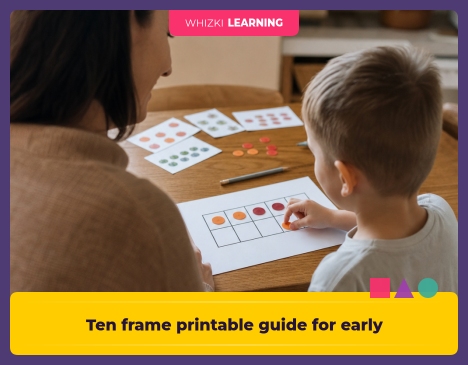
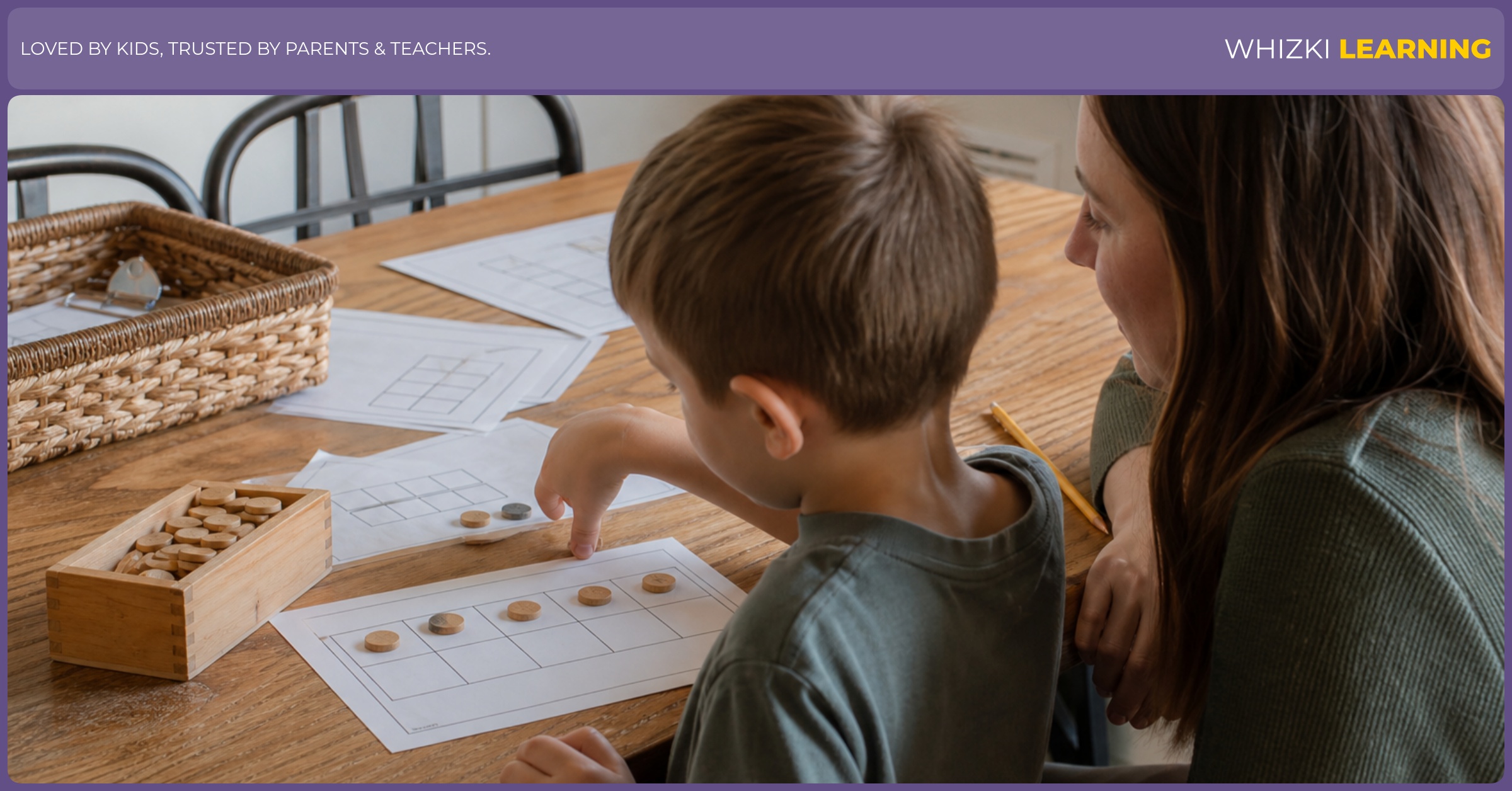
A ten frame is a rectangle with ten equal boxes, usually arranged as two rows of five. A ten frame printable lets a child place counters in a familiar pattern so the child can see 6 as 5 and 1 more, or 9 as 1 less than 10. In Montessori and Reggio-inspired rooms, the teacher often watches how the child organizes materials before adding more talk, because the arrangement tells a lot about number sense.
The ten frame works best when the child fills the top row from left to right, then fills the bottom row from left to right. That order matches the way many classrooms build early math habits and later reading direction. A kindergarten teacher can still accept a different placement during play, then model the tidy order during a short teaching turn.
The ten frame belongs with early counting, matching numerals, and comparing small sets, so the printable pairs well with the numbers learning hub when a child needs extra practice with one number at a time. The number work should stay concrete for ages 3-7, with fingers, counters, and spoken math before written equations. NAEYC guidance supports playful, hands-on math because young children learn best when materials can be touched, moved, and talked about.
Why ten frames build subitizing
Subitizing is the skill of recognizing a small quantity without counting every single object. A ten frame printable supports subitizing because the five-box row becomes a mental landmark. When a child sees a full top row and two counters below, the child can begin to say 7 without touching each counter.
Number bonds grow from the same visual structure. A child who sees 8 on a ten frame can also see 5 and 3, 4 and 4, or 2 empty spaces before 10. In Orton-Gillingham teaching, teachers use explicit, consistent patterns for letters and sounds, and the same clear routine helps early math feel predictable instead of random.
Occupational-therapy basics matter during ten frame work because small hands get tired quickly. A child who struggles with pencil pressure may show better math thinking with large counters, tongs, or dot markers before crayons enter the lesson. The ten frame should reduce fine-motor load, not turn math practice into a hand-strength test.
How to print and set up a ten frame
A useful ten frame printable has clear boxes, enough white space, and no clutter around the math task. Print a few blank frames, slip one into a plastic sleeve, and let the child write with a dry-erase marker or place counters on top. Reggio practice reminds adults to notice the child's strategy first, then offer a small prompt such as, I see five on top, what comes next?
For quick practice, keep one blank frame, one filled example, and a small cup of ten counters in a folder. Families and teachers can find more early math pages in our printable library when the same child needs fresh pages without changing the routine. Familiar format with new numbers often works better than a brand-new activity every day.
Ten frame setup should match the child's age and attention span. A 3-year-old may only fill to 3 or 4 and name how many, while a 6-year-old may compare two frames or find the missing part to make 10. NAEYC-aligned practice keeps the work short, playful, and connected to real talk.
For a ready sequence, the premium Ten-Frame Practice Pack in our worksheet sets pairs blank frames, dot frames, and make-ten pages in a parent-friendly order. The complete pack lives in Whizki Plus.
Five ten frame activities to try
The fill activity is the easiest first round. The adult says a number, and the child fills that many spaces with counters, then touches the full set while saying the total. Montessori practice values self-correction, so a child can compare the counted counters with the printed numeral before an adult steps in.
The flash activity builds quick visual recognition. Show a filled ten frame for two seconds, cover the frame, and ask the child how many counters were shown. Speech-language pathology practice often uses short wait time and clear prompts, so the adult can pause before asking, how did your eyes know?
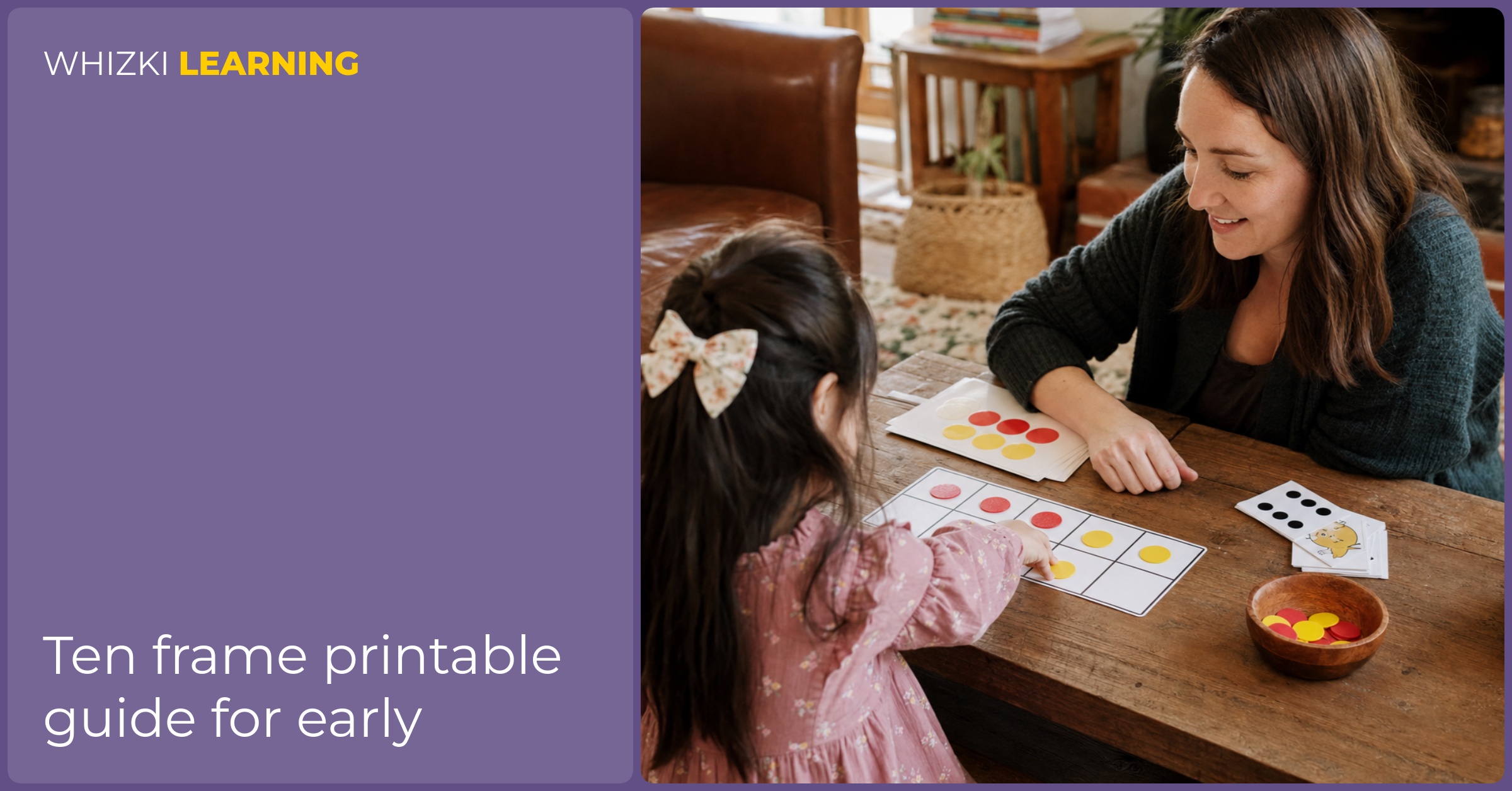
The make-ten activity turns number bonds into a small puzzle. Place 6 counters on the ten frame and ask how many empty spaces remain before 10. The child can fill the empty spaces with a second color so 6 and 4 become visible, touchable partners.
The war activity uses two ten frame cards, and the larger quantity wins the round. Story problems use the same frame with tiny real-life scenes, such as four crackers on a plate and three more crackers added. In Orton-Gillingham-style teaching, consistent wording and repeated routines help children focus on the math idea instead of decoding a brand-new direction each time.
Troubleshooting ten frame friction
A child who dumps counters everywhere may need a movement break before math begins. Occupational-therapy heuristics often start with the body, so try wall pushes, chair carries, or a short animal walk before returning to the table. The ten frame printable should feel like a small job the child can finish, not a long worksheet session.
A child who counts the same counter twice may need a physical tracking tool. Use a finger, a small craft stick, or a left-to-right sweep under the row while counting. Reggio observation helps here because the adult watches the mistake pattern before choosing the prompt.
A child who resists written numerals can still do strong ten frame math with spoken answers and counters. Add numeral writing only after the child can build and describe the quantity with confidence. NAEYC guidance supports matching the challenge to the child, especially for preschool and kindergarten learners who are still building fine-motor control.
A child who masters the blank frame quickly can compare two frames, hide part of a full frame, or invent a tiny story problem. Keep the numbers within 10 for ages 3-7 so the pattern stays useful. Bigger numbers can wait until the child is steady with one full ten.
A ten frame printable is small, but the routine can carry a lot of early math: counting, subitizing, comparing, and make-ten thinking. Start with one frame, ten counters, and one activity, then stop while the child still has a little energy left. Tomorrow's practice will go better when today's practice ends calmly.