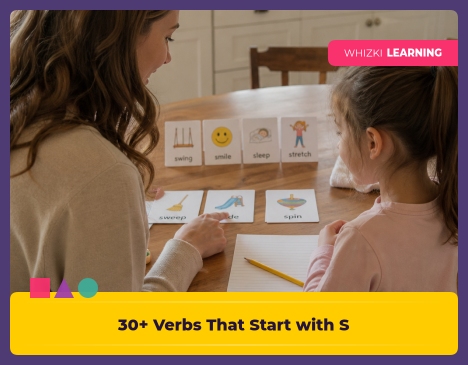
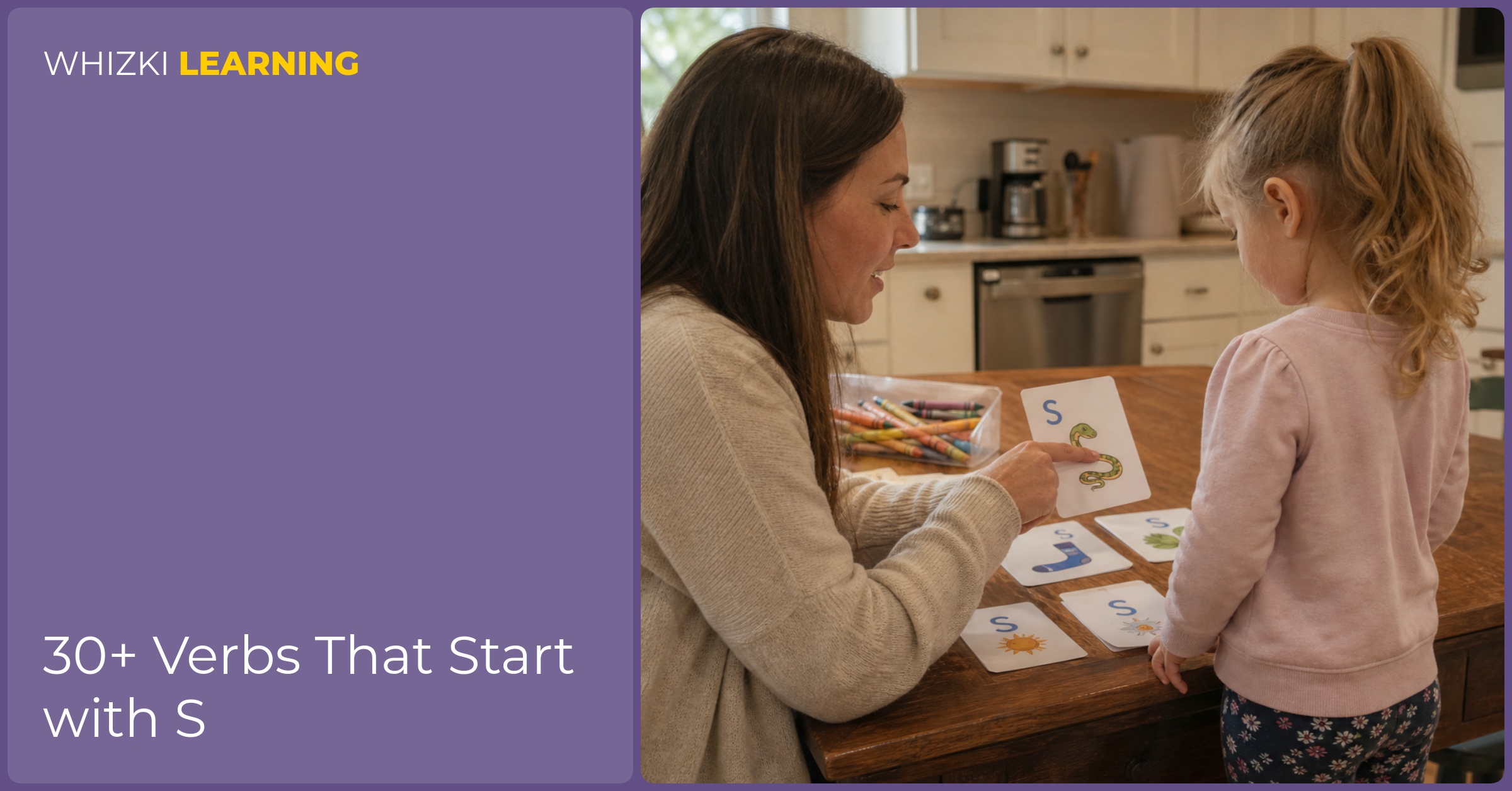
If S-word practice keeps turning into wiggles, pick three verbs from the list below and act each word before any pencil comes out. Young children learn action words best with bodies, voices, and real objects. A short movement break can turn letter practice from a battle into a shared routine.
Reviewed by Whizki Editorial Team, Early Childhood Education Editors.
Why S verbs help young readers
Action words give the letter S a job a child can feel. In an Orton-Gillingham style lesson, the child hears the /s/ sound, says the word, moves the body, and then looks at the printed word. That mix of sound, speech, movement, and print is especially helpful for preschool and kindergarten readers.
NAEYC guidance reminds teachers and parents that young children need play, movement, and meaningful language before worksheets become useful. For the letter shape and sound, keep our letter S learning page nearby. For other S word families, use first words starting with S for nouns and describing words starting with S for adjectives.
Body actions that start with S
Body verbs are the easiest place to begin because the child can act out the word right away. Occupational-therapy basics often use big-body movement before fine-motor work because shoulders, balance, and core muscles help children settle into pencil tasks. A child who stomps, stretches, and squats first often traces with a steadier hand afterward.
Say one word, model one action, and invite the child to copy. Keep the pace light and stop before the child gets worn out. The goal is a clean link between the S sound, the spoken verb, and the action.
- Sit: Sit on the rug.
- Stand: Stand by your chair.
- Step: Step over the pillow.
- Skip: Skip to the door.
- Spin: Spin one slow circle.
- Stretch: Stretch both arms high.
- Stomp: Stomp like a giant.
- Squat: Squat beside the basket.
- Sway: Sway side to side.
- Slide: Slide across the mat.
- Scoot: Scoot to the couch.
- Smile: Smile at your grown-up.
- Sniff: Sniff the pretend flower.
- Sneeze: Sneeze into your elbow.
Household actions that start with S
Household verbs make vocabulary feel useful because the word belongs to a real job. Montessori practical-life work and Reggio classroom observation both value child-sized tasks, real tools, and language tied to daily routines. A small broom, spoon, cloth, or snack bowl can carry a lot of literacy practice.
Choose safe jobs with no rush and no perfect-product pressure. The adult can say the S verb first, then the child can do the action, then both can find the printed word. The routine works well during snack prep, cleanup, or pretend kitchen play.
- Sweep: Sweep under the table.
- Scrub: Scrub the small cup.
- Spray: Spray the thirsty plant.
- Stir: Stir the soup slowly.
- Stack: Stack the clean towels.
- Sort: Sort socks by color.
- Scoop: Scoop rice into bowls.
- Serve: Serve crackers on plates.
- Set: Set out two spoons.
- Spread: Spread jam on toast.
- Seal: Seal the snack bag.
- Shake: Shake the salad jar.
Print a matching page from our sight-words printables and tape one action-word sheet near the snack table. The posted page gives a tired grown-up one quick routine: point, act, trace, and move on.
Play actions that start with S
Play verbs work because children care about the materials in front of them. Reggio-inspired teaching pays close attention to a child’s chosen play and adds language inside that play instead of pulling the child away too soon. Blocks, toy food, stickers, boats, and bears can all become S-verb practice.
Keep play sentences short enough for a 3- to 7-year-old to copy. The adult can whisper the sentence first, and the child can repeat the sentence while acting. Speech-language practice often pairs a clear model with a natural turn, which keeps vocabulary practice social and simple.
- Sing: Sing a silly song.
- Splash: Splash in pretend puddles.
- Search: Search for blue blocks.
- Share: Share the red truck.
- Snuggle: Snuggle the stuffed bear.
- Scribble: Scribble on scrap paper.
- Stamp: Stamp dots on cardboard.
- Stick: Stick stars onto cardstock.
- Swap: Swap toys with me.
- Swing: Swing your arms gently.
- Sail: Sail the paper boat.
- Snap: Snap two blocks together.
- Squeeze: Squeeze the play dough.
- Shop: Shop for pretend food.
Act-it-out S verb charades game
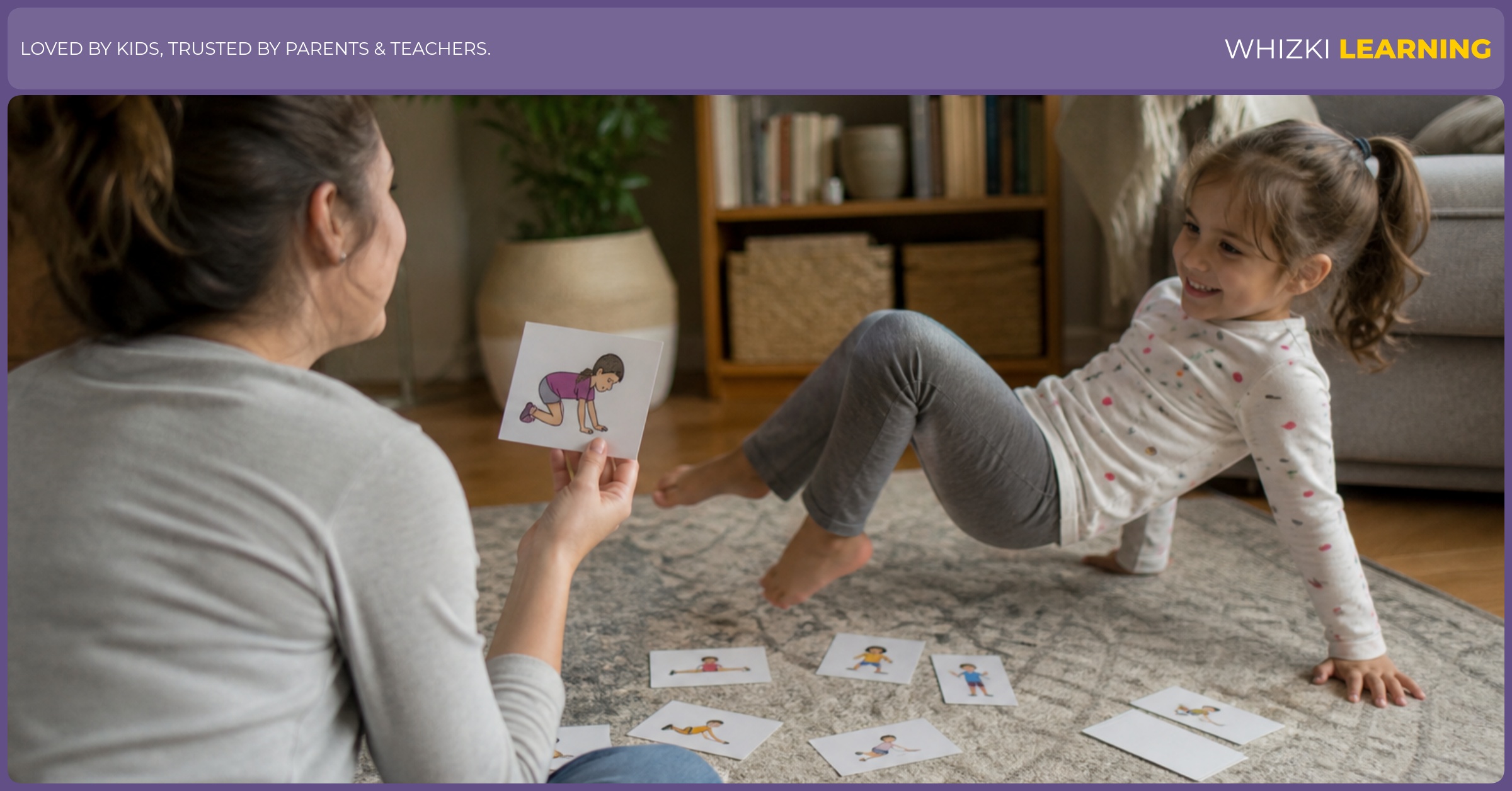
The S-verb charades game turns word practice into a two-minute movement routine. Speech-language pathologists often use imitation, turn-taking, and short spoken models because children need many friendly repetitions before new words stick. The game can fit between breakfast and shoes, during circle time, or before handwriting.
Pick six S verbs from the lists above and write each word on a small card. The adult acts first so the child sees how silly and simple the game can be. The child can point to the matching word after each guess, which connects the spoken word to print without a quiz feeling.
- Choose six favorite action cards.
- Whisper one card to the actor.
- Move without using any words.
- Guess the action together.
- Switch turns after each card.
Trace-the-word tip for S verbs
The trace-the-word routine should feel like a tiny finish, not a long worksheet. Orton-Gillingham lessons often use multisensory tracing because the child sees the letters, says the sounds, and feels the hand path at the same time. Occupational-therapy handwriting basics also favor short practice with a comfortable grip and relaxed shoulders.
Write one S verb in large letters on plain paper, then let the child act out the word before tracing. The movement gives the printed word meaning, and the tracing gives the hand a calm job. Stop after one to three words if the child is young, tired, or new to pencil work.
- Point to the first letter.
- Trace with two fingers.
- Name the action softly.
- Write the word once.
Kindergarten vocabulary grows fastest when words belong to real life. Choose a few S verbs, act the words, and trace one favorite word at the end. A short, steady routine will beat a long, tense lesson almost every time.