Learning Outcomes
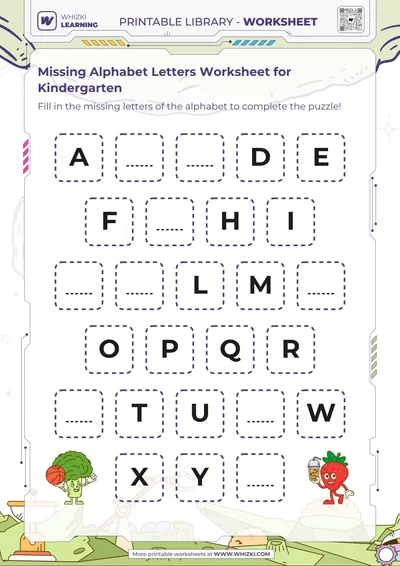
The Whizki Learning alphabet worksheet strengthens letter-sequence recognition accuracy to 90% by guiding children to identify and write missing ABC letters in order.
The Whizki Learning alphabet worksheet improves early handwriting fluency by prompting children to trace and independently form uppercase letters with correct spatial placement.
The Whizki Learning alphabet worksheet introduces alphabetic pattern awareness by inviting learners to predict which letter comes next and justify choices using verbal reasoning.
Alphabet & Letters
ABC
A–Z alphabet learning with words, examples, and early reading practice
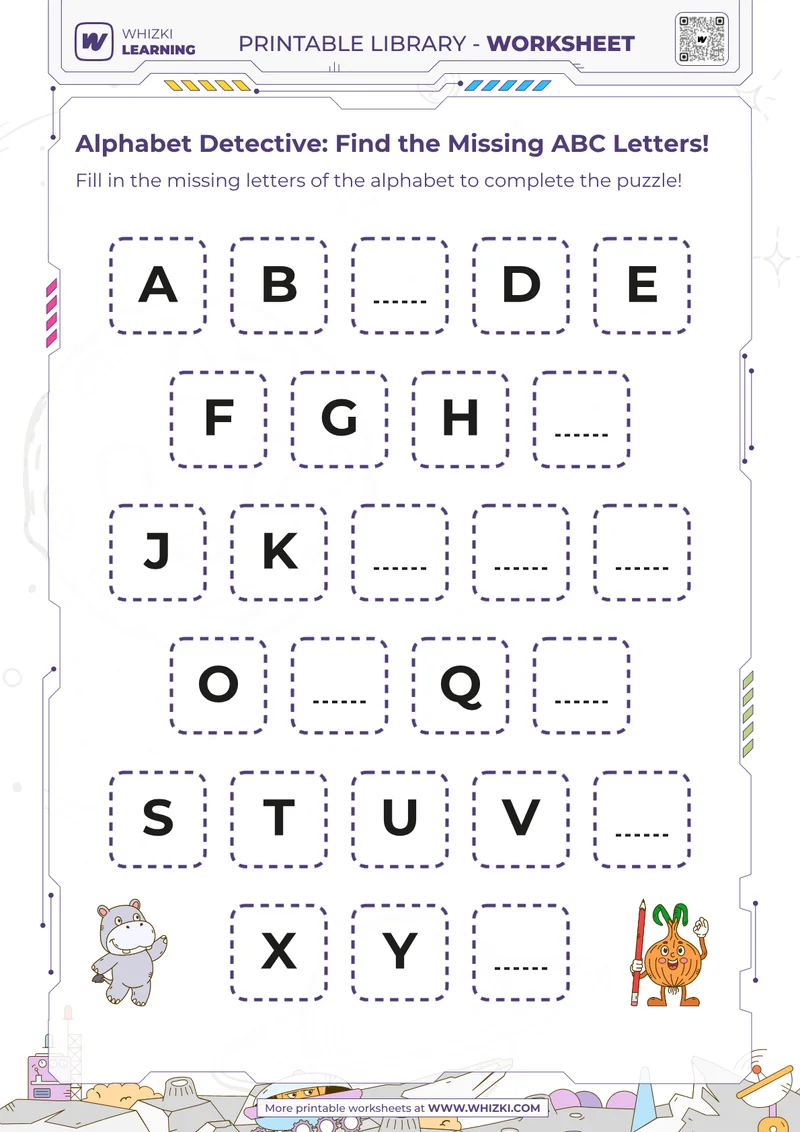
Alphabet Detective: Find the Missing ABC Letters!
The Whizki Learning 'Alphabet Detective: Find the Missing ABC Letters!' worksheet invites young learners to complete alphabet sequences by discovering hidden letters from A to Z. Designed for 4-year-olds and first grade students, the Whizki Learning activity uses playful puzzles and large, kid-friendly fonts to support beginning readers. Early literacy experts created the Whizki Learning worksheet to blend phonics readiness, visual scanning, and handwriting practice in one engaging resource. Parents and teachers can use the Whizki Learning printable as a quick, low-prep literacy center or at-home warm-up.
The Whizki Learning alphabet completion worksheet focuses on missing-letter patterns, encouraging each child to say the alphabet out loud, point to each printed letter, and decide which letter belongs in the empty box. Strong letter-sequence skills from the Whizki Learning activity help children read simple words more smoothly, because children recognize letter patterns faster inside storybooks. Carefully spaced writing lines on the Whizki Learning worksheet guide young writers toward correct letter size and placement, which supports legible handwriting in later grades. Educational designers and classroom teachers collaborated on the Whizki Learning resource to match common first grade reading standards while remaining accessible for younger four-year-old learners.
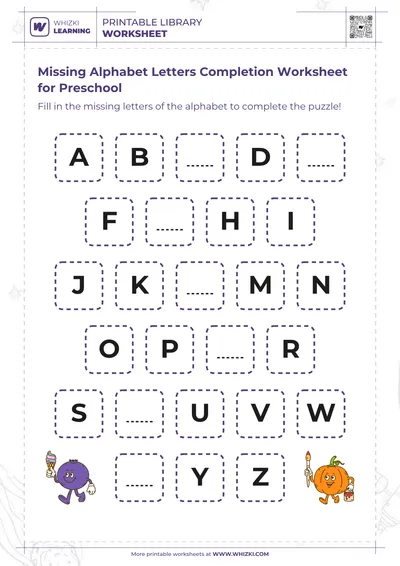
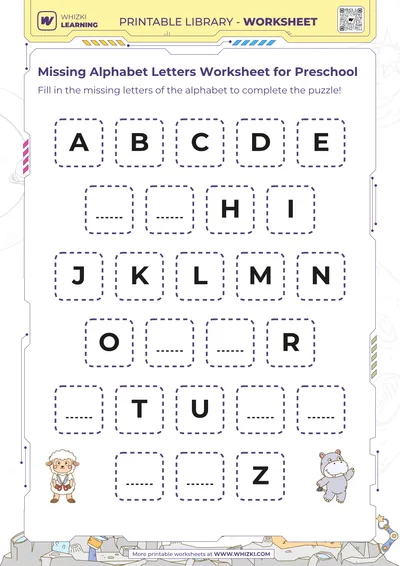
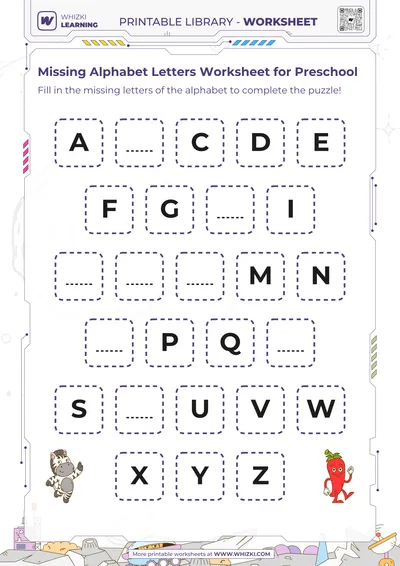
The Whizki Learning alphabet worksheet promotes independent learning by offering clear visual cues, such as arrows, dotted outlines, and example rows that model correct ABC order. Children gain confidence when each child successfully fills the missing letters C, I, L, M, N, P, R, W, and Z, turning alphabet practice into a mini mystery game. The playful detective theme of the Whizki Learning worksheet encourages children to talk about clues, ask questions, and explain reasoning, which develops oral language alongside reading and writing. Families can store the Whizki Learning printable worksheet in a learning binder to revisit alphabet skills for quick review before kindergarten or first grade assessments.
The Whizki Learning alphabet completion printable worksheet provides a flexible resource for homeschool lessons, tutoring sessions, and classroom literacy centers. Parents can print multiple copies of the Whizki Learning worksheet to track growth by dating each page and saving samples across several weeks. Teachers can pair the Whizki Learning activity with alphabet songs, letter tiles, or magnetic letters to deepen alphabetic understanding through multisensory practice. Durable design choices in the Whizki Learning worksheet, such as simple icons and clean layouts, support children who benefit from reduced visual distractions during reading and writing tasks.
Limited Time Sale
Kids’ Workbooks!
Boost your child’s skills with our discounted workbooks. Engaging activities for preschool, kindergarten, and grade 1 - now at special sale prices!


Fast shipping
Secure Payment
Licensed Teachers
For the planet
Printed in the USA
Find fresh ideas
To help your little learners grow!
Helpful guides for parents and teachers, and tips for making learning at home super fun.

Getting an energetic preschooler to sit still for handwriting practice often results in frustrating power struggles. This educator-approved playbook provides 10 screen-free, proprioceptive calm-down activities designed to regulate a dysregulated nervous system. Learn how heavy work, fine motor warm-ups, and breath control prepare a child's body and mind for successful, tear-free tracing and writing.
Sunny Hedge
When a preschooler complains of boredom, parents often feel immediate guilt and offer digital entertainment. This educator-approved guide explains the psychological mechanism of unstructured time and why boredom is the ultimate catalyst for independent play. Learn how to survive the initial complaining phase and utilize high-quality printed workbooks to bridge the gap between digital stimulation and deep, analog focus.
Sunny Hedge
Many parents panic when their preschooler cannot sit still for more than two minutes, fearing the child is not ready for formal schooling. This educator-tested guide explains why early attention spans are naturally short and provides a step-by-step plan to gently stretch cognitive stamina. Learn how to build a reliable 15-minute focus habit using screen-free, analog activities before the first day of kindergarten.
Sunny Hedge
The kitchen provides a natural, highly engaging mathematics classroom for preschoolers. This educator-approved playbook details 10 easy, screen-free number games using everyday pantry items and snacks. Learn how sorting pasta, measuring water, and counting blueberries builds foundational counting skills, one-to-one correspondence, and deep number recognition without any formal preparation.
Sunny HedgeJoin the Screen-Free Movement.
Get exclusive activities, expert tips, and inspiration for a more meaningful, offline family life.