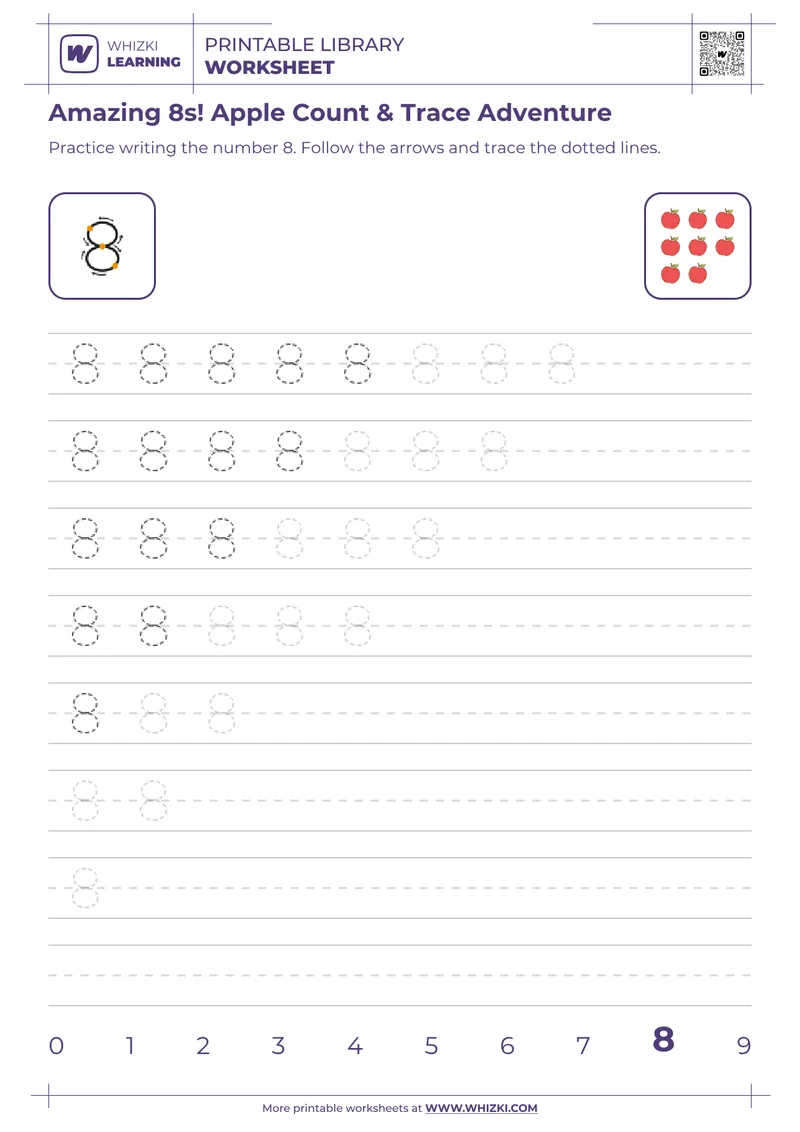
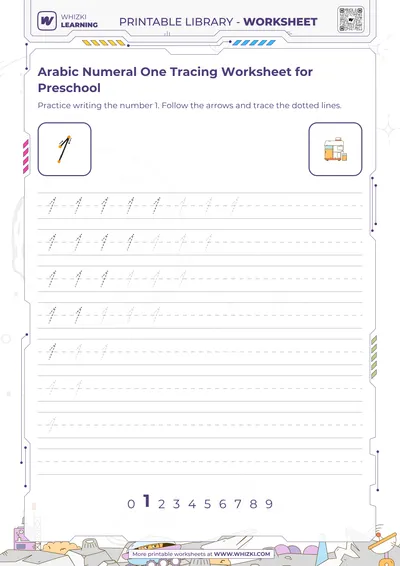
A child can recognize a number before writing it feels comfortable. This number 8 tracing worksheet provides a large model, direction cues, and repeated dotted examples for pencil practice. The model uses the printed form supplied on this page. Begin with a short look at the large example, then choose a few tracing attempts for a supported lesson at home or in a classroom writing center.
8 is the written numeral for a group containing 8 objects. Connect the written numeral with its spoken number name before asking the child to trace. Look at the upper and lower loops. Model the starting point and movement once, then let your child follow the dotted path. Compare one finished attempt with the large model before moving to the next.
The printed activity concentrates on forming 8. To connect handwriting with quantity, use a separate group of counters or small objects. Count out 8 counters, touching each once, then point back to the written numeral. Keep this follow-up brief and distinguish the movable objects from the tracing models on the worksheet.
The number 8 guide offers a related explanation of the value and notation. For another practice format, explore the Early Math Essentials set. If a turn is difficult, draw a larger model on plain paper and try that movement together. Use a comfortable pace, leave unused rows for another session, and later invite one independent attempt beside the printed example.