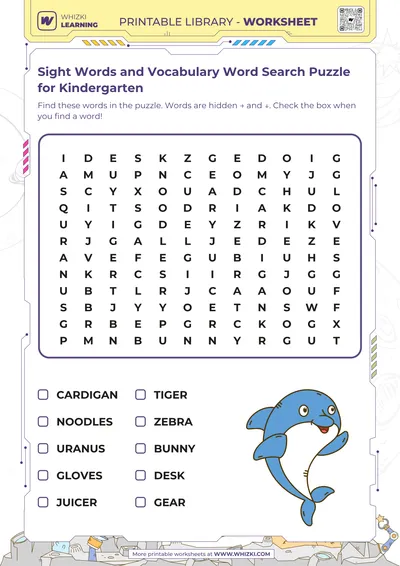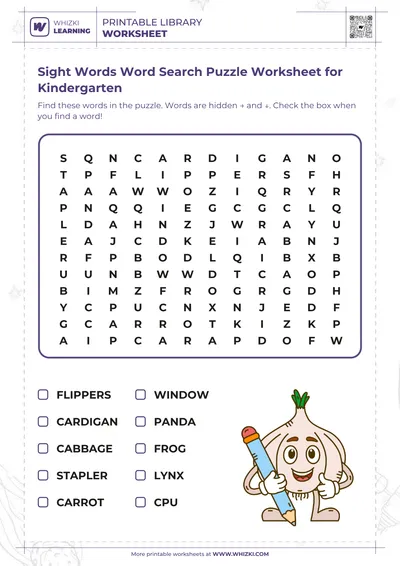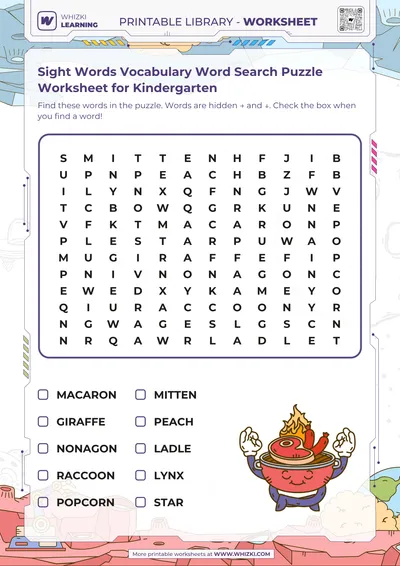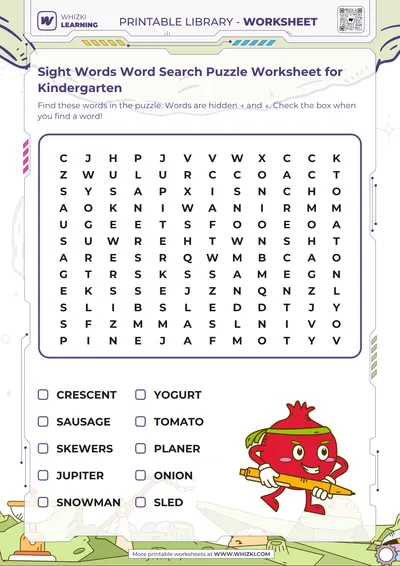
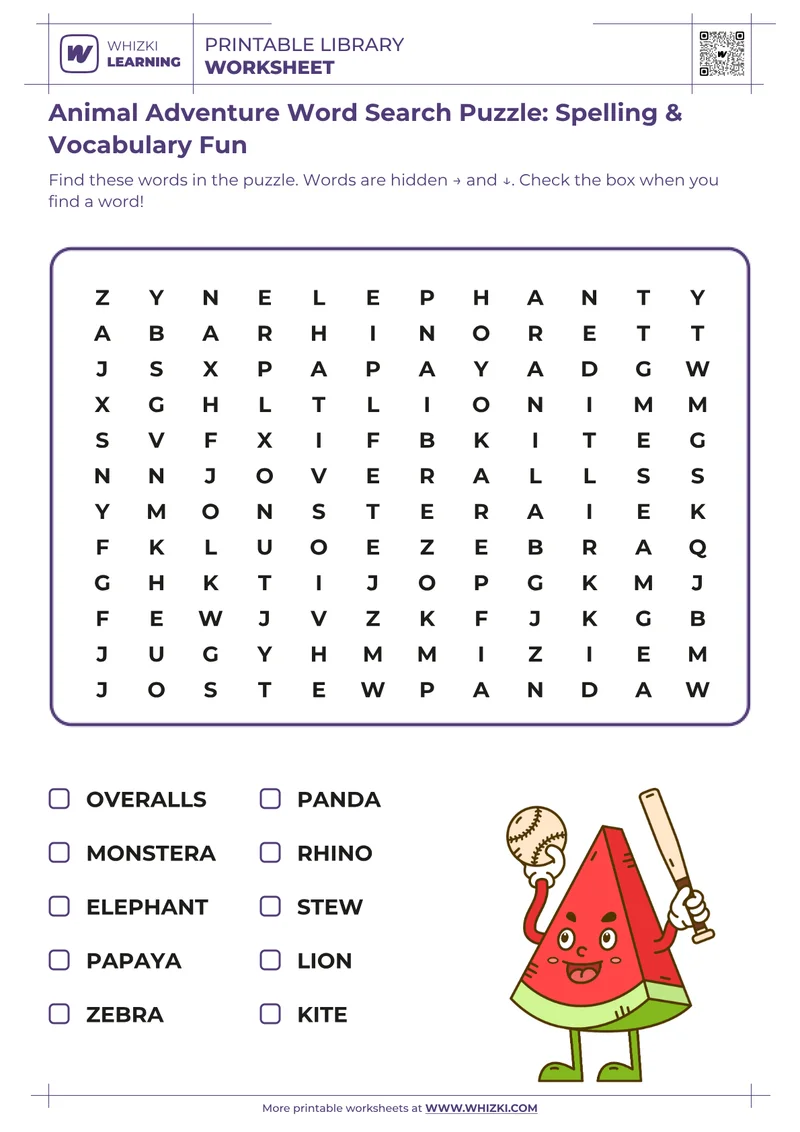


Read each listed word and compare its letters with the grid, using the printed word list as the model for accurate matching.
Scan rows and columns in the directions shown on the page, then confirm a word by checking every letter in sequence.
Track completed work by checking the box after each found word, showing which spellings have been matched and which remain.

This animal-themed word search asks learners to find the printed words stew, overalls, monstera, zebra, panda, lion, rhino, kite, elephant, and papaya in a letter grid. The page states that words are hidden left to right and top to bottom, then asks learners to check the box when a word is found. For adults planning a first-grade reading routine, the first-grade foundational reading goals page gives useful context for print skills such as recognizing letters, reading words, and noticing spelling patterns.
This activity is a good fit when a learner can compare uppercase printed words with uppercase letters in a grid. Some words are short and familiar, such as lion and kite, while others are longer, such as overalls, elephant, and monstera. If the full list feels like too much at once, start with one short word, read it together, and look for its first letter before scanning the rest of the row or column.
The practice works best when learners use a steady search routine. Choose a word from the list, point to each letter in order, and then scan the grid for the first letter. Because the printed directions show that words go right and down, compare the next letters in those two directions before moving on. After a match is confirmed, check the word’s box and read the word again. For more pages organized around similar print and vocabulary practice, the Sight Words & Vocabulary worksheets collection can help adults choose another related activity.
Use the page during a literacy center, morning work time, homework practice, or a short home reading session. Sit nearby at first and model how to check the spelling against the list instead of guessing from the first letter alone. If a learner loses their place, cover part of the grid with a blank sheet of paper or return to a single target word. A suitable next step is to read the checked words together and copy a few of them on separate paper for extra spelling practice.
Boost your child’s skills with our discounted workbooks. Engaging activities for preschool, kindergarten, and grade 1 - now at special sale prices!


Fast shipping
Secure Payment
Licensed Teachers
For the planet
Printed in the USA
Helpful guides for parents and teachers, and tips for making learning at home super fun.

Picture labels can build meaning, first-sound attention, or guessing habits. Use this parent-friendly decision tree to know when to cover or reveal the picture.

A vague school screening notice can leave families guessing, so start with seven plain questions about the test, timing, language, evidence, and next steps.

A field note on the May 2026 move to one shared worksheet generator API, with a simple parent preview for print consistency and handwriting comfort.

A seven-minute apple observation helps children compare color, stem, skin, weight, smell, and a cut surface, then draw what children noticed before any craft begins.
Get exclusive activities, expert tips, and inspiration for a more meaningful, offline family life.