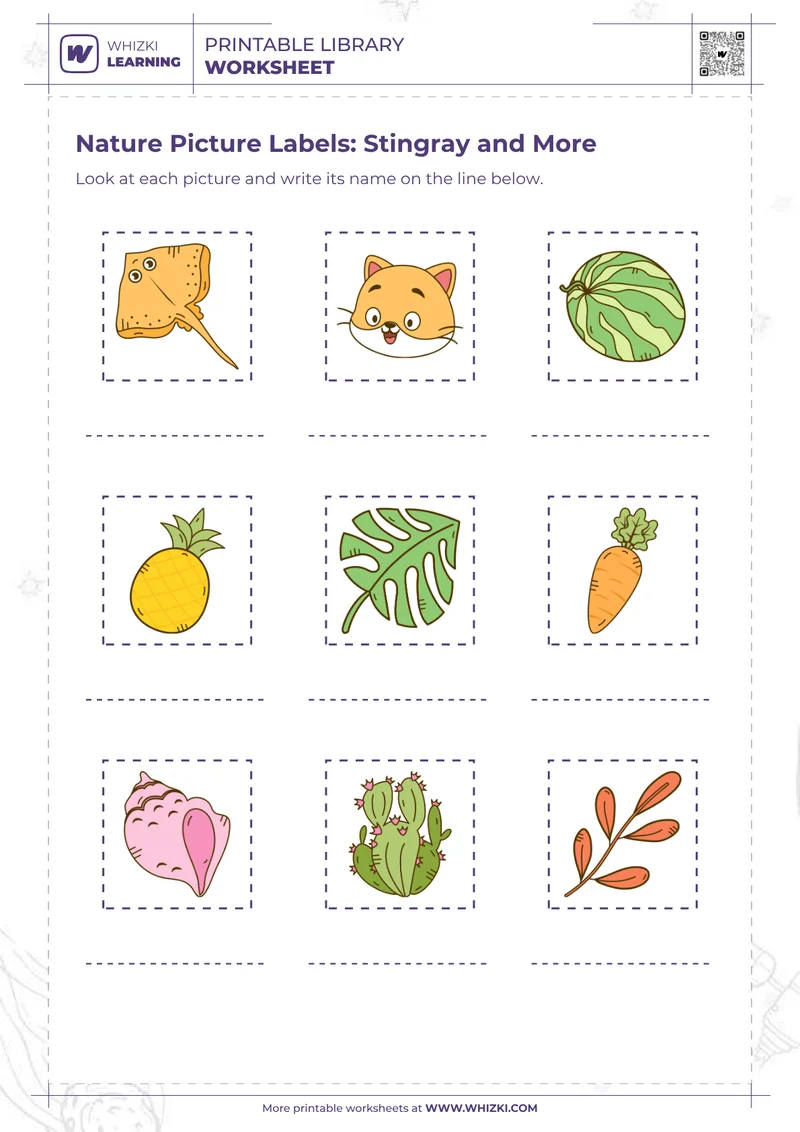
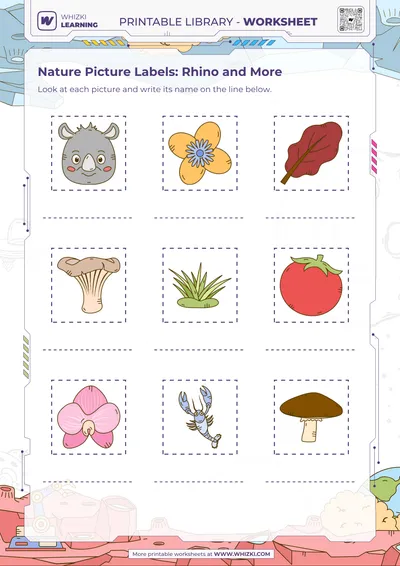
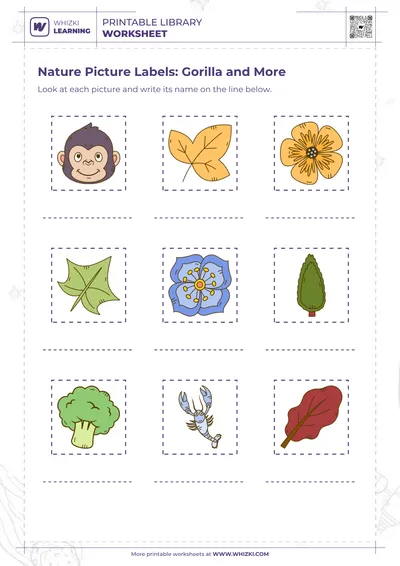
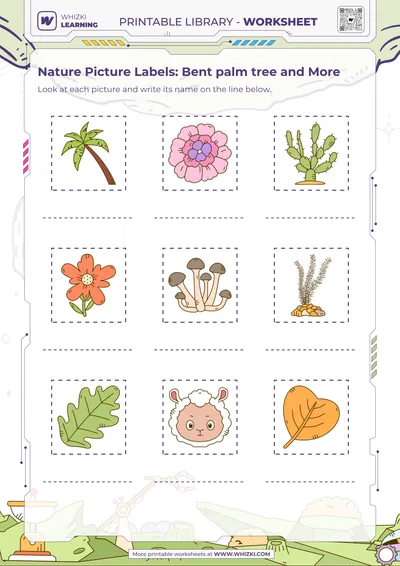
This nature picture labeling worksheet presents nine illustrations with a blank writing line beneath each one. The pictures include stingray, lynx, and watermelon. Name them together before beginning the writing. The page asks for picture names; it has no printed word bank, matching column, or category boxes. An adult can provide a model word when the child recognizes the picture but cannot yet spell its name.
In reading order, suggested labels are stingray, lynx, watermelon, pineapple, split green leaf, carrot, conch shell, round cactus, small orange branch. Use these as an adult reference while checking the picture above each line. A shorter accurate name is also useful: a child can say “plant” or “leaf” for a more detailed nature illustration, for example. Choose labels the child understands rather than requiring a long descriptive phrase simply because it appears in the adult guide.
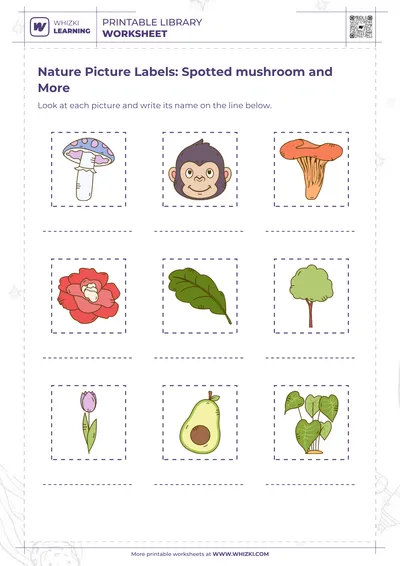
Use visible features to explain an unfamiliar picture: a leaf has an outline, a plant has stems or leaves, and an animal may have a distinctive head shape. These are simplified drawings, so accept a sensible everyday name instead of demanding a precise species identification. If a mushroom appears, use it as a pictured vocabulary item. Recognizing a cartoon mushroom does not tell someone whether a real mushroom is safe to handle or eat.
Explore the animals and nature worksheet collection for related activities. Save a suitable next page in the Family Learning Planner. Begin with two or three pictures, say their names, and record one label at a time. An adult can write a spoken answer or provide a separate copying model. Return to the remaining cards later, then read each completed label beside its picture.