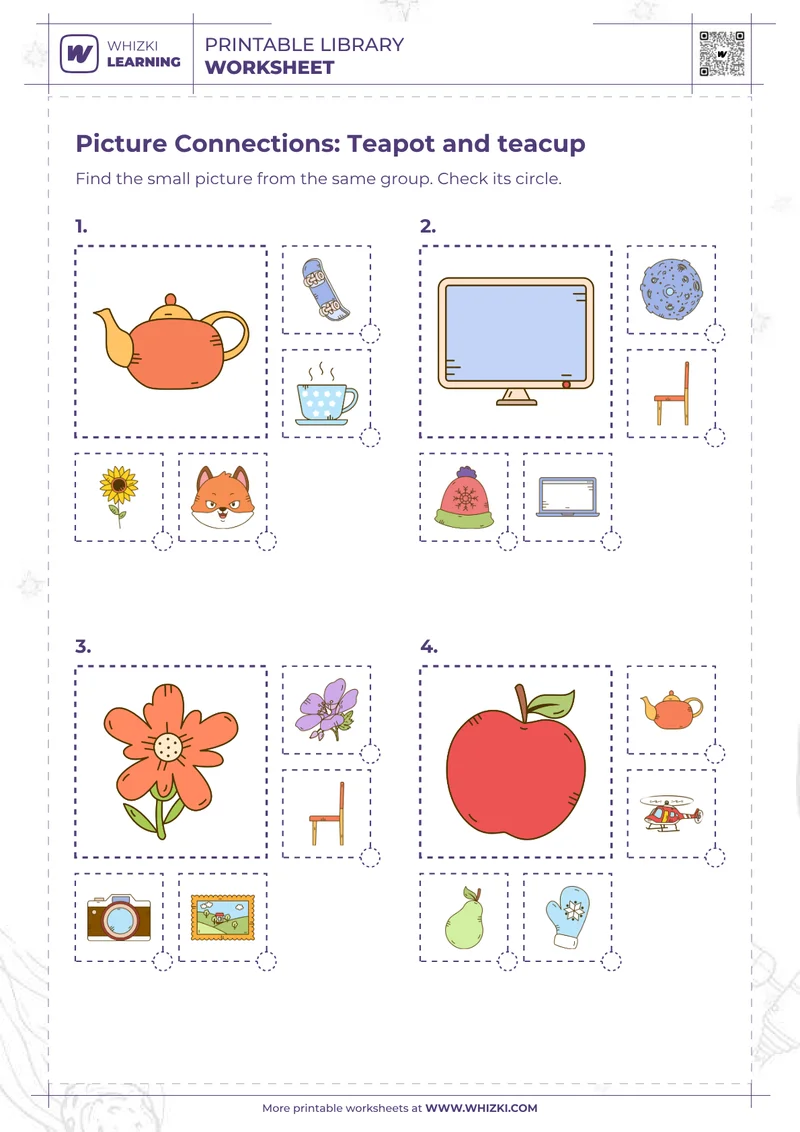
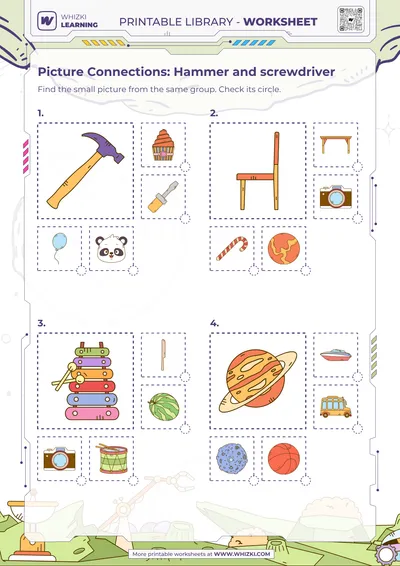
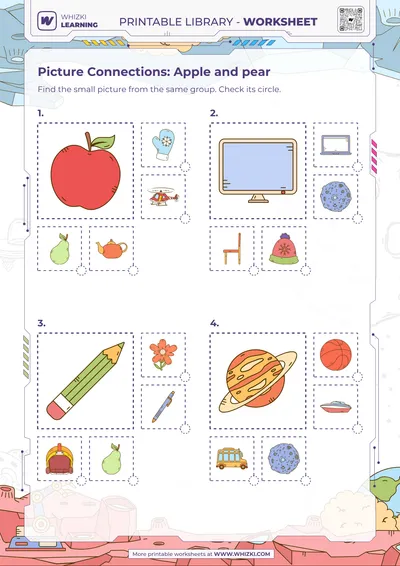
This picture connections worksheet presents four small puzzles about objects that belong together. Each large prompt has four smaller choices, with a circle beside each choice. The first prompt shows a teapot; its intended partner is the teacup. Introduce unfamiliar objects before beginning, then invite your child to explain why two pictures fit together instead of guessing from their color or position.
The teapot connects with the teacup. Both are used for serving tea. The monitor connects with the laptop. Both are devices with screens. The orange flower connects with the purple flowers. Both are flowers. The apple connects with the pear. Both are fruits. Use these relationships as an adult checking guide after the child has compared the choices. Ask for a short reason before marking the circle, and return to the large prompt when another option is distracting.
Work through one puzzle at a time. Name the large picture, look at all four smaller pictures, and choose the one with the shared use or group. The page asks for one intended match per prompt. A child may suggest another everyday association; listen to the explanation, then compare it with the particular relationship this puzzle practices. An adult can introduce a tool’s purpose without making the final choice.
Find more grouping activities in the Picture Sorting and Logic Pack. Save an appropriate follow-up in the Family Learning Planner. After checking the four circles, choose two familiar household objects and ask whether they have a shared use. Explain the connection in an everyday sentence, or describe why the objects belong to different groups. Keep this extension separate from the printed choices.