Learning Outcomes
Centimeter measurements → Add saved quantities → Children combine labeled lengths and record totals with the correct cm unit.
Illustrated measuring models → Compare quantities → Children use pictures to decide which saved measurement is greater or smaller.
Kindergarten math vocabulary → Name units → Children say centimeters, match cm labels, and explain totals in simple words.

Centimeter Addition Measurement Worksheet
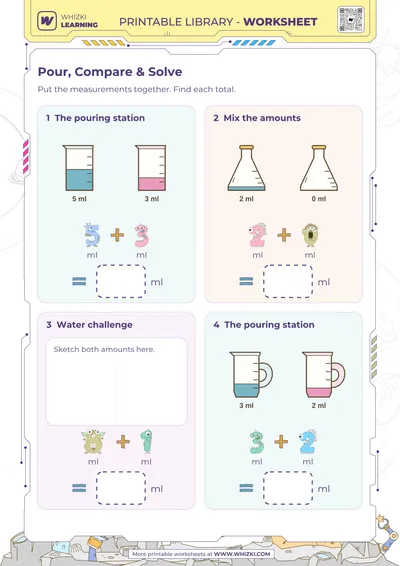
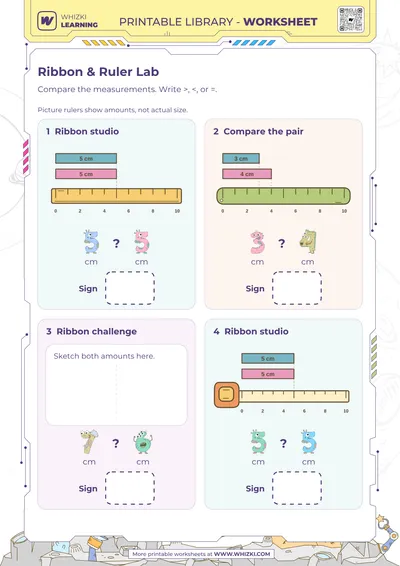
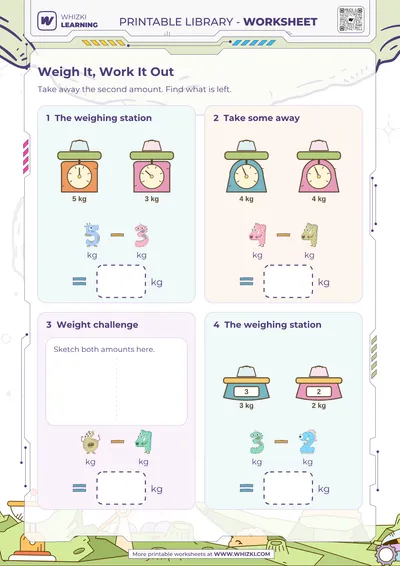
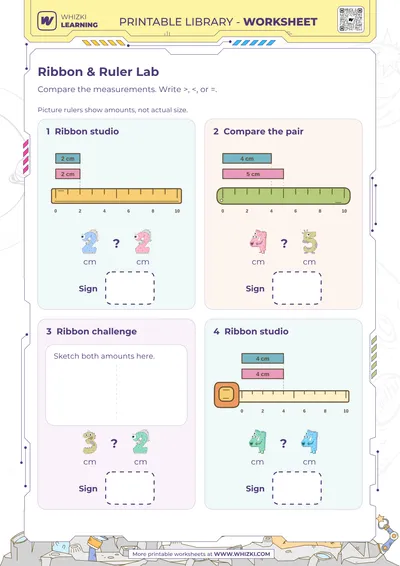
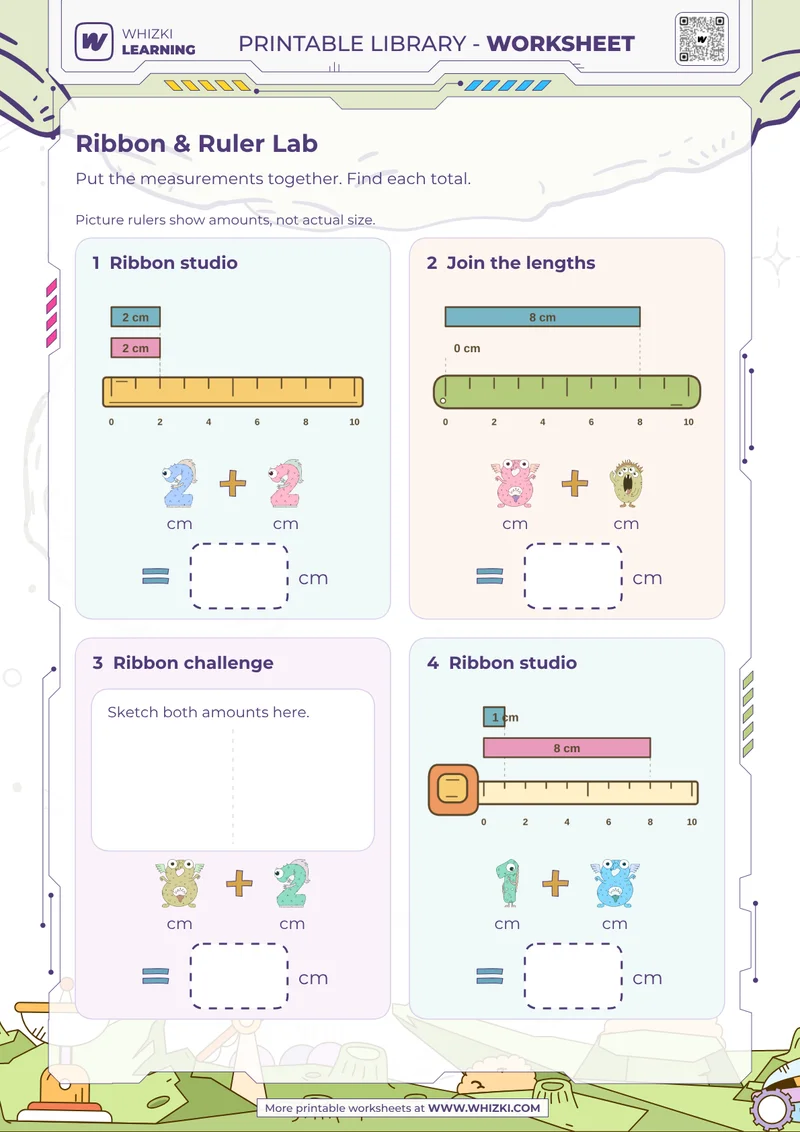
The centimeter addition measurement worksheet gives kindergarten children one printable page with four cm addition problems. Each problem shows an illustrated ruler, scale, or measuring container that matches the saved quantities, so children add measurements and write totals using centimeters. The pictures are models for thinking, not life-size measuring tools.
At age 5, measurement can feel slippery because children are learning that a number can stand for length, weight, or amount. Five-year-olds get bored fast when every problem looks like plain math facts, and unit labels can slow children down. Short picture-based practice helps children connect addition with real measuring language.
Sit beside your child and read one problem aloud: “Three centimeters plus two centimeters.” Ask your child to point to the matching picture, say the unit, count on, and write the total with cm. If attention fades, fold the page so only one problem shows at a time.
A generic printable may treat measurement as regular addition with a label added at the end. This page keeps the unit visible in every problem and pairs each saved quantity with a simple model, which makes comparison talk feel natural: Which measurement is longer or has more centimeters? Which total is greater?
Limited-time savings
on Whizki workbooks.
Boost your child’s skills with our discounted workbooks. Engaging activities for preschool, kindergarten, and grade 1 - now at special sale prices!


Fast shipping
Secure Payment
Licensed Teachers
For the planet
Printed in the USA
Find fresh ideas
To help your little learners grow!
Helpful guides for parents and teachers, and tips for making learning at home super fun.

A field note on the May 2026 move to one shared worksheet generator API, with a simple parent preview for print consistency and handwriting comfort.

A seven-minute apple observation helps children compare color, stem, skin, weight, smell, and a cut surface, then draw what children noticed before any craft begins.

A field note on why Ukrainian-English workbook pages need fresh design choices for letters, examples, space, and language-specific skills.

A fast weather window journal helps ages 3-7 notice sky and temperature feeling with simple symbols, compare a few days, and learn observation versus forecast.
Join the Screen-Free Movement.
Get exclusive activities, expert tips, and inspiration for a more meaningful, offline family life.