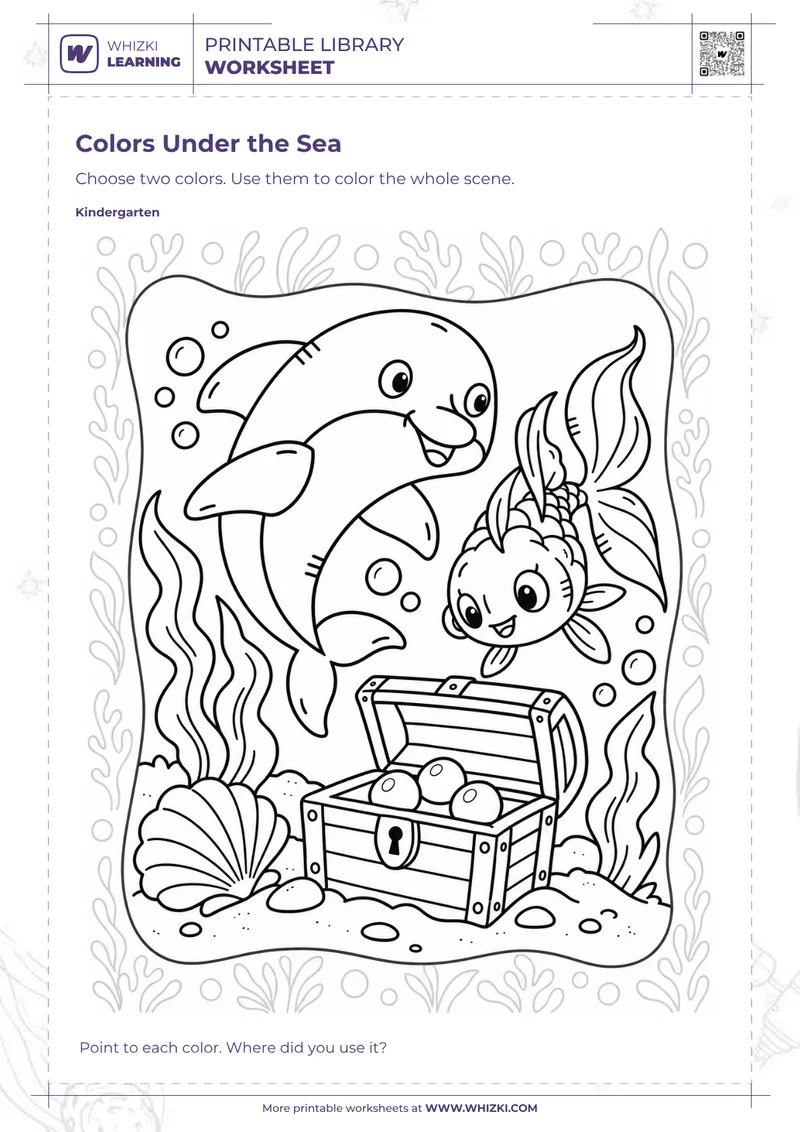
In Colors Under the Sea, the printed task is: “Choose two colors. Use them to color the whole scene.” This single-page coloring activity combines a picture with a specific instruction, so look at the direction before choosing the first color or adding a drawing. Read it aloud together and identify the part of the page where the child will begin.
Start by naming a few visible details together. The picture provides a setting for a spoken story; a child can describe what is happening or imagine what happens next. The page also invites this response: “Point to each color. Where did you use it?” Keep the first attempt focused on one small area. Pause to compare that choice with the direction before carrying the same idea into the rest of the picture.
Let the child point while speaking, and follow up on one detail instead of requiring a long story. The coloring and conversation can happen in short turns. Crayons or colored pencils can be used for the picture, with a pencil available when the prompt asks for a drawing or written detail. The child can talk through a choice before marking the page. There is no need to finish every part in one sitting; return to an unfinished area with the original direction in view.
Explore the related pre-writing activities when choosing a next step. Save a suitable activity in the Family Learning Planner for another day. When this picture is finished, ask your child to point to one choice that follows the prompt and explain it. Use that explanation to decide whether to repeat the same idea or try a different task with familiar materials.