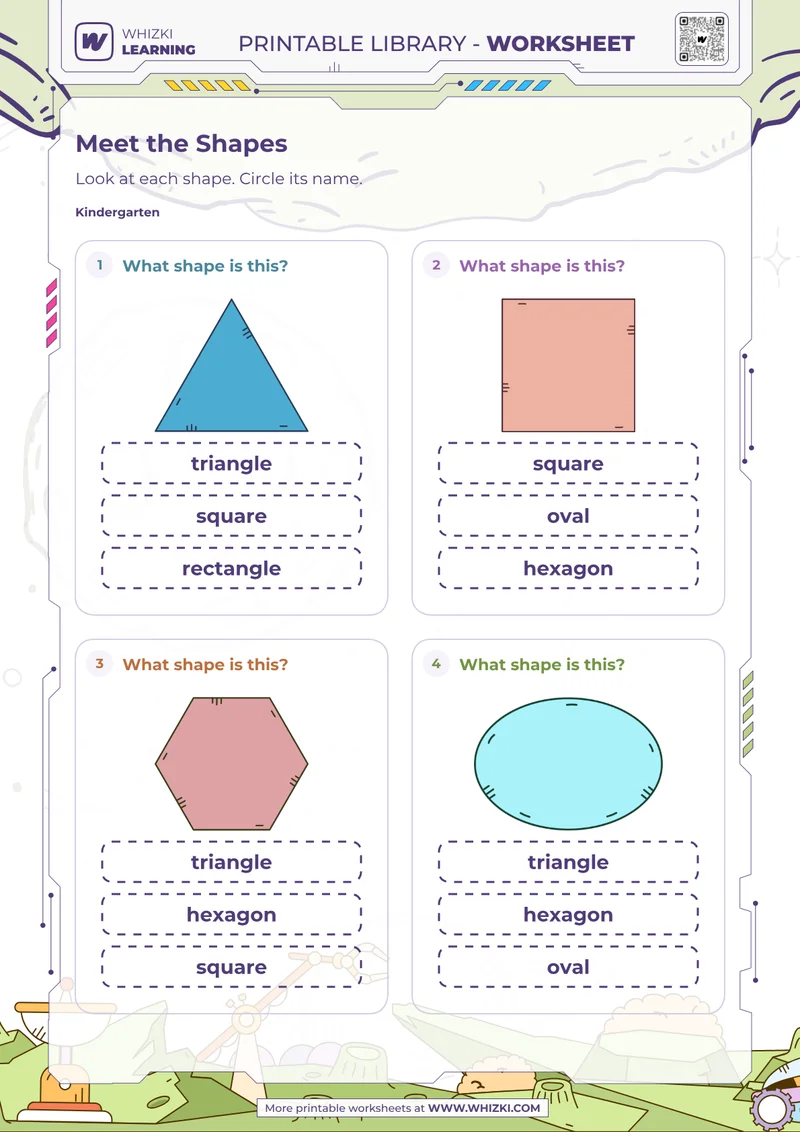
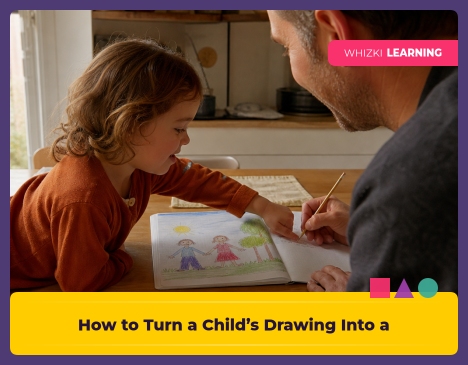
Children can learn more about a shape by looking closely at its outline. This shape naming worksheet includes 4 pictured shapes: triangle, square, hexagon, oval. The task is to circle the name that matches each pictured shape. Each shape has its own activity card. Read unfamiliar words aloud so your child can focus on the shape rather than struggle with the directions.
The first picture is a triangle. Read the choices and circle that name. Trace the outline with a finger before recording an answer. Look for the features that distinguish the picture, such as three straight sides on a triangle or four equal sides and four right angles on a square. A shape’s color or the direction it faces does not determine its name. Let the child explain the choice in a few words or by pointing.
If two names seem plausible, compare the outline with a familiar paper shape. A square is also a rectangle because it has four right angles, even when this activity uses the more specific name square. Keep that relationship in mind without turning a first naming task into a long lesson. Read each choice without emphasizing the correct answer, then give your child time to inspect the picture.
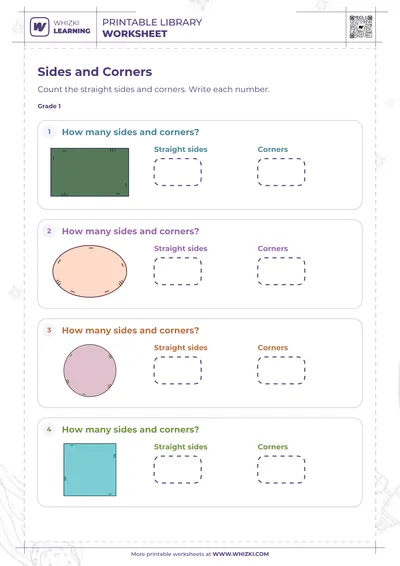
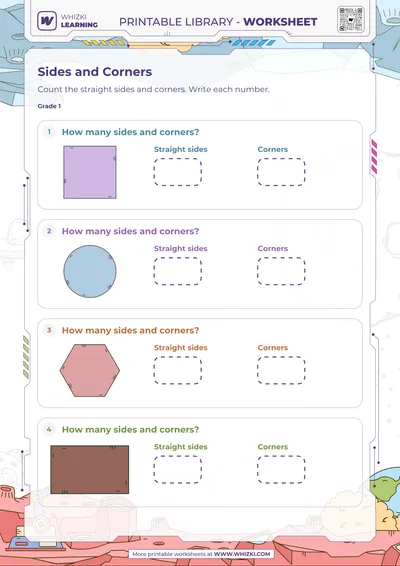
The guide to naming shapes gives context for recognizing shapes in different orientations. The Shapes and Geometry set offers related activities. Finish a few examples and revisit any uncertain answer together. For a short follow-up, draw one of the shapes on scrap paper and ask your child to name it or point out its sides and corners. Keep the conversation tied to the features you can actually see.