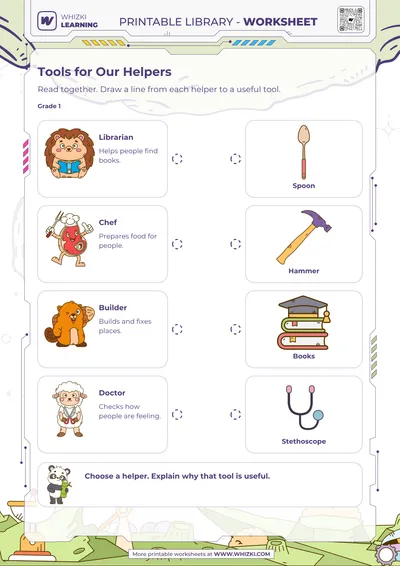


First grader → Identifies community helpers → Names familiar workers and connects them with the jobs people rely on.
Community helpers → Describes job roles → Explains what different workers do in simple, everyday language.
Parent and child → Discusses neighborhood roles → Builds clearer social studies vocabulary through shared questions and answers.

First graders can know a lot about the people in their neighborhood and still freeze when a page asks them to explain it. This printable gives them a focused place to practice community helpers by naming workers, thinking about what they do, and talking about why those jobs matter in everyday life.
This page fits children who can follow short directions and share ideas in simple sentences. If reading is still choppy, sit nearby and read the directions or prompts aloud. The goal is not to rush through it. It is to help your child connect familiar people, places, and jobs using clear words.
As your child works, ask small questions that keep the thinking concrete: “What does this helper do?” “Where might we see this person?” “How does this job help a family or neighborhood?” For more practice with the same topic at this level, the community helpers worksheet for first grade gives another way to revisit the idea without starting from scratch.
After the page is done, use it as a quick conversation starter. Point out a helper you see during errands, or ask your child to name one helper they would want to thank. If they are ready for another screen-free follow-up, this community helpers worksheet can help keep the topic familiar while giving the practice a fresh page.
Boost your child’s skills with our discounted workbooks. Engaging activities for preschool, kindergarten, and grade 1 - now at special sale prices!


Fast shipping
Secure Payment
Licensed Teachers
For the planet
Printed in the USA
Helpful guides for parents and teachers, and tips for making learning at home super fun.

Picture labels can build meaning, first-sound attention, or guessing habits. Use this parent-friendly decision tree to know when to cover or reveal the picture.

A vague school screening notice can leave families guessing, so start with seven plain questions about the test, timing, language, evidence, and next steps.

A field note on the May 2026 move to one shared worksheet generator API, with a simple parent preview for print consistency and handwriting comfort.

A seven-minute apple observation helps children compare color, stem, skin, weight, smell, and a cut surface, then draw what children noticed before any craft begins.
Get exclusive activities, expert tips, and inspiration for a more meaningful, offline family life.