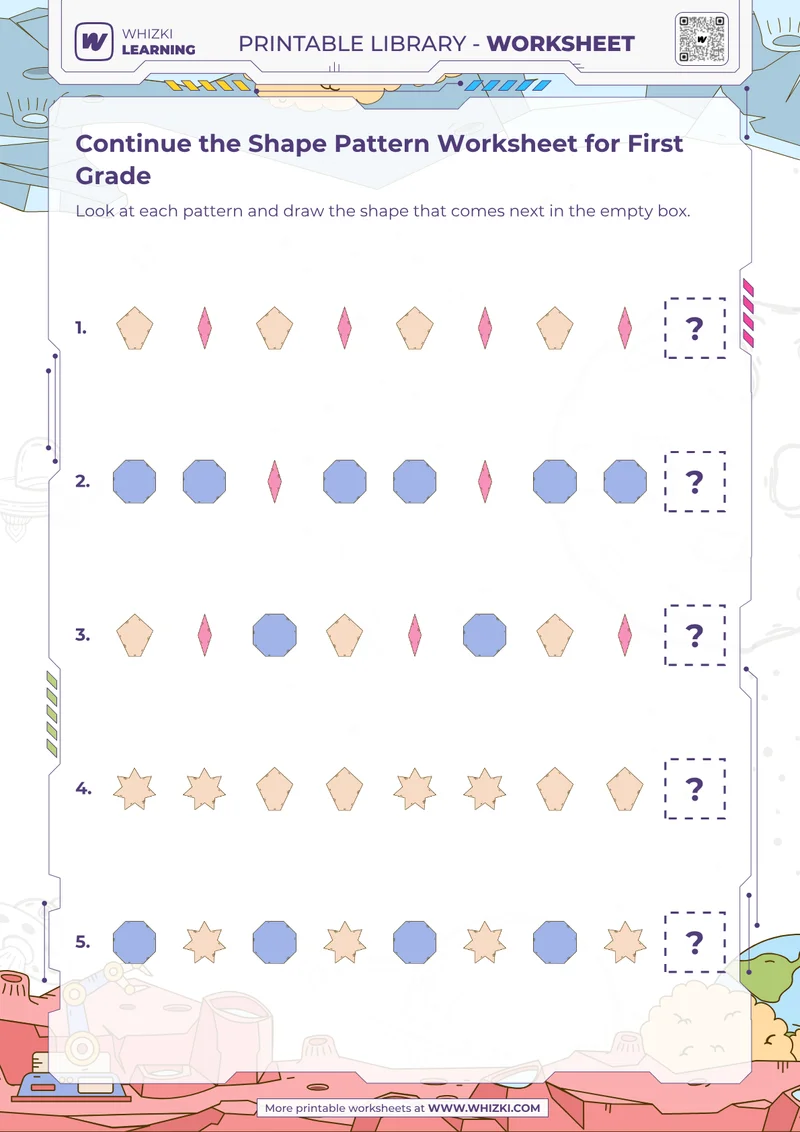
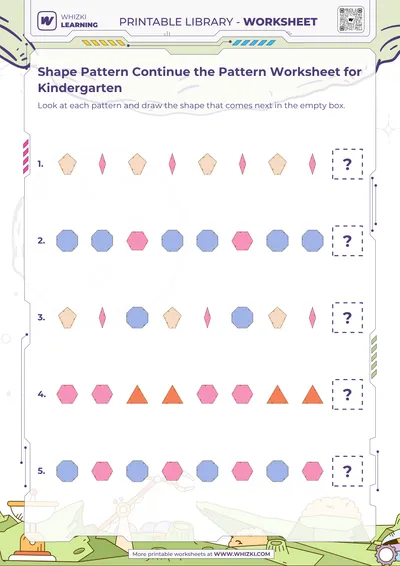
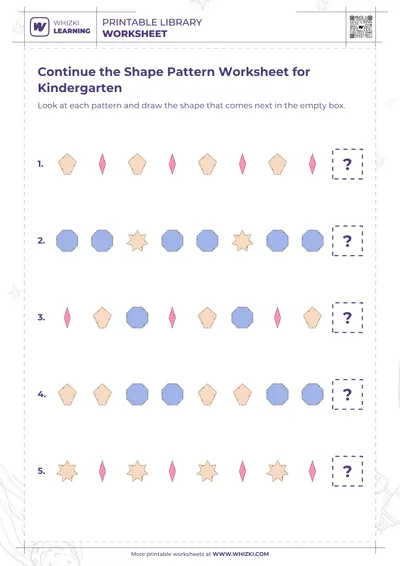
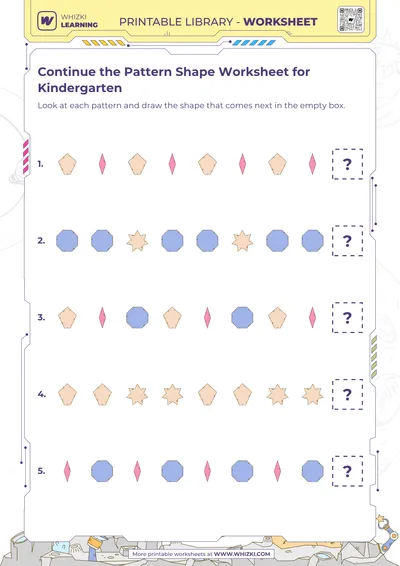
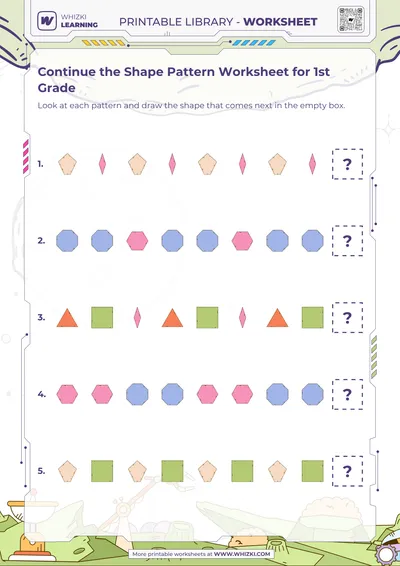
A repeating pattern follows the same small group of shapes again and again. This continue the shape pattern worksheet has five rows, each with eight pictured shapes and a ninth space for the next one. Look across the whole row, identify the repeating group, and draw the missing shape. Read the direction together and let your child point to the expected shape before drawing it.
The first row repeats pentagon, narrow diamond. Follow that group across the printed examples; the ninth position needs a pentagon. Say or point through the sequence at an even pace and pause at the answer box. The page includes AB, AAB, ABC, AABB arrangements. These letters describe the pattern structure for an adult: each letter stands for a particular pictured shape, rather than being an alphabet exercise for the child.
Look for the smallest group that keeps repeating instead of guessing from only the final picture. In an AAB pattern, the first shape appears twice before the second; in an AABB pattern, both appear in pairs. An ABC pattern has three positions in its repeating group. Use the actual row to decide which rule applies. A recognizable outline is enough for the response, and an adult can draw a larger model on scrap paper if a detailed star or polygon is difficult to copy.
Explore the pattern worksheet collection for more repeating sequences. The Shapes and Geometry set offers related outline activities. Check the completed row by reading its sequence through the new drawing. For a follow-up, use paper shapes to make the same repeating group and extend it by another full repetition. Ask your child to explain what repeats before changing any of the shapes.