Learning Outcomes
Whizki Learning worksheet -> Counting fluency -> Children accurately count objects and numerals from 0–20, strengthening number sense and readiness for first grade math through repeated practice.
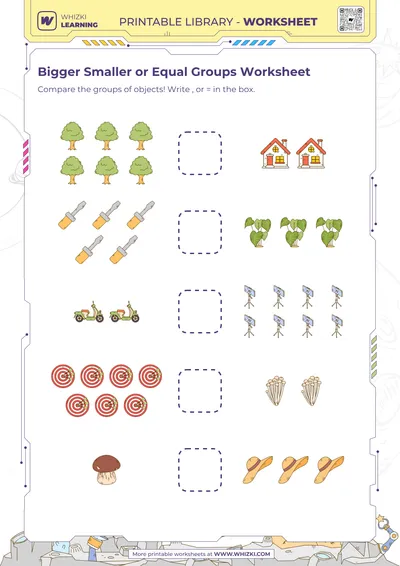
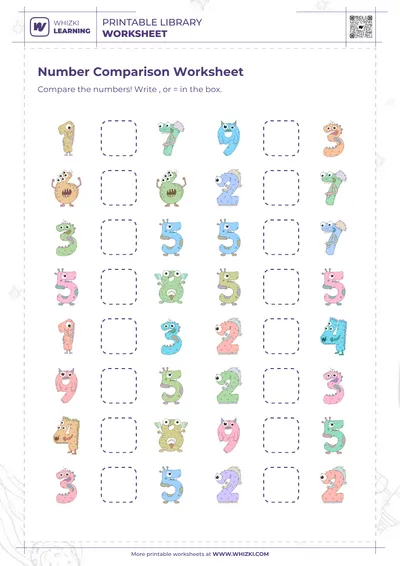
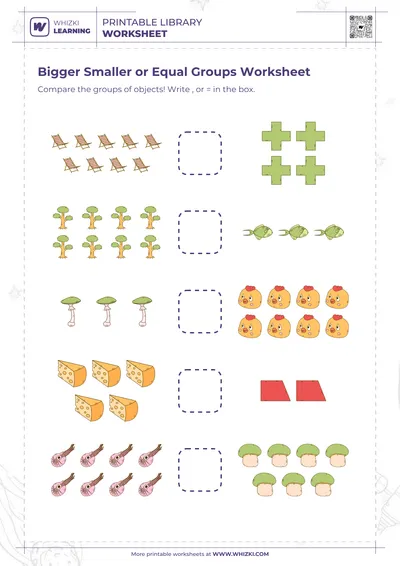
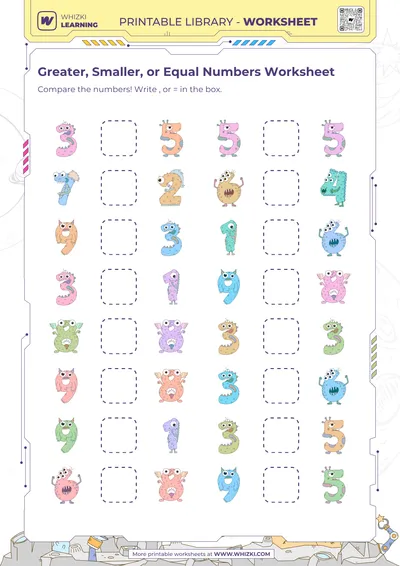
Whizki Learning worksheet -> Comparison skills -> Children learn to identify which group shows more, fewer, or equal quantities, building logical reasoning for future problem-solving tasks.
Whizki Learning worksheet -> Symbol-quantity connection -> Children connect written numerals 0–20 with matching picture sets, supporting early decoding of math symbols in classroom and home activities.

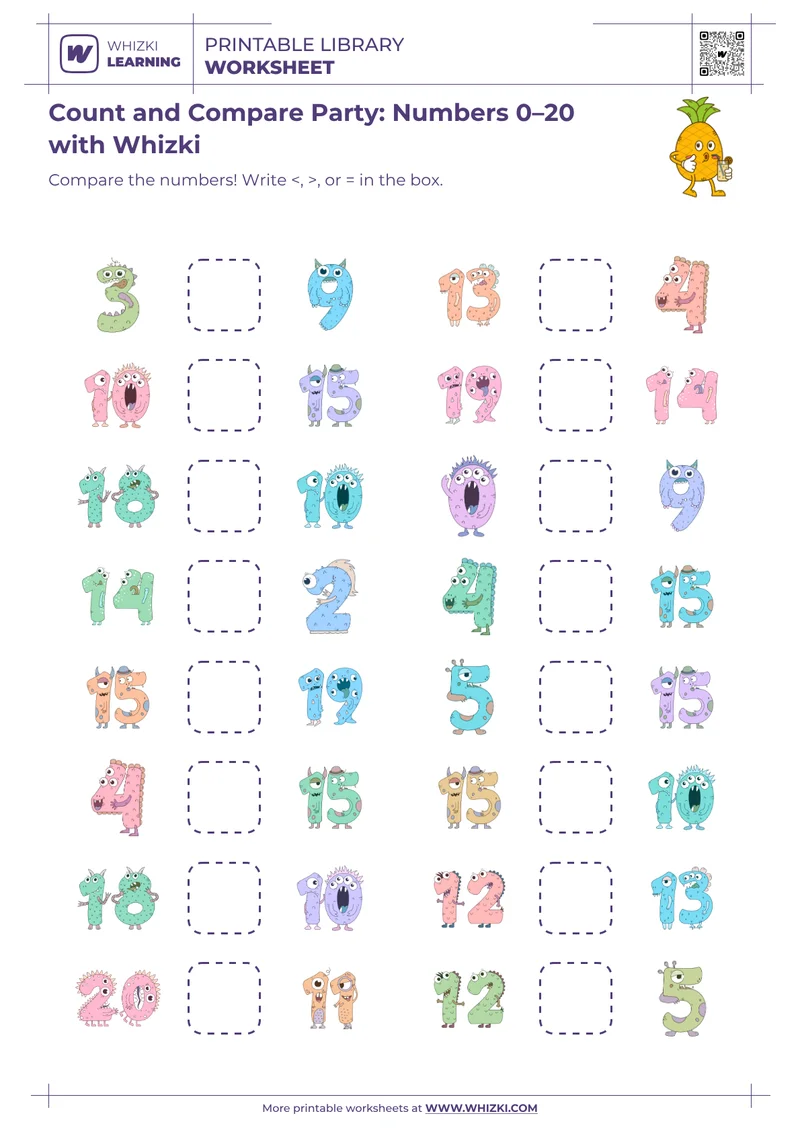
Count and Compare Party: Numbers 0–20 with Whizki
The Whizki Learning Count and Compare Party worksheet introduces children to counting and comparing numbers 0–20 through playful pictures and simple challenges designed by experienced early childhood math educators. The Whizki Learning worksheet features clear visuals, large numbers, and step-by-step tasks so a young learner can confidently match quantities to numerals, laying a strong foundation for first grade math success.
The Whizki Learning Count and Compare Party worksheet focuses on comparison skills by asking children to decide which group has more, fewer, or the same number of objects between 0 and 20. By circling, coloring, or marking the larger or smaller quantity, the child practices essential number sense strategies that support future understanding of addition, subtraction, and word problems in primary school.
The Whizki Learning Count and Compare Party worksheet is carefully structured so parents and teachers can guide a 4-year-old learner from counting small groups to understanding number order and magnitude within 0–20. Each page progresses gently, using repetition and mixed representations such as dots, pictures, and numerals, allowing the child to recognize numbers in different formats and transfer knowledge to real-life counting situations.
The Whizki Learning Count and Compare Party worksheet reflects current early math standards and is created by qualified educators who specialize in early numeracy and child development. Families and teachers can trust that every activity in the Whizki Learning worksheet has been intentionally designed to build confidence, attention, and problem-solving skills while keeping practice fun, age-appropriate, and visually engaging.
Limited Time Sale
Kids’ Workbooks!
Boost your child’s skills with our discounted workbooks. Engaging activities for preschool, kindergarten, and grade 1 - now at special sale prices!


Fast shipping
Secure Payment
Licensed Teachers
For the planet
Printed in the USA
Find fresh ideas
To help your little learners grow!
Helpful guides for parents and teachers, and tips for making learning at home super fun.

Many early childhood reading programs rely on memorizing 'sight words' using flashcards, but this visual memorization strategy often creates fragile readers. This comprehensive guide compares phonics instruction against rote memorization, explaining the neurological mechanisms behind decoding. Learn why teaching letter sounds builds genuine reading confidence and how to foster a growth mindset in young readers.
Sunny Hedge
Teaching a child to read often creates immense anxiety for parents, leading to frustrating flashcard memorization. This comprehensive guide details a proven, Montessori-inspired phonics method that prioritizes letter sounds over letter names. Learn how screen-free, hands-on learning activities build essential phonemic awareness and prepare preschoolers for fluent reading without academic pressure.
Sunny Hedge
When a child cries at the sight of a pencil, parents must completely stop handwriting practice to prevent long-term academic anxiety. This tactical 7-day guide provides a clinical 'Writing Confidence Reset' designed by early childhood experts. Learn how to rebuild a child's fine motor confidence through screen-free sensory play, vertical drawing, and high-quality printed workbooks without any pressure or shame.
Sunny Hedge
Children frequently develop incorrect handwriting habits, such as starting letters from the bottom or applying extreme pencil pressure. This tactical guide outlines the five most common letter formation mistakes and provides occupational therapist-approved, kind fixes for each. Learn how high-quality printed workbooks and specific tactile exercises build permanent, correct muscle memory without frustrating the child.
Sunny HedgeJoin the Screen-Free Movement.
Get exclusive activities, expert tips, and inspiration for a more meaningful, offline family life.