

First grade learner → Identifies cultural traditions → Names ways families and communities celebrate, share food, dress, music, and stories.
First grade learner → Compares traditions respectfully → Notices similarities and differences without labeling one way as better than another.
First grade learner → Connects learning to daily life → Talks about personal traditions using clear words and careful listening.

The Cultures and Traditions Worksheet is a first grade social studies printable that helps children practice noticing and comparing traditions. The page supports simple conversations about celebrations, foods, clothing, music, stories, family routines, and community customs in age-friendly English.
At age six, children often understand their own family habits before understanding that other families may do things differently. Kids can also get stuck saying “weird” when a custom is new, so the worksheet gives children a calmer way to use respectful words, ask questions, and notice similarities.
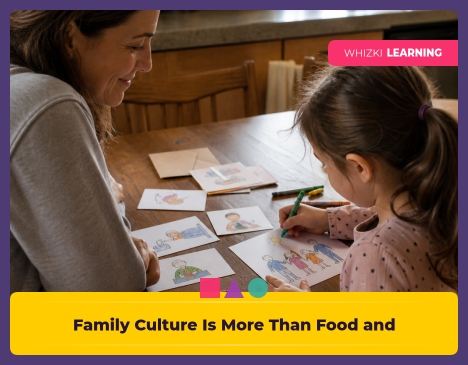
A parent or teacher can sit beside the child and move through the page one part at a time. Read the prompt aloud, let the child answer in words or pictures, then ask, “What is one tradition your family has?” and “What is one tradition another family might have?”
The worksheet is useful because the topic stays concrete instead of turning culture into a big lecture. Whizki Learning keeps the practice short, clear, and screen-free, so the page works well for a kitchen table talk, a small-group lesson, or a quiet follow-up after a story about families around the world.
Boost your child’s skills with our discounted workbooks. Engaging activities for preschool, kindergarten, and grade 1 - now at special sale prices!


Fast shipping
Secure Payment
Licensed Teachers
For the planet
Printed in the USA
Helpful guides for parents and teachers, and tips for making learning at home super fun.

Picture labels can build meaning, first-sound attention, or guessing habits. Use this parent-friendly decision tree to know when to cover or reveal the picture.

A vague school screening notice can leave families guessing, so start with seven plain questions about the test, timing, language, evidence, and next steps.

A field note on the May 2026 move to one shared worksheet generator API, with a simple parent preview for print consistency and handwriting comfort.

A seven-minute apple observation helps children compare color, stem, skin, weight, smell, and a cut surface, then draw what children noticed before any craft begins.
Get exclusive activities, expert tips, and inspiration for a more meaningful, offline family life.