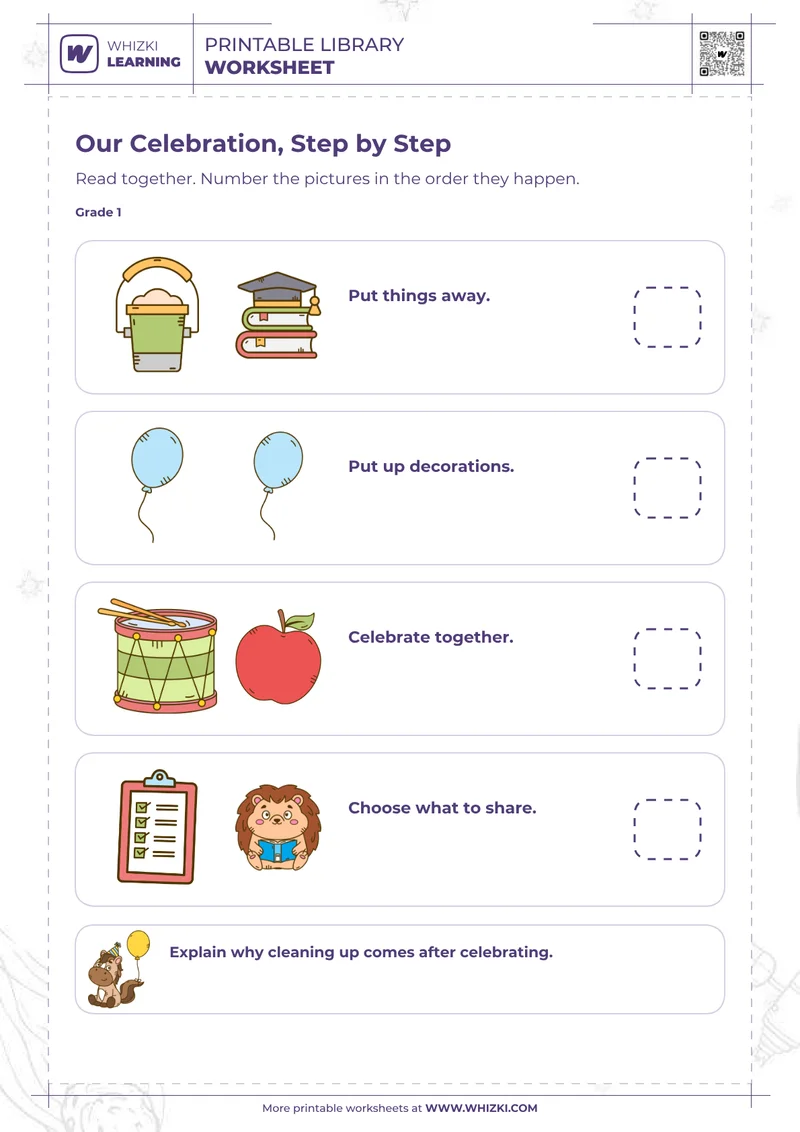


Place 4 celebration steps in their intended chronological order.
Use first, next, and other sequence words to explain how one pictured action follows another.
Match each sequence number to the correct card and check for omitted or repeated numbers.

This celebration sequencing worksheet presents 4 mixed-up picture cards. Read the captions and number them in the order intended by this short celebration story. The pictures give context for each step, while the captions name what happens. Begin by finding the earliest action rather than assuming the top card comes first.
The intended order is: 1. Choose what to share. 2. Put up decorations. 3. Celebrate together. 4. Put things away. The cards are printed in a different order, so write each step’s number beside its own picture. Say the sequence aloud using first and next, then finish with last. Check that every step has one number and that no number is repeated.
This is one simple sequence for a shared celebration, not a rule that every family must follow. Discuss how preparing makes the event possible and how putting things away follows the activity when that step is included. An adult can read the captions and help the child explain a choice before writing a numeral. Use the pictured story as the reference when checking the answer.
Explore the celebrations and traditions collection for related practice. Use the Family Learning Planner to save a suitable next activity. Work through a few examples with time to explain a choice. After checking the page, try one spoken example using a familiar place, activity, or object while keeping the same skill in focus.
Boost your child’s skills with our discounted workbooks. Engaging activities for preschool, kindergarten, and grade 1 - now at special sale prices!


Fast shipping
Secure Payment
Licensed Teachers
For the planet
Printed in the USA
Helpful guides for parents and teachers, and tips for making learning at home super fun.

A field note on reviewing early social studies printables for fair job pictures, simple maps, real culture, matching labels, and kid-clear directions.

Use six friendly Halloween pictures for naming, first-sound sorting, describing, and a tiny story, with a nonreading option for ages 3-7.

A warm, practical plan for helping ages 3-7 notice Ukrainian and Latin letter look-alikes with color cues, context, and short table routines.

Help children ages 3 to 7 prepare one respectful question for a real community helper using a simple card, quick rehearsal, and honest context.
Get exclusive activities, expert tips, and inspiration for a more meaningful, offline family life.