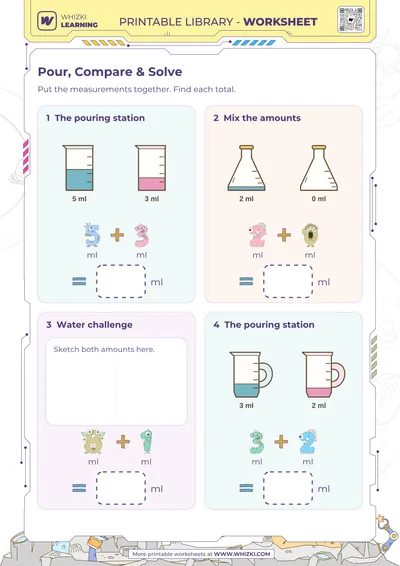
Feet measurements → Read and add labeled quantities → Finds totals while keeping the ft unit attached to each answer.
Picture models → Connect quantities to visual supports → Uses the saved measurements without treating pictures as life-size tools.
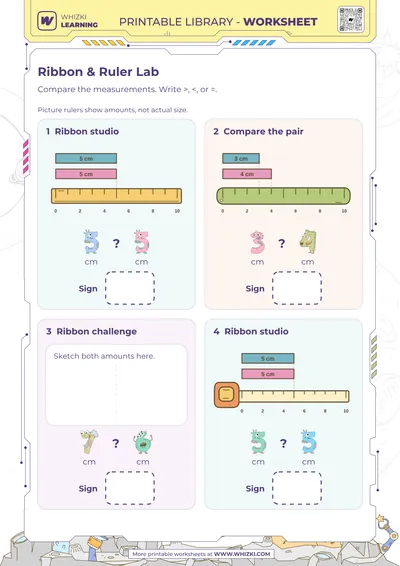
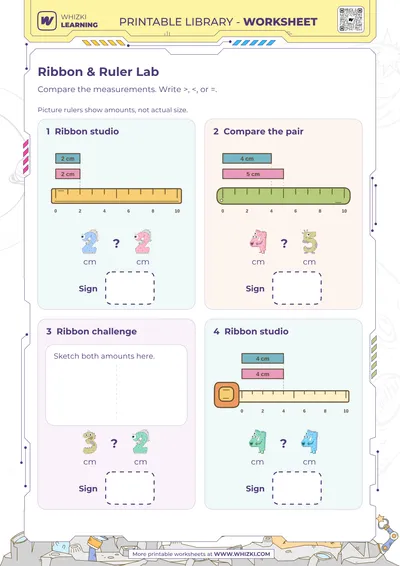
Addition problems → Compare resulting measurements → Talks about which totals are greater or less after solving each item.

Kids can add two numbers and still stall when a unit like ft appears. This page keeps the job small: four feet addition problems with picture models that show the saved quantities. The pictures help your child read the numbers, add the measurements, and write a total with the unit.
It is a good fit when a kindergartener can count small amounts, recognize numerals, and is starting to see that measurements need labels. The illustrations are models, not life-size rulers or tools, so there is no need to measure the page. Point to the ft label and say "feet" each time so the unit becomes part of the answer.
Work side by side. Ask, "What number comes first? What number are we adding?" Then let them count on fingers, draw tiny marks, or count forward from the larger number. After each sum, have them read it aloud as a feet measurement, then notice whether it is longer or shorter than another answer.
For a next step, stay with the same unit and try feet measurement comparison practice, because it asks kids to look at lengths without adding first. Later, switch units with the pound measurement comparison page to show that we compare weight labels differently from length labels.
Boost your child’s skills with our discounted workbooks. Engaging activities for preschool, kindergarten, and grade 1 - now at special sale prices!


Fast shipping
Secure Payment
Licensed Teachers
For the planet
Printed in the USA
Helpful guides for parents and teachers, and tips for making learning at home super fun.

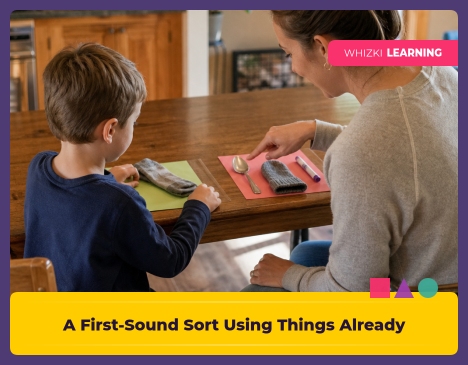
Use two clear starting sounds and a handful of safe objects to build a five-minute sound sort that keeps letter names from getting in the way.

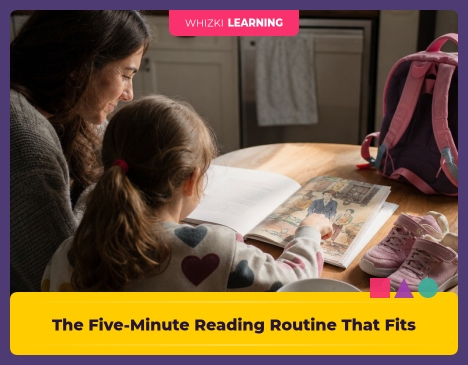
A tiny before-school reading routine using one familiar book, one chosen page, one small literacy job, and a clear stop for ages 3 to 7.

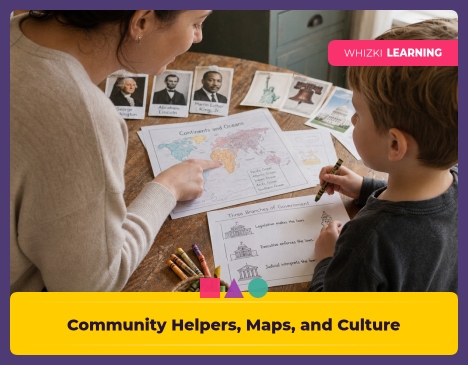
A field note on reviewing early social studies printables for fair job pictures, simple maps, real culture, matching labels, and kid-clear directions.

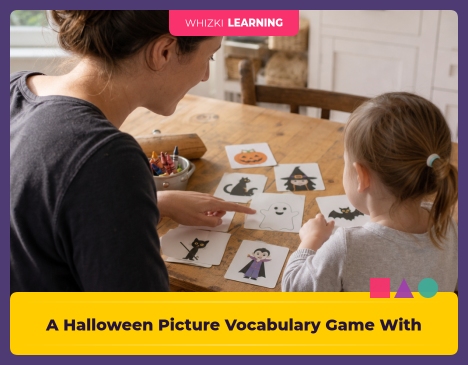
Use six friendly Halloween pictures for naming, first-sound sorting, describing, and a tiny story, with a nonreading option for ages 3-7.
Get exclusive activities, expert tips, and inspiration for a more meaningful, offline family life.