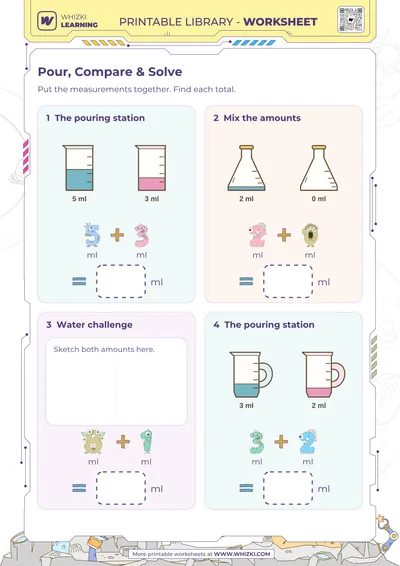
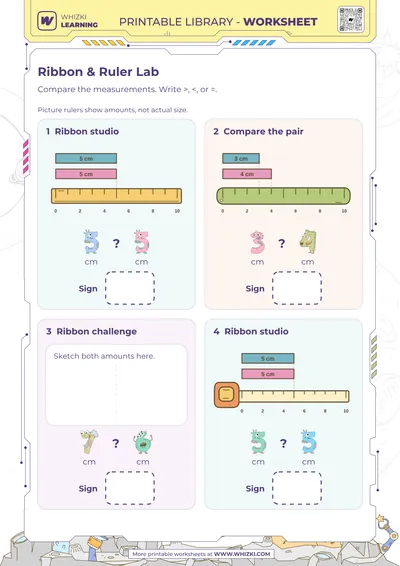
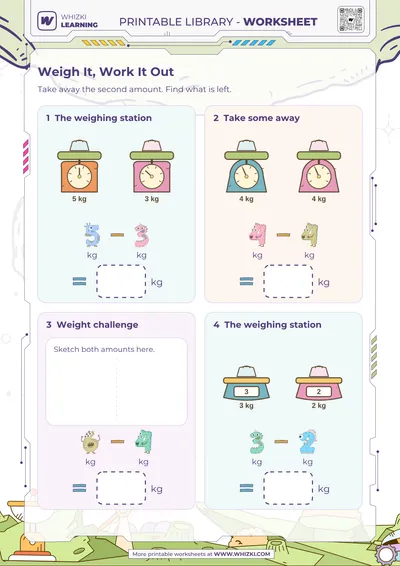
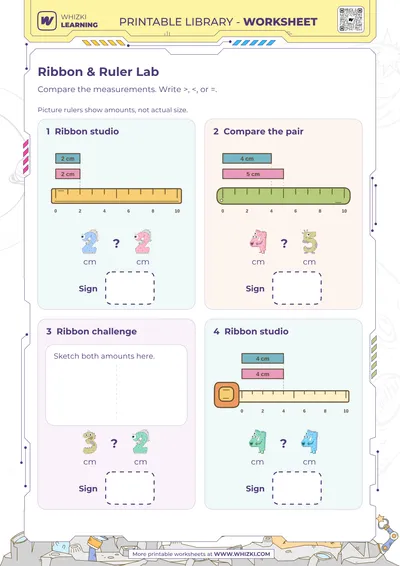
Feet measurement comparison worksheet → Read quantities in ft → Child identifies larger measurements using numbers and unit labels together.
Illustrated measurement models → Compare feet-based amounts → Child uses picture support without treating drawings as life-size tools.
Four comparison problems → Practice careful math language → Child explains answers with complete phrases like greater than or less than.

Kids can know numbers and still stall when a problem asks which measurement is greater. This feet measurement comparison worksheet gives 1st graders four short problems using quantities in ft, with illustrated rulers, scales, or measuring containers shown as friendly models.
At age 7, children are learning that a number and a unit work together. Children may choose the taller drawing instead of the larger measurement, especially when pictures are not life-size, so practice with ft helps children slow down and read carefully.
Sit beside your child and read the first comparison problem out loud. Ask your child to circle or write the larger measurement, then say the full answer in words, such as “six feet is greater than four feet,” before moving to the next problem.
The worksheet keeps the practice short with four comparison problems, so a tired child can finish without a long math session. The pictures match the given quantities as models, while the page reminds adults that the illustrated rulers, scales, or containers are not life-size measuring tools.
Boost your child’s skills with our discounted workbooks. Engaging activities for preschool, kindergarten, and grade 1 - now at special sale prices!


Fast shipping
Secure Payment
Licensed Teachers
For the planet
Printed in the USA
Helpful guides for parents and teachers, and tips for making learning at home super fun.

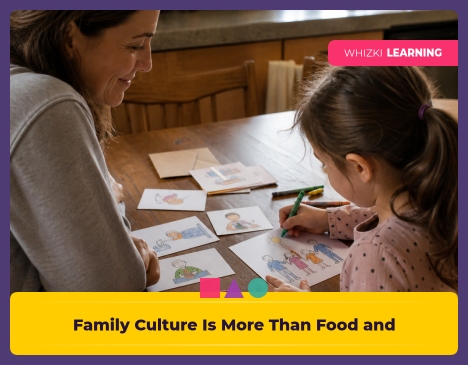
A practical guide for inviting family stories about names, language, music, routines, celebrations, and places without putting children on display.

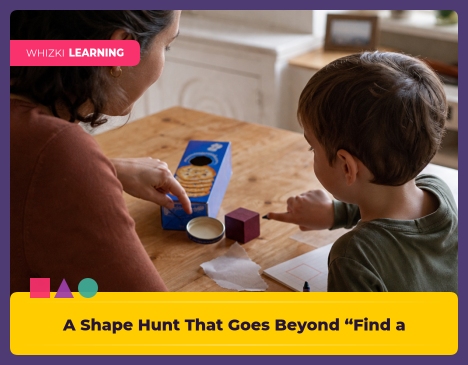
Turn a quick room search into early geometry talk by asking about sides, corners, curves, and shapes inside everyday objects.

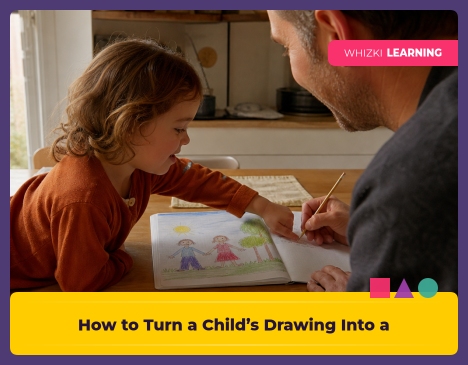
Use a child’s own drawing and spoken words to build a first sentence through adult dictation, shared writing, or optional child writing.

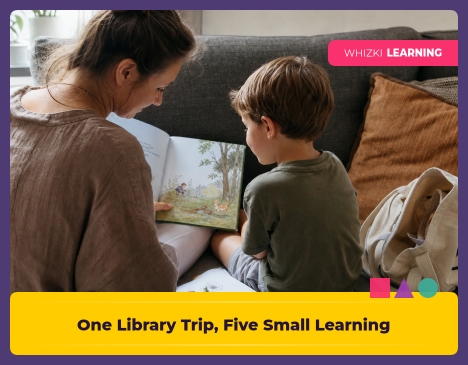
Turn one borrowed book into five short learning moments for ages 3 to 7, with choosing, rereading, drawing, counting, memory, and returning.
Get exclusive activities, expert tips, and inspiration for a more meaningful, offline family life.