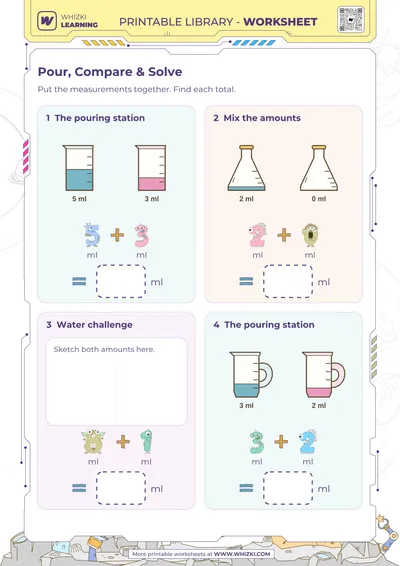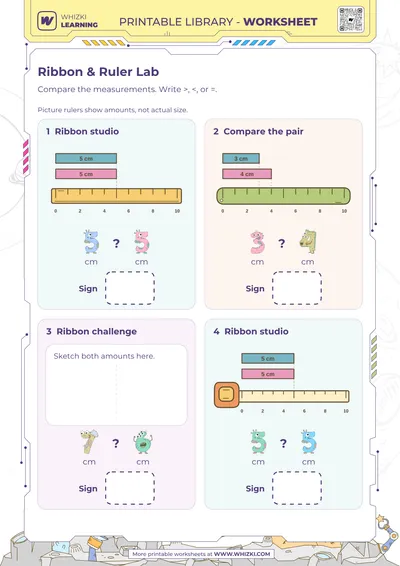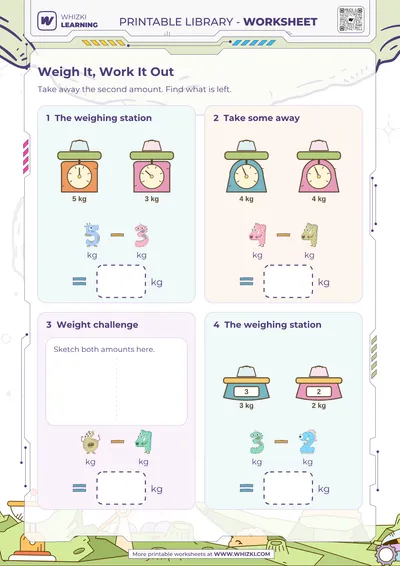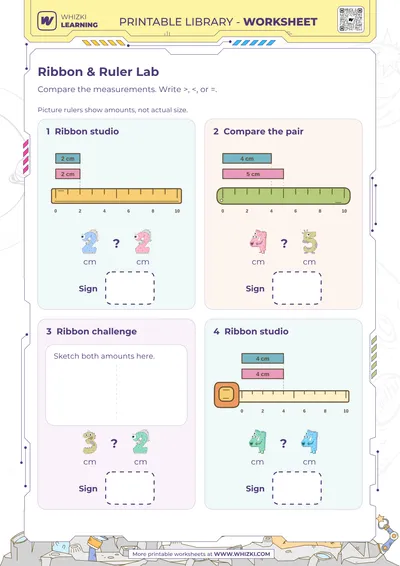


Child → Read measurements in feet → Identifies the number and ft. unit before comparing each pictured quantity.
Child → Compare measurement quantities → Decides which value is greater, less, or the same using the printed models.
Child → Explain a comparison choice → Points to the numbers or pictures and tells why one measurement matches the answer.

Kids often stall when a measurement problem has both a number and a unit. This page keeps the job small: read the quantities shown in feet, look at the matching picture model, and compare the measurements. There are four problems, so it feels doable for a five-year-old who is still getting used to math on paper.
This is a good fit when a child can count small numbers, recognize that ft. means feet, and talk about “more,” “less,” or “same.” The illustrated rulers, scales, or measuring containers are there to support the saved quantities, but they are models, not life-size measuring tools. That is worth saying out loud before starting, especially if your child wants to hold a real ruler up to the page.
Sit nearby and have your child point to each quantity before answering. Ask, “Which one shows more feet?” or “Are these the same amount?” If the answer comes too fast, slow it down by covering one problem at a time. The useful practice is in reading the unit, matching it to the picture, and making a comparison from the information on the page.
When the four comparisons are finished, you can keep the measurement talk going off the page. Measure two toys with a real ruler or tape measure and compare the lengths in feet if the objects are large enough. For a next step with measurement word problems, the pint measurement subtraction worksheet gives practice taking away liquid amounts, while the milliliter subtraction worksheet helps children see that measurement units can be used in different kinds of math.
Boost your child’s skills with our discounted workbooks. Engaging activities for preschool, kindergarten, and grade 1 - now at special sale prices!


Fast shipping
Secure Payment
Licensed Teachers
For the planet
Printed in the USA
Helpful guides for parents and teachers, and tips for making learning at home super fun.

Picture labels can build meaning, first-sound attention, or guessing habits. Use this parent-friendly decision tree to know when to cover or reveal the picture.

A vague school screening notice can leave families guessing, so start with seven plain questions about the test, timing, language, evidence, and next steps.

A field note on the May 2026 move to one shared worksheet generator API, with a simple parent preview for print consistency and handwriting comfort.

A seven-minute apple observation helps children compare color, stem, skin, weight, smell, and a cut surface, then draw what children noticed before any craft begins.
Get exclusive activities, expert tips, and inspiration for a more meaningful, offline family life.