Feet subtraction problems → Read quantities with units → Solve short measurement subtraction tasks without dropping the ft. label.
Picture measurement models → Match visuals to saved quantities → Use the image as support while subtracting the written amounts.
Kindergarten math practice → Compare measured amounts → Explain how many feet remain after one quantity is taken away.

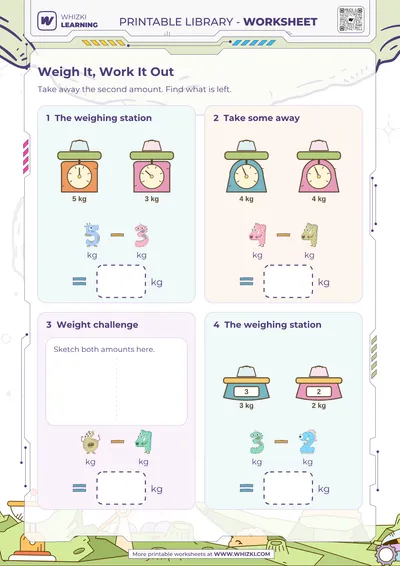
Measurement can feel slippery for six-year-olds because the number is only part of the answer. This page gives one short, focused practice set with four subtraction problems in ft. The illustrated rulers, scales, or measuring containers match the saved quantities, so you can point, read the problem aloud, and ask, “How many feet are left?”
This is a good fit when a child is ready to subtract small quantities and is starting to notice measurement units. The pictures support the math, but they are models, not life-size measuring tools. That matters because the goal is to connect the written unit ft. with the subtraction problem, not to measure the printed picture with a real ruler.
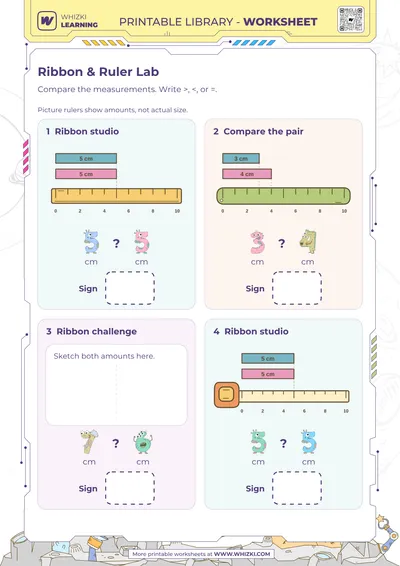
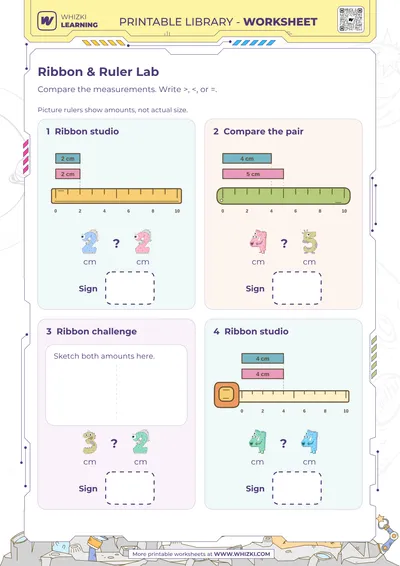
As you work together, have your child read the numbers, say the unit, subtract, and write the answer with ft. if there is space for it. If the unit distracts them, cover it for a moment, solve the subtraction, then uncover it and say the full answer. For extra length comparison practice after this page, try the centimeter comparison worksheet, which keeps the focus on comparing measured amounts in another length unit.
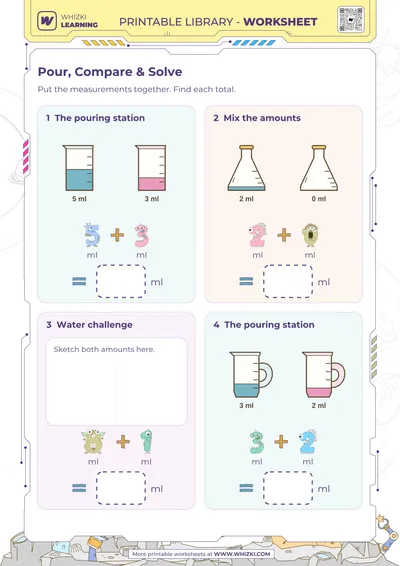
Keep it calm and quick. Four problems are enough for a useful off-screen math moment without dragging it out. If your child wants another measurement topic later, the milliliter comparison worksheet shifts the same compare-and-read habit to liquid measurement, which helps them see that different units can be used in different situations.
Boost your child’s skills with our discounted workbooks. Engaging activities for preschool, kindergarten, and grade 1 - now at special sale prices!


Fast shipping
Secure Payment
Licensed Teachers
For the planet
Printed in the USA
Helpful guides for parents and teachers, and tips for making learning at home super fun.

Help young children measure with paper clips before a ruler, using equal units, clear endpoints, and quick fixes for gaps, overlaps, and different answers.

Picture labels can build meaning, first-sound attention, or guessing habits. Use this parent-friendly decision tree to know when to cover or reveal the picture.

A vague school screening notice can leave families guessing, so start with seven plain questions about the test, timing, language, evidence, and next steps.

A field note on the May 2026 move to one shared worksheet generator API, with a simple parent preview for print consistency and handwriting comfort.
Get exclusive activities, expert tips, and inspiration for a more meaningful, offline family life.