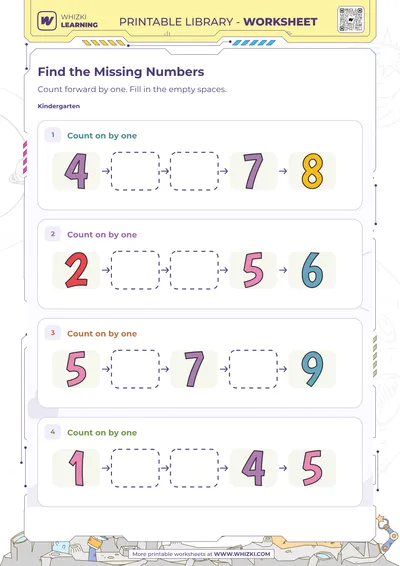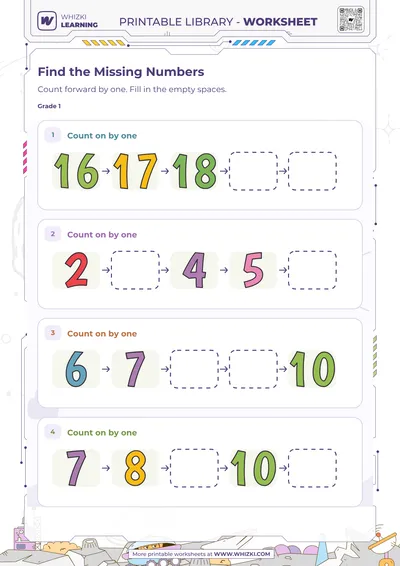


First grader → Counting forward by ones → fills blanks inside short number sequences with nearby numbers.
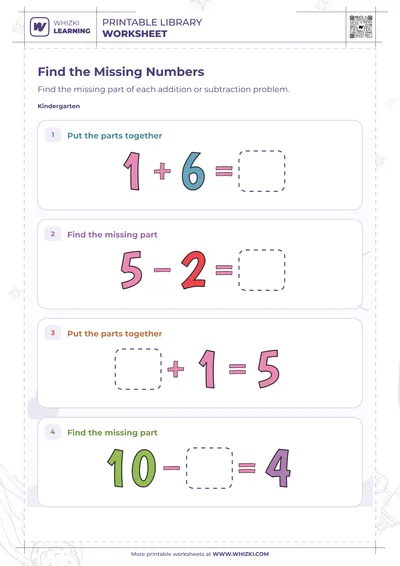
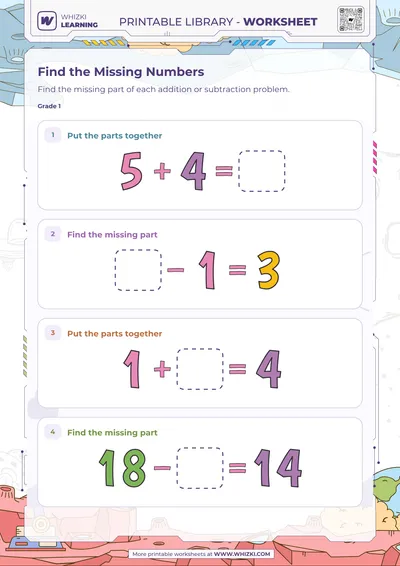
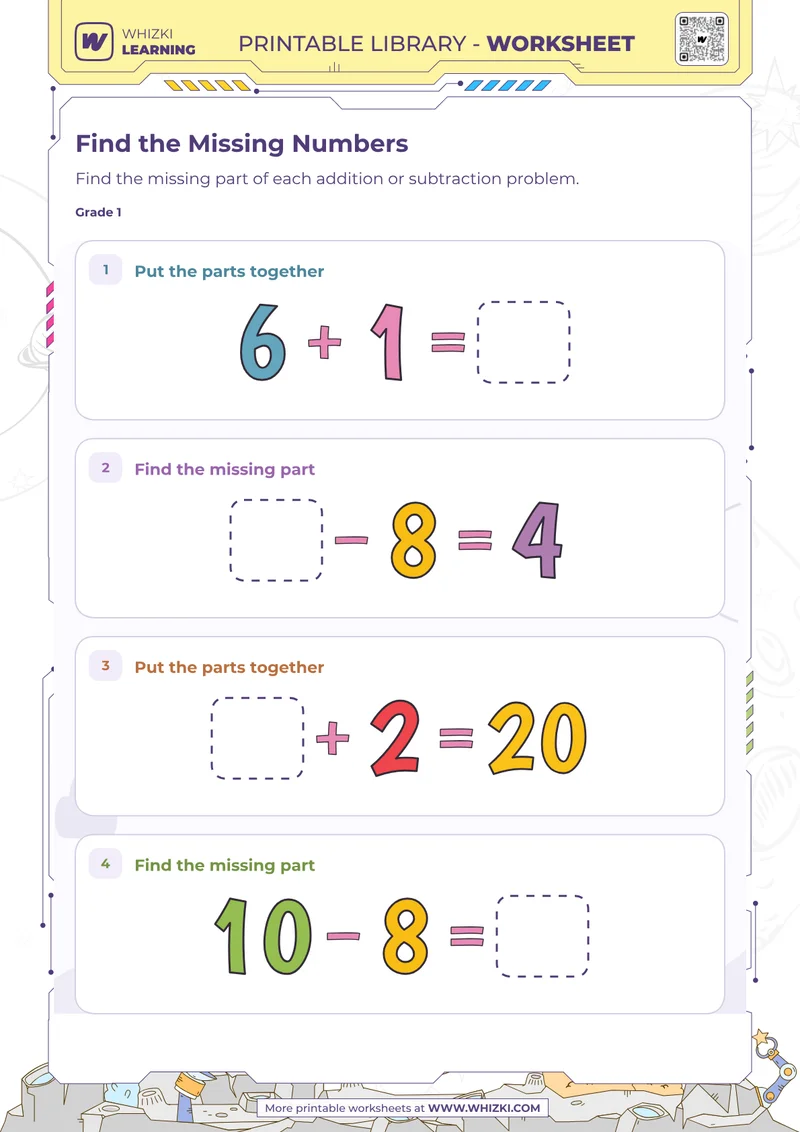
First grader → Addition facts → completes equations by identifying the missing addend or sum in each problem.
First grader → Subtraction facts → completes equations by finding the missing starting number or difference accurately.

Kids can count out loud and still freeze when two blanks sit inside a number line. This grade 1 printable keeps the work small and clear. Children fill in missing numbers in four count-by-one sequences, then complete a related addition or subtraction equation by writing the missing number.
This page fits a six-year-old who can count forward by ones and is starting to work with numbers up to 20. The sequences use close number groups, including 2 through 6, 4 through 8, 13 through 17, and 15 through 19. If teen numbers feel tricky, say the full row together first, then let the child write the blanks.
The practice works because the child has to look at numbers before and after each blank, not just start counting from one. For a quick warm-up before this page, next whole number practice helps with the one-more idea. If the blank-filling format feels right and you want another nearby activity, another missing numbers page gives more practice with the same kind of thinking.
Sit close for the first row and ask, “What comes right before this number?” or “What comes right after it?” For the equations, read the whole number sentence aloud and let your child use fingers or small objects if needed. A good next step is to make one five-number row together on scrap paper, leave out two numbers, and trade jobs so the child gets to be the teacher too.
Boost your child’s skills with our discounted workbooks. Engaging activities for preschool, kindergarten, and grade 1 - now at special sale prices!


Fast shipping
Secure Payment
Licensed Teachers
For the planet
Printed in the USA
Helpful guides for parents and teachers, and tips for making learning at home super fun.

Use one familiar snack to build science talk and vocabulary without pressure to taste. This kitchen-table investigation honors allergies, texture needs, and child choice.

Help young children measure with paper clips before a ruler, using equal units, clear endpoints, and quick fixes for gaps, overlaps, and different answers.

Picture labels can build meaning, first-sound attention, or guessing habits. Use this parent-friendly decision tree to know when to cover or reveal the picture.

A vague school screening notice can leave families guessing, so start with seven plain questions about the test, timing, language, evidence, and next steps.
Get exclusive activities, expert tips, and inspiration for a more meaningful, offline family life.