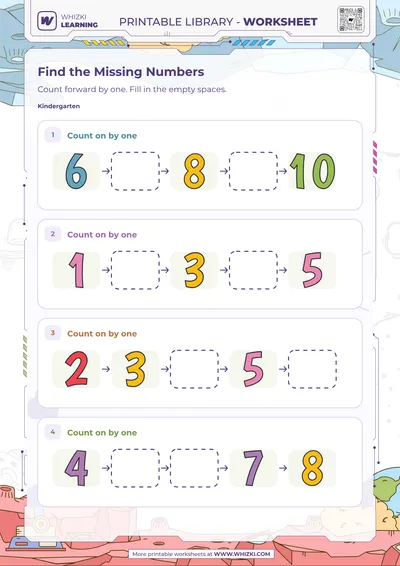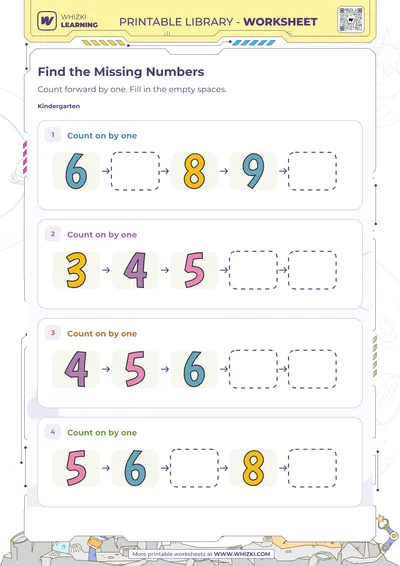


Number trails → Fill missing numerals in order → Child practices counting forward and identifying skipped numbers from 0 to 10.
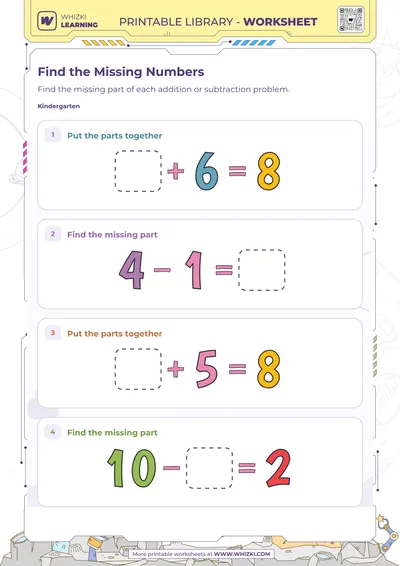
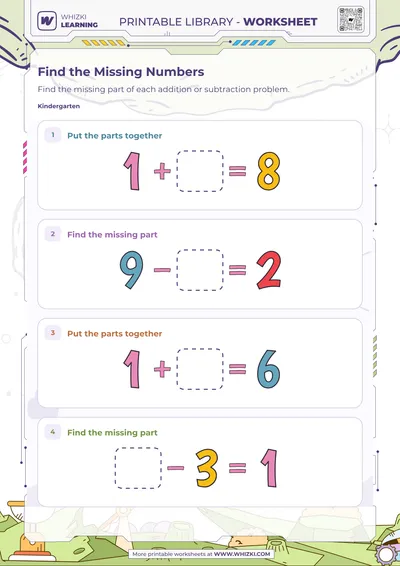
Simple equations → Read addition and subtraction facts → Child connects small-number operations with written numerals and missing values.
Parent prompts → Count, point, and check each blank → Child uses verbal counting to support accurate written answers.

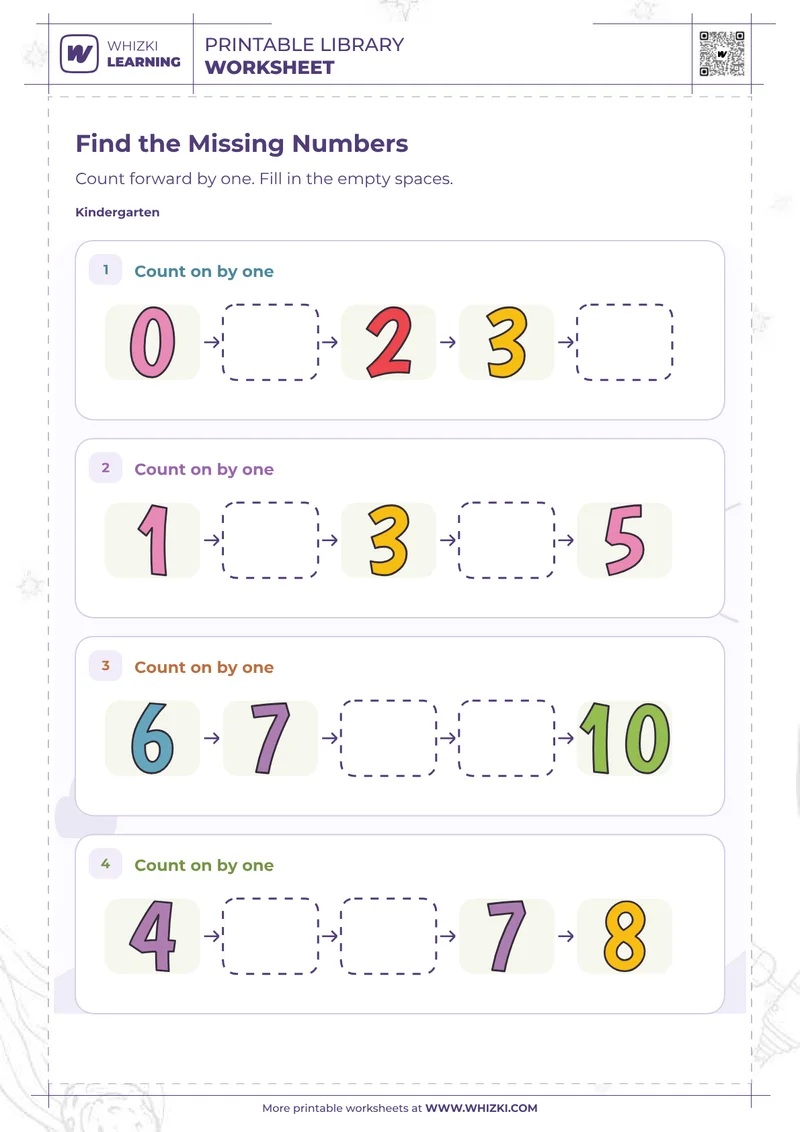
Six-year-olds can stall when a number line has blanks, even when they can count out loud with no trouble. This worksheet gives them a clear next step: fill in missing numbers in four short number trails from 0 to 10, then look at simple addition and subtraction equations that also use small numbers.
The page is a good fit when a child can count forward to 10 and is starting to notice which numbers come before and after. The trails include 0, 1, 2, 3, 4; 1, 2, 3, 4, 5; 6, 7, 8, 9, 10; and 4, 5, 6, 7, 8, with two blanks in each trail. That keeps the task short enough for a kindergartner who gets tired of long math pages.
As your child writes each missing number, ask, “What comes next?” or “What number did we skip?” That simple talk connects counting words to written numerals. The equation practice adds one more layer, using facts like 2 plus 6 equals 8, 4 minus 2 equals 2, 4 plus 4 equals 8, and 10 minus 4 equals 6, so the same page touches both counting order and early number sense.
Sit nearby with a pencil and let them point, whisper-count, or tap each number space before writing. If they need a warmer start, try the Circle Count and Draw Worksheet first because it lets kids count visible groups before filling in numbers. When these trails feel comfortable, the Tens and Ones Number Cards Worksheet is a helpful next step for seeing how numbers can be built and grouped.
Boost your child’s skills with our discounted workbooks. Engaging activities for preschool, kindergarten, and grade 1 - now at special sale prices!


Fast shipping
Secure Payment
Licensed Teachers
For the planet
Printed in the USA
Helpful guides for parents and teachers, and tips for making learning at home super fun.

Use one familiar snack to build science talk and vocabulary without pressure to taste. This kitchen-table investigation honors allergies, texture needs, and child choice.

Help young children measure with paper clips before a ruler, using equal units, clear endpoints, and quick fixes for gaps, overlaps, and different answers.

Picture labels can build meaning, first-sound attention, or guessing habits. Use this parent-friendly decision tree to know when to cover or reveal the picture.

A vague school screening notice can leave families guessing, so start with seven plain questions about the test, timing, language, evidence, and next steps.
Get exclusive activities, expert tips, and inspiration for a more meaningful, offline family life.