

Identify a repeating unit in a sequence of two picture types, including units with repeated copies of the same picture.
Continue the identified rule to predict and draw the next picture in a sequence.
Check a proposed continuation by naming or grouping the complete sequence and explaining which unit repeats.

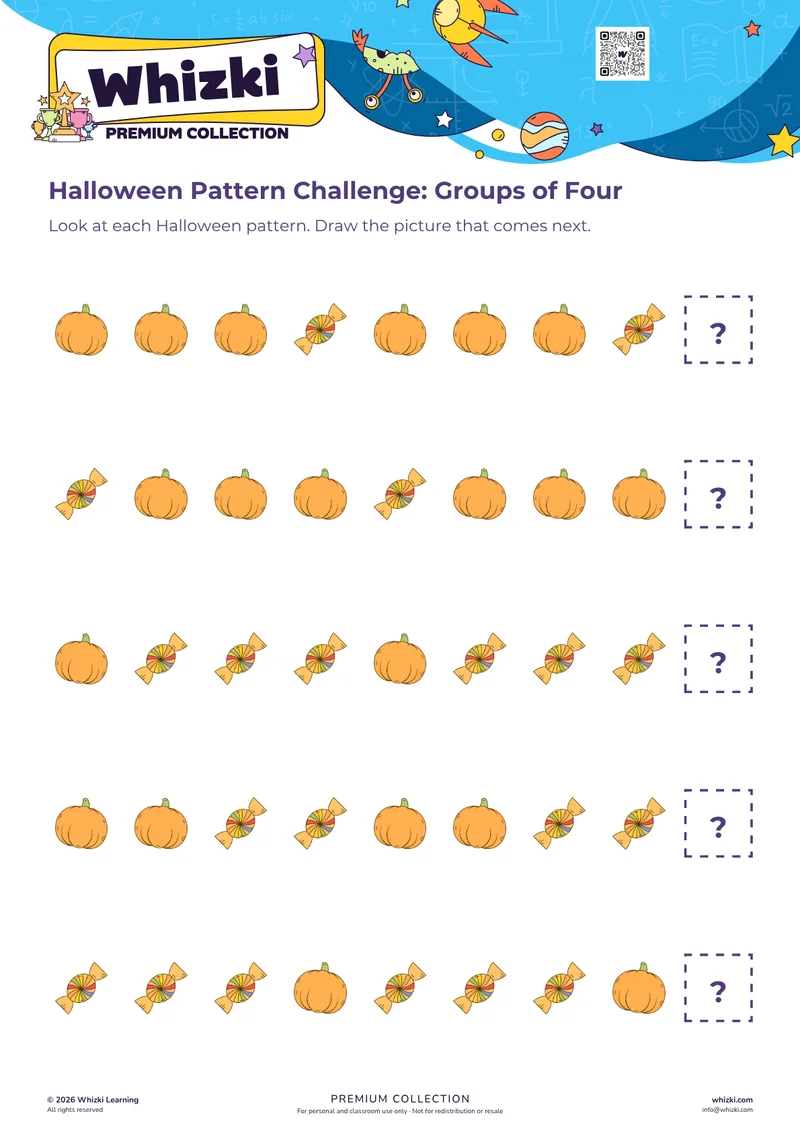
This Halloween repeating-pattern worksheet shows five rows of pumpkin and candy pictures. Each row contains eight printed pictures followed by a box for the next one. The child looks for the repeating group and draws the picture that should follow. This version uses repeating groups of four pictures, asking for attention to how many times a picture repeats before the group starts again.
The first row repeats pumpkin, pumpkin, pumpkin, candy. Say the picture names in order, group the repeated part with your voice, and continue the rule to the empty box. The next picture is pumpkin. Check it by reading the whole sequence again and listening for the same group repeating without a change.
An adult can point along the pictures while the child names them, then pause before the blank to invite a prediction. A simple pumpkin outline or candy sketch is enough to record the answer; the drawing does not need to match the artwork exactly. If a longer repeated group is confusing, copy one group onto separate paper, repeat it once more, and compare that model with the printed row.
Find the other seasonal pages in the Halloween Learning Activities Pack. For related practice outside the holiday theme, explore the Picture Sorting and Logic Pack. Choose a small amount of work that the child can explain or complete comfortably, then return to the rest during another short session. Keep an adult nearby to read directions and offer a specific example when needed.
Boost your child’s skills with our discounted workbooks. Engaging activities for preschool, kindergarten, and grade 1 - now at special sale prices!


Fast shipping
Secure Payment
Licensed Teachers
For the planet
Printed in the USA
Helpful guides for parents and teachers, and tips for making learning at home super fun.

A field note on bilingual worksheet directions, with practical checks for parallel meaning, readable layout, clear verbs, and fair visual space.

Try a calm one-week moon watch with young children: look at a regular time, sketch the visible shape, note weather gaps, and compare what changed.

Turn a family choice into a 10-minute sticky-note graph. Children vote, compare more and fewer, and learn why a tiny sample has limits.

Use safe envelopes, cards, and pretend delivery play to show young children names, addresses, stamps, reading direction, and why written messages matter.
Get exclusive activities, expert tips, and inspiration for a more meaningful, offline family life.