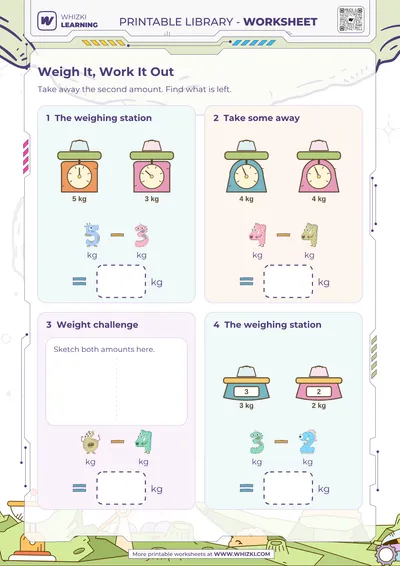
Kilogram subtraction problems → read the kilogram amounts and subtract → record the remaining quantity in kg.
Picture measurement models → connect saved quantities to written problems → use visuals to support subtraction checks.
Measurement comparisons → notice that subtracting reduces the amount → explain whether the answer should be smaller.

Measurement pages can feel fussy when a child is still sorting out numbers and units. This printable keeps the job clear with four subtraction problems in kg. Each problem uses a picture model that matches the saved quantity, so the picture gives a helpful clue without acting like a real measuring tool.
This page fits a kindergartener who can count, recognize written numbers, and is starting to understand that kg stands for kilograms. Sit together and read each problem slowly. Point to the unit, say “kilograms,” then have your child subtract the amounts and write the answer with kg.
The practice works by connecting three small steps: read the measurement, do the subtraction, and compare the result to the model. If your child rushes, cover the other problems with a blank sheet of paper and do one at a time. If the subtraction is tricky, use small objects as counters first, then return to the printed problem.
After finishing, ask a quick check question like, “Does the answer get smaller after we subtract?” That keeps the focus on meaning, not just filling boxes. For a next step with another unit, try the feet subtraction measurement worksheet to compare length amounts, or use the milliliter subtraction measurement worksheet when you want similar practice with liquid measure.
Boost your child’s skills with our discounted workbooks. Engaging activities for preschool, kindergarten, and grade 1 - now at special sale prices!


Fast shipping
Secure Payment
Licensed Teachers
For the planet
Printed in the USA
Helpful guides for parents and teachers, and tips for making learning at home super fun.

Picture labels can build meaning, first-sound attention, or guessing habits. Use this parent-friendly decision tree to know when to cover or reveal the picture.

A vague school screening notice can leave families guessing, so start with seven plain questions about the test, timing, language, evidence, and next steps.

A field note on the May 2026 move to one shared worksheet generator API, with a simple parent preview for print consistency and handwriting comfort.

A seven-minute apple observation helps children compare color, stem, skin, weight, smell, and a cut surface, then draw what children noticed before any craft begins.
Get exclusive activities, expert tips, and inspiration for a more meaningful, offline family life.